
Quick answer: Nonprofits can produce high-impact DC events on real-world budgets with six strategies: define your ‘hero moment’ first, right-size the AV package, bundle services with one full-service partner, leverage venue infrastructure, plan repurposable content, and choose dates and timelines strategically. Production is also a sponsor-value engine – branded LED content and livestream impressions extend the value of every dollar.
Your mission deserves a standing ovation, but your budget says otherwise. If you are a nonprofit event planner in the Washington DC area, you already know the tension: stakeholders expect polished, professional events that inspire donors and energize volunteers, yet every dollar spent on production is a dollar not going directly to your cause. Here is the good news – nonprofit event production DC does not have to mean choosing between impact and affordability. More and more nonprofits are investing in live and hybrid events, recognizing them as one of the most effective channels for donor retention and major-gift cultivation. The key is not spending more; it is spending smarter.
At TriVision Event Production, we have partnered with nonprofits, associations, and mission-driven organizations across Washington DC, Northern Virginia, and Maryland for over 30 years. We have seen firsthand how the right production strategy transforms a modest budget into an event donors remember. In this guide, we share the exact budget-conscious production strategies – and real-world examples – that help DC nonprofits deliver high-impact events without overspending.

Why Nonprofit Events in DC Demand a Different Production Approach
Washington DC is unlike any other event market in the country. The city is saturated with galas, fundraisers, advocacy summits, and award ceremonies – many of them produced by organizations with significant corporate sponsorship or government-level budgets. For nonprofits operating with lean teams and tighter finances, this environment creates a unique set of challenges:
- High venue costs: Premier DC venues – from hotel ballrooms along the K Street corridor to iconic spaces near the National Mall – command premium rental fees, especially during peak gala season (October through May).
- Audience expectations: DC attendees, including Hill staffers, lobbyists, donors, and media, attend dozens of events per year. A lackluster production can blend into the noise and fail to generate the emotional connection that drives giving.
- Logistical complexity: Load-in restrictions, union labor requirements at certain venues, parking limitations, and security protocols add layers of cost and coordination that many nonprofits underestimate.
- Hybrid and virtual components: In 2026, most nonprofit events still include a livestream or on-demand component to reach supporters who cannot attend in person, adding technical requirements and budget line items.
A production partner that understands these DC-specific dynamics can help you navigate every one of these challenges – often saving you money in the process by avoiding common pitfalls before they become expensive mistakes.
Budget-Conscious Production Strategies That Actually Work
Cutting corners is not a strategy; it is a recipe for a forgettable event. Instead, smart nonprofit event production in DC is about prioritizing – investing heavily in the elements that drive emotional impact and donor engagement while finding creative efficiencies everywhere else. Here are the strategies we recommend and implement for our nonprofit clients.
1. Define Your ‘Hero Moment’ First
Every nonprofit event has one moment that matters most – the keynote address, the live fundraising appeal, the video testimonial from a beneficiary, or the award presentation. We call this the hero moment. Before allocating a single dollar to AV equipment or décor, identify that moment and build your production plan around making it as powerful as possible.
For example, if your hero moment is a three-minute impact video, invest in a high-quality LED wall or projection setup with crisp audio so every attendee feels the story viscerally. The floral arrangements on the cocktail tables? They can be simplified. The branded step-and-repeat? A well-lit fabric backdrop with your logo costs a fraction of a printed vinyl wall and photographs beautifully.
2. Right-Size Your AV Package
One of the most common budget traps for nonprofits is over-specifying AV equipment. A 500-person gala in a hotel ballroom does not need the same speaker array as a 3,000-seat concert. A skilled production company will conduct a site visit, assess room dimensions and acoustics, and recommend a system that fills the space without excess.
- Audio: Choose a line-array or point-source system matched to your room size. Wireless microphone packages should include only the channels you actually need (typically 4–8 for a gala with a host, honorees, and a few presenters).
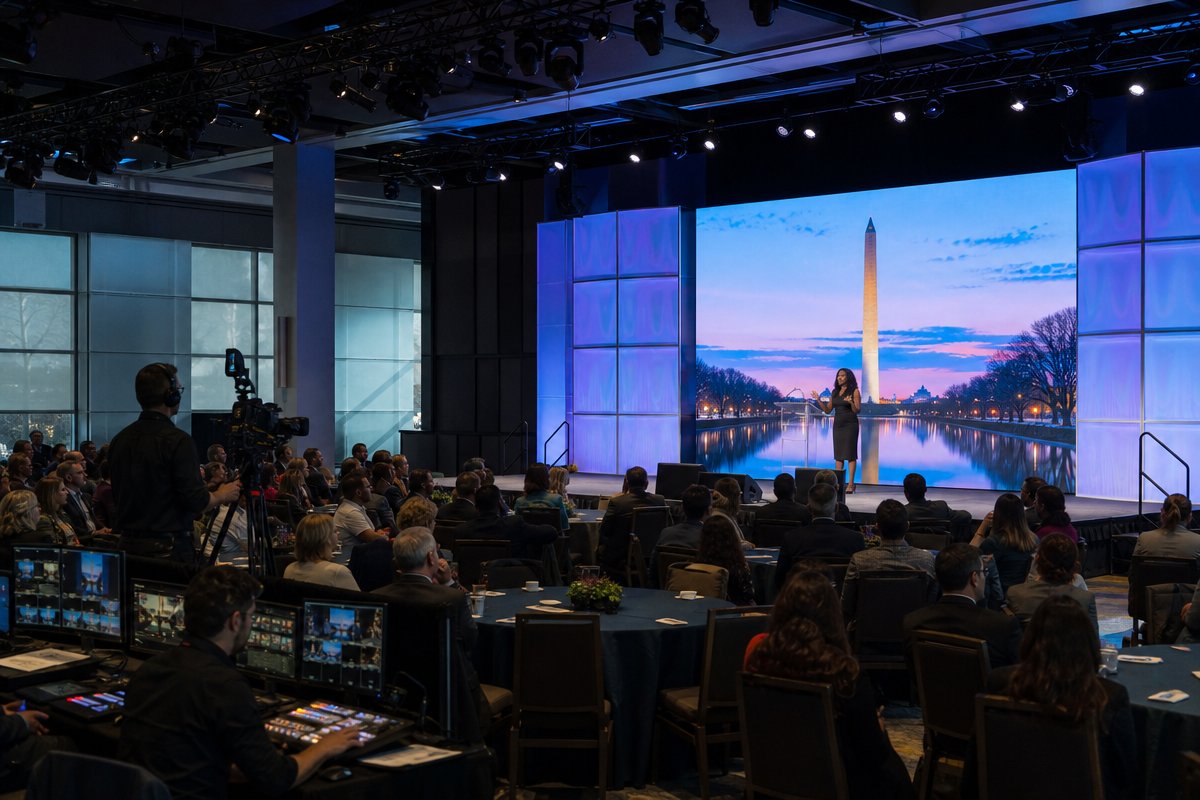
- Video: A single LED wall upstage center often replaces the need for multiple projection screens – and it looks dramatically better on camera for your livestream and post-event recap video.
- Lighting: Uplighting around the perimeter, a focused stage wash, and two or three spotlights can transform a ballroom. You do not need a full concert rig.
3. Bundle Services With a Full-Service Partner
Hiring separate vendors for audio, video, lighting, staging, and show management almost always costs more than working with a single full-service event production company. Beyond the price savings, a bundled approach eliminates coordination headaches, reduces the number of load-in crews competing for dock time, and gives you a single point of contact on show day.
TriVision provides end-to-end event production – audio solutions, LED walls, projection and monitors, lighting design, staging and scenic, strategy and creative direction, show management, and video solutions – all under one roof. For nonprofits, this means one proposal, one contract, and one team that owns the outcome.
4. Leverage Venue Infrastructure
Many DC venues – the Ronald Reagan Building, the National Building Museum, various Marriott and Hilton properties – have in-house rigging points, power drops, and even basic AV infrastructure. A production team that knows these venues intimately (as TriVision does after three decades in the DMV) can tap into existing infrastructure rather than bringing in redundant equipment, saving thousands of dollars.
5. Plan for Repurposable Content
Your event is not a one-night expense; it is a content engine. Budget for a multi-camera video capture and professional audio feed so you can repurpose keynote speeches, testimonial videos, and highlight reels across your digital fundraising campaigns, social media, email marketing, and annual reports. The marginal cost of capturing content during an event you are already producing is far less than staging a separate video shoot later.
6. Choose Dates and Timelines Strategically
DC’s event calendar has clear peak and off-peak windows. Booking your event during a slower period (summer months or early January) can reduce venue costs and give you more negotiating leverage with vendors. Similarly, allowing adequate lead time – ideally 8–12 weeks for production planning – prevents rush fees and gives your production partner time to source equipment efficiently.
Real-World Budget Scenarios: What DC Nonprofits Can Expect
To make this actionable, here are three composite budget scenarios based on events TriVision has produced for nonprofit clients in the DC metro area. These are illustrative ranges, not fixed quotes, as every event is unique.
Scenario A: Intimate Fundraising Dinner (100–150 Guests)
- Venue: Boutique hotel or restaurant private dining room
- Production elements: Wireless microphone package (2–4 channels), a single 55” or 65” LED monitor on a stand for sponsor recognition and impact video, basic uplighting (8–12 fixtures), background music playback
- Estimated production budget: $3,500–$7,000
- Impact tip: Invest in a high-quality wireless lapel mic for your keynote speaker and a polished 90-second impact video. These two elements alone can double your live-ask results.
Scenario B: Annual Gala (300–600 Guests)
- Venue: Hotel ballroom or historic DC event space
- Production elements: LED video wall (8’x14’ to 10’x18’), professional sound system with 6–8 wireless mic channels, stage lighting with spotlights, pre-designed motion graphics and speaker support slides, show management and a stage manager, live-stream feed
- Estimated production budget: $15,000–$35,000
- Impact tip: A skilled show manager keeps your program on time and your audience engaged. This role alone is worth its weight in donations – literally. A program that runs long loses attendees before the fundraising appeal.
Scenario C: Multi-Day Conference or Advocacy Summit (500–1,500 Attendees)
- Venue: Convention center or large hotel conference space
- Production elements: Main-stage LED wall, breakout-room AV packages, confidence monitors, IMAG (image magnification) cameras, professional lighting rig, hybrid streaming platform integration, on-site technical director
- Estimated production budget: $40,000–$80,000+
- Impact tip: Negotiate breakout-room AV as a bundle with your main-stage package. Vendors (including TriVision) can often offer significant per-room discounts when you consolidate.

How to Evaluate a Nonprofit Event Production Partner in DC
Not all production companies are created equal, and not all are well-suited to the nonprofit sector. Here is what to look for when vetting potential partners for your next event:
- Nonprofit experience: Ask for case studies or references from similar organizations. A company that has worked with associations, advocacy groups, and charitable foundations understands your unique dynamics – tight timelines, volunteer-heavy teams, board-level oversight, and the importance of every budget line item.
- Transparent pricing: Beware of vague proposals. Your production partner should provide line-item quotes so you know exactly what you are paying for and can make informed trade-off decisions.
- Scalability: Can the company scale from a 100-person dinner to a 1,500-person conference? A partner that grows with you saves onboarding time and institutional knowledge year over year.
- Local venue expertise: DC venues have quirks. Your production team should know load-in protocols, power capacity, rigging limitations, and union requirements at every major venue in the District, Northern Virginia, and Maryland.
- Creative and strategic input: The best production companies do not just set up equipment – they help you design an experience. Look for a partner that offers strategy, creative direction, and show management as part of their service portfolio.
Maximizing Sponsor Value Through Production
For many nonprofits, corporate sponsorships offset a significant portion of event costs. Smart production choices can increase the perceived value of your sponsorship packages – helping you attract higher-tier sponsors and generate more revenue.
Branded Content on LED Walls
An LED video wall is not just a presentation tool; it is premium sponsor real estate. Rotating sponsor logos, animated sponsor reels during cocktail receptions, and branded lower-thirds during livestreams give sponsors visible, high-value exposure that justifies larger sponsorship commitments.
Livestream and On-Demand Impressions
When you add a professional livestream to your event, you can offer sponsors digital impressions that extend well beyond the in-room audience. Include sponsor branding in your stream overlays, pre-roll, and post-event video – and quantify those impressions in your sponsorship deck.
Professional Event Photography and Video
Sponsors love shareable content. A multi-camera video capture and professional event photography provide assets that sponsors can use in their own marketing, making your event a more attractive investment.
Frequently Asked Questions About Nonprofit Event Production in DC
How much does nonprofit event production in DC typically cost?
Costs vary widely based on event size, venue, and production complexity. A small fundraising dinner may require $3,500–$7,000 in production, while a large annual gala can range from $15,000 to $35,000. Multi-day conferences with breakout rooms and hybrid streaming can reach $40,000–$80,000 or more. The most important factor is working with a production partner who helps you allocate every dollar toward maximum audience impact.
Can a nonprofit event look professional on a limited budget?
Absolutely. The secret is prioritization. Invest in the elements your audience will notice most – clear audio, a sharp video display for your impact content, and focused stage lighting. Simplify or eliminate elements that add cost without proportional impact, such as elaborate scenic builds or excessive floral arrangements. A skilled production team can make a modest budget look and sound like a premium experience.
What is the biggest mistake nonprofits make with event production?
Waiting too long to engage a production partner. When nonprofits bring in AV and production as an afterthought – sometimes just two or three weeks before the event – they lose the ability to plan strategically, negotiate pricing, and avoid rush fees. We recommend engaging your production company at least 8–12 weeks before your event date, ideally at the same time you confirm your venue.
Should our nonprofit event include a livestream or hybrid component?
In most cases, yes. A livestream extends your reach to donors who cannot attend in person – whether they are across the country or simply unable to make it that evening. It also creates a content archive you can use for year-round fundraising. The incremental cost of adding a professional livestream to an event you are already producing is modest compared to the donor engagement and content value it delivers.
How do we choose between an LED wall and projection screens?
LED walls offer brighter, higher-contrast visuals that look stunning even in partially lit ballrooms – ideal for galas where ambient lighting is part of the atmosphere. Projection screens are more cost-effective for breakout rooms or venues where you can fully control ambient light. Your production partner should recommend the right solution based on your specific venue, audience size, and content needs.
Does TriVision work with nonprofits on flexible payment terms?
TriVision understands the nonprofit budget cycle. We work with organizations to structure proposals and payment timelines that align with your fiscal calendar and sponsorship revenue flow. We encourage you to reach out early so we can build a plan that fits your financial reality.
Make Your Next Nonprofit Event Count – Without Breaking the Bank
Your cause is too important for a forgettable event. Whether you are planning a 150-person fundraising dinner in Georgetown, an annual gala at a landmark DC hotel, or a multi-day advocacy conference in Northern Virginia, the right production partner makes the difference between an event that simply happens and one that moves people to act.
TriVision Event Production has spent over 30 years helping nonprofits and organizations across Washington DC, Northern Virginia, and Maryland deliver high-impact events on real-world budgets. From audio and lighting to LED walls, staging, show management, and creative strategy, we bring the full-service expertise that ensures your event looks, sounds, and feels extraordinary – every single time.
Ready to start planning your 2026 nonprofit event? Contact TriVision Event Production today for a complimentary consultation and discover how smart nonprofit event production DC strategies can maximize your impact without maximizing your spend.
Let’s talk about your event
Tell us the date and the room - we’ll bring the plan.