
Quick answer: Government event production in DC differs from corporate work in three areas: procurement (contract vehicles and vendor vetting), security (facility access, personnel screening, and equipment protocols), and compliance (including Section 508 accessibility for all AV content). Engage a partner experienced in all three before you issue an RFQ.
Producing an event for a federal agency is not the same as producing a corporate gala or association conference. If you have ever navigated the labyrinth of government procurement rules, facility security protocols, and strict technical specifications, you already know: government event production in DC demands a specialized partner who understands what is at stake. Federal agencies collectively spend heavily on conferences, meetings, and training events – and every dollar is subject to oversight, audit, and public scrutiny. In 2026, with evolving cybersecurity mandates and tightened spending accountability, the margin for error is essentially zero.
This guide is built for contracting officers, federal event coordinators, and agency program managers who need a clear, actionable roadmap to producing compliant, secure, and technically flawless government events in Washington DC.

Why Government Event Production in DC Requires a Different Approach

Washington DC is the epicenter of federal activity, and that geography introduces layers of complexity that simply do not exist in the private sector. From the Ronald Reagan Building to agency-specific conference centers and secure facilities across the capital, every venue carries its own set of rules, access restrictions, and technical limitations.
The Core Differences from Corporate Events
- Procurement and contracting: Government events must comply with the Federal Acquisition Regulation (FAR) and agency-specific acquisition supplements. Vendors typically need to be registered in SAM.gov, hold appropriate NAICS codes, and respond to formal RFQs or task orders rather than informal proposals.
- Spending oversight: The Government Conference and Travel Spend Act and OMB Memoranda impose strict caps and reporting requirements on event spending. Every line item – from AV rental to catering – must be justifiable and documented.
- Security requirements: Many government events involve classified or sensitive information, requiring facility security clearances, controlled access, and cybersecurity protocols for all connected technology.
- Accessibility mandates: Section 508 of the Rehabilitation Act requires that all electronic and information technology used at federal events – including AV presentations, livestreams, and digital signage – be fully accessible to individuals with disabilities.
- Branding and messaging restrictions: Government agencies operate under strict communication guidelines, meaning creative assets, signage, and video content must be approved through official channels and often require plain language compliance.
An event production company that excels in the private sector may stumble badly when faced with these requirements. The most successful government events in DC are produced by teams that have navigated these waters repeatedly and understand how to deliver excellence within the framework of federal compliance.
Navigating Procurement: How to Engage an AV and Event Production Partner
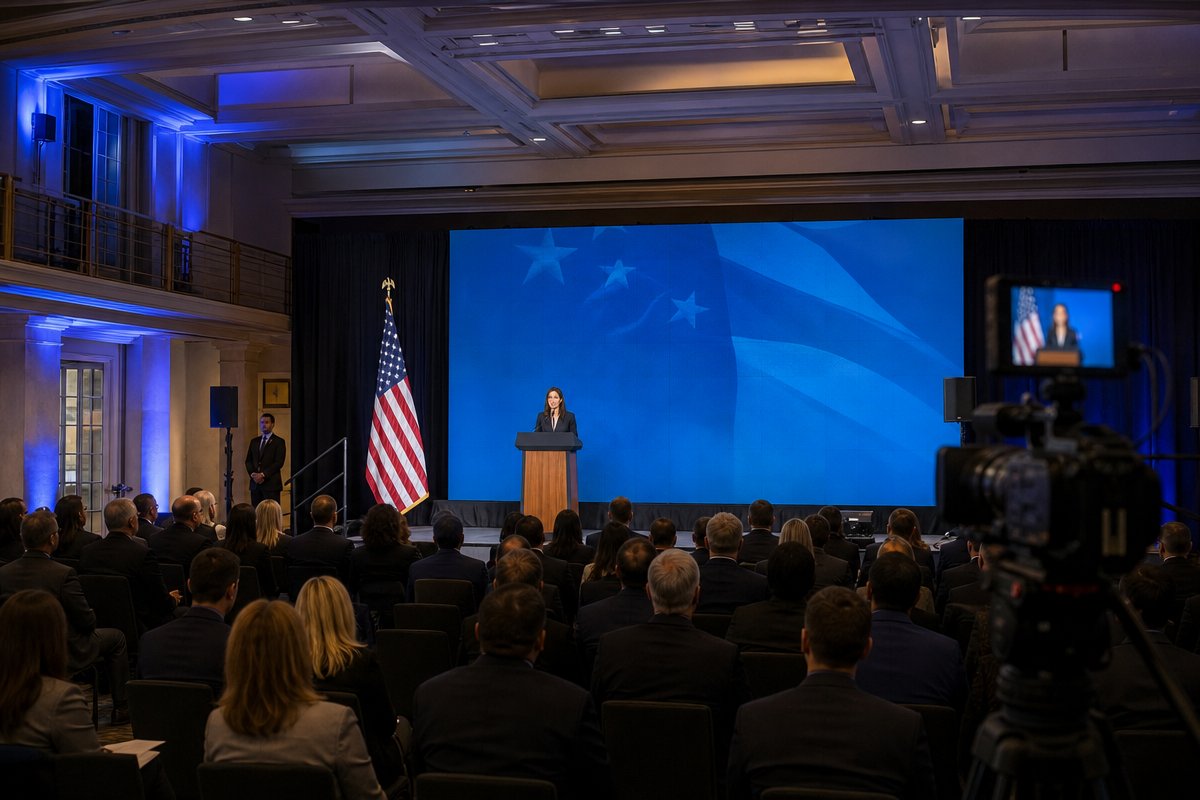
The procurement process for government event production is often the first hurdle – and the one that causes the most delays. Understanding the process early allows agencies to secure the right partner without scrambling at the last minute.
Key Procurement Pathways
- GSA Schedule contracts: Many agencies prefer vendors on the GSA Multiple Award Schedule (MAS), which streamlines the acquisition process. Event production companies listed on relevant GSA schedules have already been vetted for pricing, capability, and compliance.
- Blanket Purchase Agreements (BPAs): For agencies that host recurring events, establishing a BPA with a trusted production partner reduces procurement lead times and ensures consistency in quality and pricing.
- Task orders under IDIQ contracts: Indefinite Delivery/Indefinite Quantity contracts allow agencies to issue task orders for specific events, providing flexibility while maintaining competitive pricing structures.
- Micro-purchases and simplified acquisition: For smaller events falling under the simplified acquisition threshold, agencies have more flexibility – but still must document the purchase and ensure fair and reasonable pricing.
What Agencies Should Look for in a Vendor
- Active SAM.gov registration with relevant NAICS codes (e.g., 512110, 532490, 711310)
- Demonstrated past performance on federal contracts with verifiable references
- Understanding of FAR clauses related to event services, including limitations on conference spending
- Capability to provide detailed cost breakdowns that withstand audit scrutiny
- Insurance coverage meeting government minimums, including general liability and workers’ compensation
TriVision Event Production has supported federal agencies and government-adjacent organizations across the DC region for over 30 years, maintaining the documentation standards, pricing transparency, and operational discipline that government procurement demands.
Security Clearance and Facility Access: What Your Production Team Needs
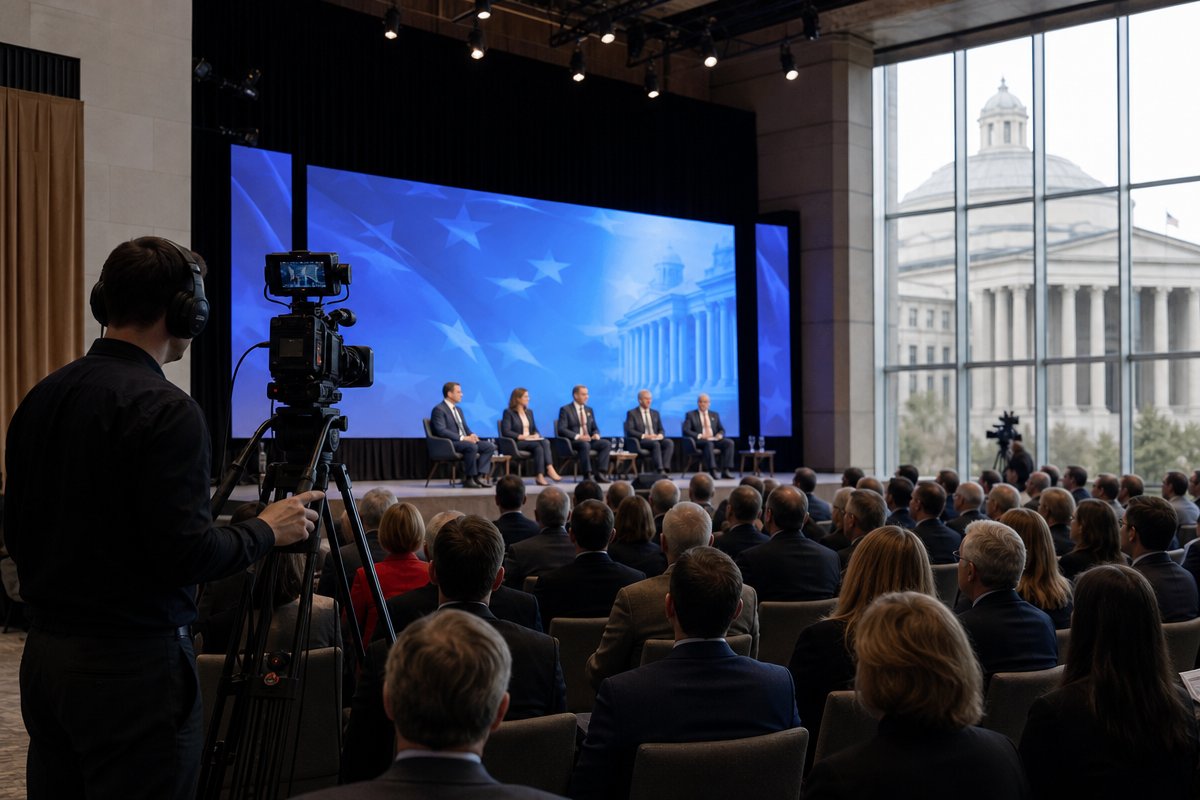
Security is not optional in government event production – it is foundational. Whether you are producing a town hall at a federal building, a training event at a military installation, or a classified briefing in a SCIF-adjacent space, your AV and production crew must meet stringent security requirements.
Common Security Protocols for Government Events
- Personnel vetting: All production crew members typically must pass background checks. For events at classified facilities, personnel may need active security clearances at the appropriate level (Confidential, Secret, or Top Secret).
- Equipment inspection: AV equipment, cases, cables, and staging materials are subject to security screening before entering federal buildings. Production teams must build extra load-in time into their schedules to accommodate these inspections.
- Network and cybersecurity: Any equipment that connects to a federal network – including streaming encoders, wireless microphone systems, and presentation laptops – must comply with agency cybersecurity policies. In many cases, agencies will require that production equipment operate on isolated networks.
- Photography and recording restrictions: Some government events prohibit photography or video recording entirely. Others permit recording but require that all footage be reviewed and approved before release. Your production partner must understand and enforce these restrictions.
- Controlled Unclassified Information (CUI): If event presentations include CUI, the production team must handle, display, and dispose of materials in accordance with NIST SP 800-171 guidelines.
Planning for Security Lead Times
One of the most common mistakes in government event production is underestimating security lead times. Submitting crew lists, equipment manifests, and vehicle information often must happen weeks – sometimes months – before the event date. Experienced production partners build these timelines into their project management workflow from day one, preventing last-minute access denials that can derail an entire event.
AV Technical Requirements for Federal Events in 2026
Government events in Washington DC demand technical precision. Whether it is a multi-day conference at the Walter E. Washington Convention Center or an executive briefing in an agency conference room, the AV infrastructure must perform flawlessly while meeting federal standards.
Audio Solutions for Government Spaces
Government venues range from historic buildings with challenging acoustics to modern conference centers designed for amplified speech. Key audio considerations include:
- Line array and point-source speaker systems properly tuned for the room
- Redundant wireless microphone systems operating on coordinated frequencies (critical in DC’s crowded RF environment)
- Assistive listening systems compliant with ADA and Section 508 requirements
- Simultaneous interpretation systems for multilingual events, including real-time translation booths and receiver distribution
Video and Display Technology
LED video walls, projection systems, and confidence monitors are staples of government event production. In 2026, agencies increasingly expect:
- High-resolution LED walls for keynote stages, providing vibrant visuals even in ambient-lit rooms
- IMAG (image magnification) with broadcast-quality cameras for large-audience events
- Hybrid event capabilities including professional livestreaming, virtual attendee integration, and on-demand recording
- Section 508-compliant captioning displayed on screens, integrated into livestreams, and available in archived recordings
Lighting and Staging
Lighting design for government events must balance professionalism with practicality. Agency events typically call for clean, authoritative stage looks – not the theatrical drama of an awards show. Staging must accommodate agency seals, flags, branded backdrops, and accessible podium configurations including wheelchair-accessible lecterns.
Section 508 Compliance and Accessibility: Non-Negotiable Standards
Federal law requires that all information and communication technology used at government events be accessible. This is not a best practice – it is a legal mandate, and failure to comply can result in formal complaints filed with agency civil rights offices.
What Section 508 Means for Event Production
- Captioning: All live presentations, videos, and livestreams must include real-time captioning (CART services) or pre-produced captions.
- Audio description: Video content with meaningful visual information must include audio descriptions for attendees who are blind or have low vision.
- Accessible presentation materials: Slides, handouts, and digital documents must be formatted for screen reader compatibility.
- Assistive technology integration: Hearing loops, FM/IR assistive listening devices, and sign language interpretation must be available upon request – and often proactively provided.
- Physical stage accessibility: Stages and presentation areas must include ramp access, and podiums must be adjustable or available in wheelchair-accessible configurations.
A production company experienced in government events will proactively plan for these requirements rather than treating them as afterthoughts. TriVision integrates accessibility planning into every government event project from the initial proposal phase, ensuring full compliance without last-minute scrambles.

Frequently Asked Questions About Government Event Production in DC
What makes government event production different from corporate event production?
Government event production in DC involves federal procurement regulations (FAR compliance), security clearance requirements for crew and equipment, mandatory Section 508 accessibility standards, strict spending oversight and audit documentation, and venue-specific access protocols at federal facilities. Corporate events rarely face this combination of regulatory and security constraints.
Does my AV production company need a security clearance to work at government events?
It depends on the venue and event classification. Events at federal buildings typically require background checks for all crew members. Events involving classified information or held at military installations may require active facility security clearances. Your production partner should have established processes for personnel vetting and should be prepared to submit crew information well in advance of the event date.
How far in advance should a government agency engage an event production partner?
For large conferences and multi-day events, agencies should begin the procurement and planning process at least four to six months in advance. This accounts for procurement timelines, security vetting, venue coordination, and technical planning. Smaller events – briefings, town halls, training sessions – may require two to three months of lead time, especially if they are held in secure facilities.
What does Section 508 compliance require for event AV?
Section 508 requires that all electronic and information technology be accessible to people with disabilities. For event production, this means providing real-time captioning for all live presentations and streams, offering assistive listening devices, ensuring video content includes audio descriptions when necessary, making presentation materials screen-reader compatible, and providing sign language interpretation when requested. These are legal requirements for federal events, not optional enhancements.
Can a single vendor handle all AV, staging, and production for a government event?
Yes. Full-service event production companies like TriVision provide end-to-end solutions covering audio, video, lighting, LED walls, staging, scenic design, show management, and hybrid event technology. Working with a single vendor simplifies procurement, reduces coordination risks, and provides a single point of accountability – which is especially valuable in the government context where documentation and contractor management are closely scrutinized.
How does the RF environment in Washington DC affect wireless AV equipment?
Washington DC has one of the most congested radio frequency environments in the country due to the concentration of government communications, broadcast media, and embassy operations. Wireless microphones, in-ear monitors, and intercom systems must be carefully frequency-coordinated to avoid interference. Experienced DC production companies conduct RF scans before events and use professional-grade wireless systems capable of operating reliably in this challenging environment.
Partnering with the Right Government Event Production Team in DC
Producing a successful government event in Washington DC requires more than great AV equipment and a talented crew. It requires a production partner who understands the regulations, respects the security environment, delivers Section 508 compliance as a standard practice, and has the operational maturity to withstand the scrutiny that comes with spending public funds.
TriVision Event Production has served government agencies and organizations across Washington DC, Northern Virginia, and Maryland for over 30 years. Our team understands the unique demands of government event production in DC – from procurement and compliance to security protocols and accessible AV solutions. We deliver end-to-end production services including audio, video, LED walls, lighting, staging, and show management, all backed by decades of experience in the federal space.
Ready to plan your next government event with a team that understands the stakes? Contact TriVision Event Production to start the conversation and discover how we can deliver a flawless, fully compliant event experience for your agency.
Let’s talk about your event
Tell us the date and the room - we’ll bring the plan.