
Quick answer: Custom-built scenic staging is worth it when brand impact, unusual venue geometry, or one-of-a-kind reveals justify the higher cost and longer timeline; modular rental decks win on speed, predictable pricing, and proven load capacity. Many DC events get the best result from a hybrid: a rental deck structure dressed with custom scenic elements.
Every event planner in the nation’s capital eventually faces the same crossroads: do you invest in a custom-built scenic stage that turns heads, or do you go with a modular rental deck system that gets the job done on time and on budget? Staging and scenic design now claim a meaningful share of total event production budgets for large-scale corporate gatherings – and that share has grown steadily in recent years. Choosing the right approach is not just an aesthetic decision; it directly affects your timeline, your logistics, and your bottom line. If you are searching for a reliable staging company in Washington DC, understanding the real differences between custom builds and rental decks is the first step toward making a confident, informed choice for your 2026 event.
In this guide, we break down everything you need to know – from structural engineering and lead times to budget considerations and venue compatibility – so you can match the right staging solution to your specific event goals in the DMV region.
What Custom-Built Scenic Staging Actually Means

When event professionals talk about custom-built scenic staging, they are referring to structures designed and fabricated from scratch for a single event or a specific creative vision. These stages are not pulled off a warehouse shelf. They are conceived during a creative strategy session, drafted in CAD software, built in a fabrication shop, transported to the venue, assembled on-site, and then typically broken down and recycled or stored for future use.
Key Characteristics of Custom Builds
- One-of-a-kind design: Every element – from the shape of the stage to the scenic panels, integrated LED mounting points, and branding surfaces – is purpose-built for your event.
- Material flexibility: Custom stages can incorporate wood, steel, aluminum, acrylic, fabric scrims, foam sculpting, and even living greenery. The only limit is imagination and engineering.
- Brand integration: Custom builds allow you to embed logos, color palettes, and thematic elements directly into the structure rather than relying on overlays or banner attachments.
- Complex geometries: Need a curved proscenium, a multi-level keynote platform, or a wraparound stage that extends into the audience? Custom is the path.
When Custom Builds Make Sense
Custom scenic staging is the right call when the event demands a high-impact visual statement that cannot be achieved with standard modular components. Think annual galas for associations with 1,000+ attendees, product launches where the stage is the brand experience, award ceremonies broadcast on camera, or government summits where protocol requires precise configurations. In Washington DC – where events at venues like the Walter E. Washington Convention Center, the Ronald Reagan Building, and the Kennedy Center regularly draw national media attention – the visual stakes are exceptionally high.
Custom builds also make sense when you are planning a recurring event series with a consistent look. The initial investment can be amortized over multiple deployments, and a skilled staging company in Washington DC will store and maintain your scenic pieces between events.
Modular Rental Deck Systems Explained
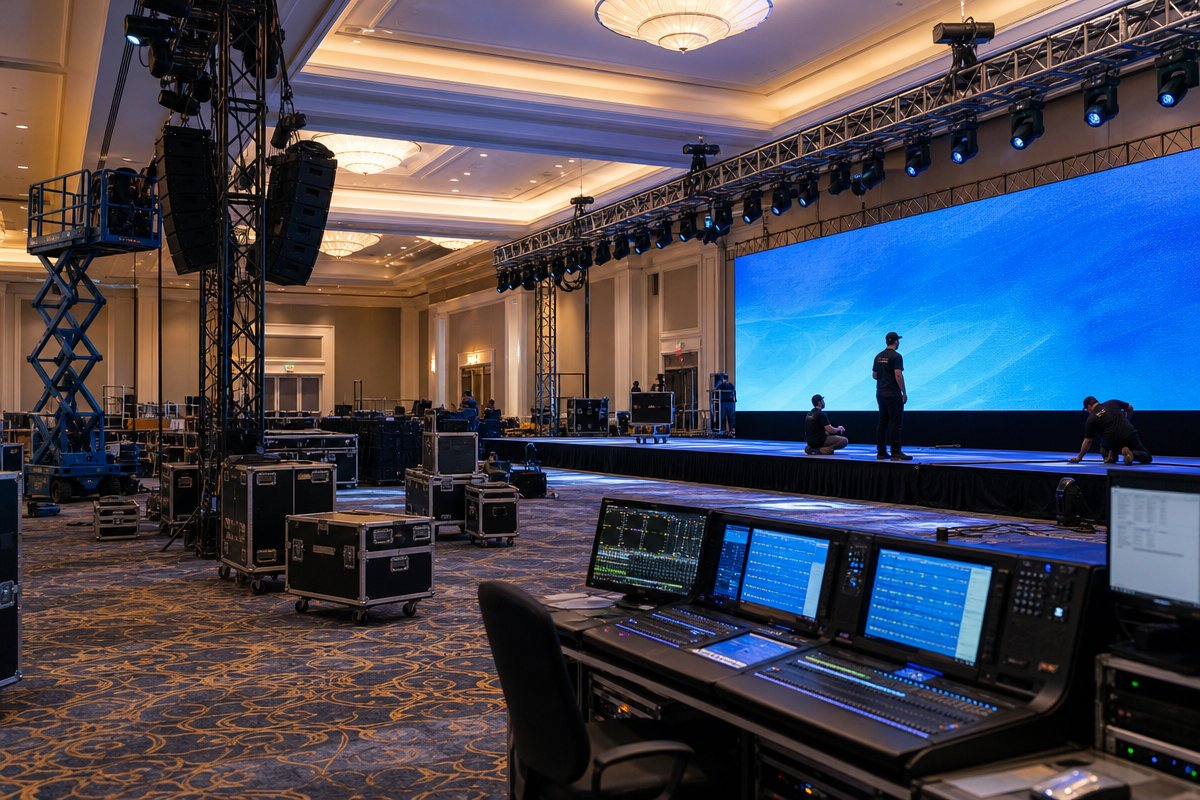
Modular rental deck systems – sometimes called portable staging, rental risers, or deck-and-leg systems – are standardized staging platforms manufactured by companies like StageRight, Staging Dimensions, and Wenger. They consist of interchangeable deck panels (commonly 4’×4′ or 4’×8′) supported by adjustable legs that can be set to various heights.
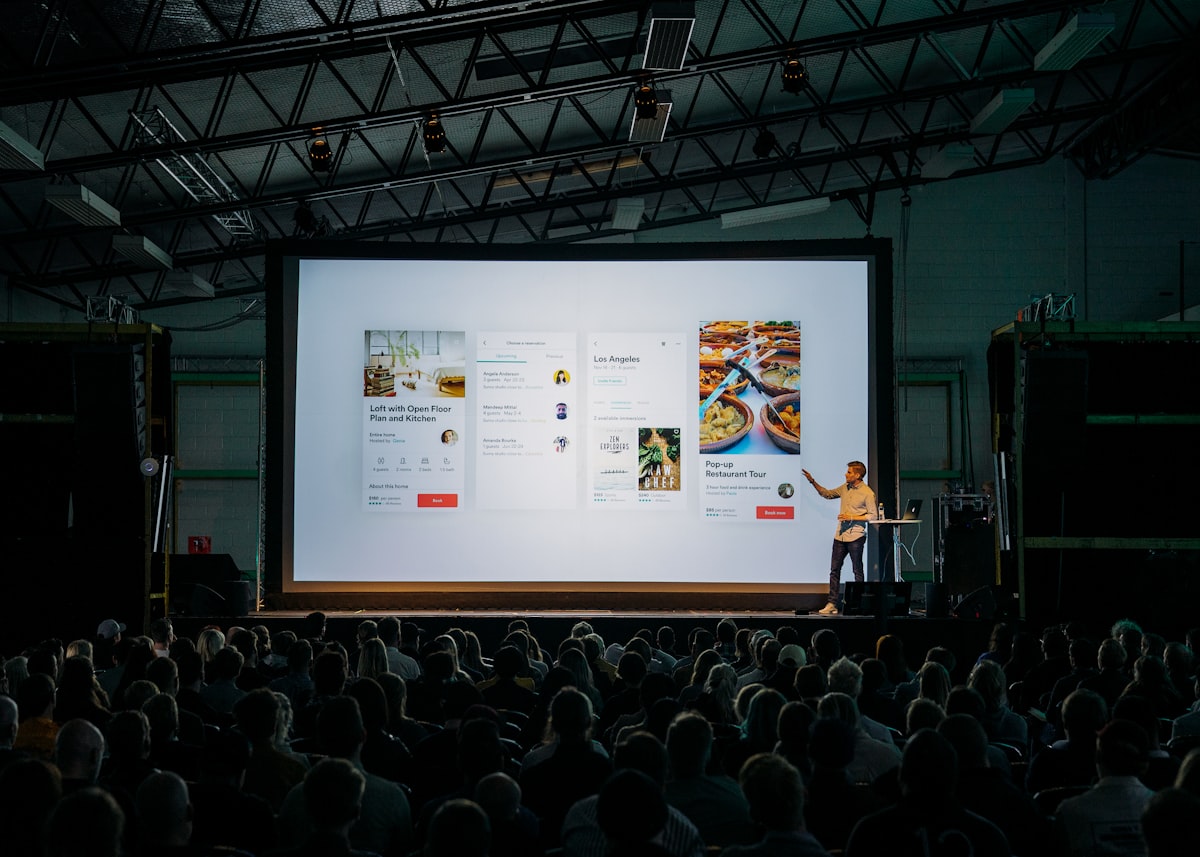
Key Characteristics of Rental Decks
- Standardized sizing: Deck panels snap or bolt together in a grid pattern, making it easy to create stages of almost any rectangular or L-shaped footprint.
- Adjustable heights: Legs typically adjust in increments from 16 inches to 48 inches, accommodating different sightline requirements and ADA accessibility ramps.
- Fast setup and strike: A skilled crew can build a 24’×16′ stage in under two hours and break it down even faster.
- Finish options: Decks come with carpet, hardwood, or industrial surfaces. Skirting in various colors hides the legs and gives a polished look.
- Proven load ratings: Modular systems are engineer-rated for specific weight capacities (often 125–200 psf), providing documented safety for rigging, heavy equipment, and large groups of performers.
When Rental Decks Make Sense
Rental decks are ideal when you need a reliable, safe, and budget-conscious platform and the event does not hinge on a bespoke visual design. They are the go-to choice for conference keynotes, panel discussions, breakout sessions, town halls, press briefings, training events, and any situation where the content on stage matters more than the stage itself. In the DC market, where government agencies and associations frequently run multi-day conferences with dozens of breakout rooms, modular rental decks deliver the consistency and speed that tight schedules demand.
Custom Builds vs. Rental Decks: A Side-by-Side Comparison
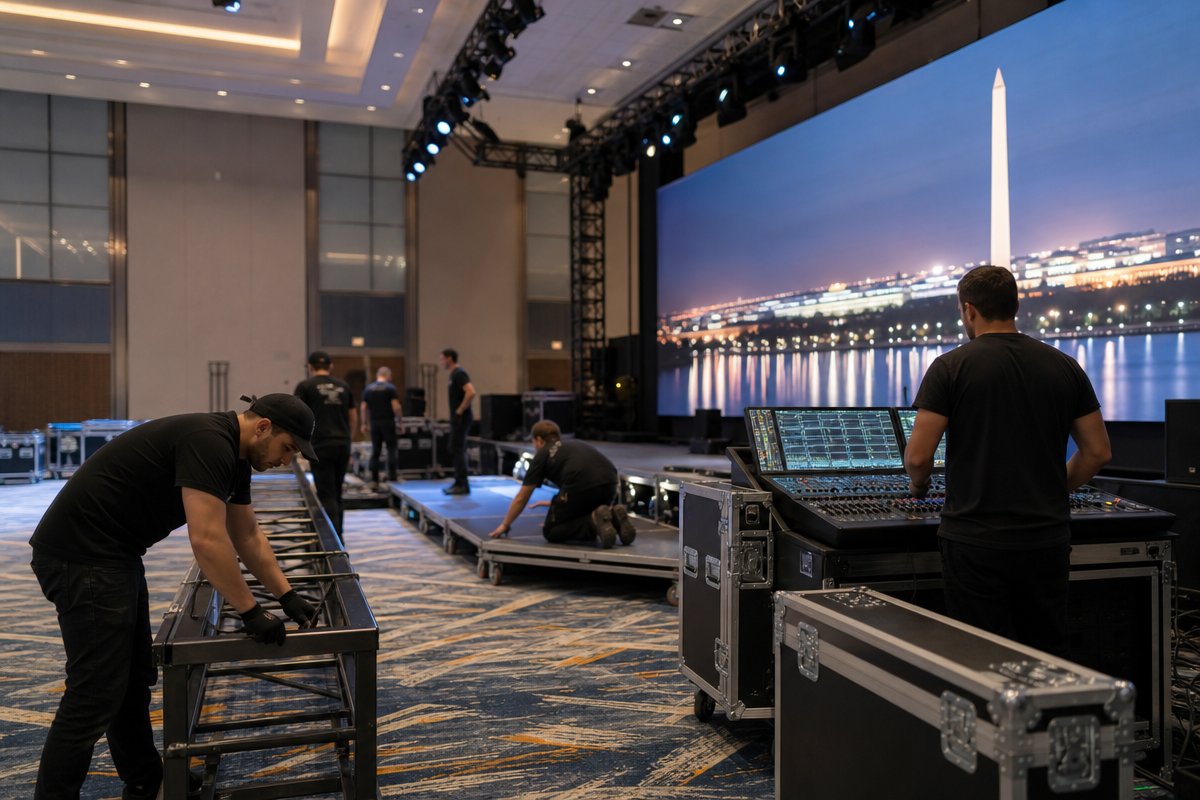
Below is a practical comparison across the factors that matter most to event planners working with a staging company in Washington DC:
- Design flexibility: Custom builds offer unlimited creative freedom. Rental decks are limited to rectangular or simple geometric footprints unless combined with custom fascia or scenic overlays.
- Lead time: Custom scenic staging typically requires 4–8 weeks for design, approval, and fabrication. Rental decks can be reserved and deployed with as little as one week’s notice, depending on inventory availability.
- Budget impact: Custom builds carry higher upfront costs because of design labor, materials, and fabrication. Rental decks are priced per piece per day, making costs predictable and scalable. For a mid-size corporate event, rental staging might run between $1,500 and $5,000, while a comparable custom scenic build could range from $8,000 to $30,000 or more.
- Load-in and load-out time: Custom pieces often require larger crews, specialized rigging, and longer install windows – sometimes a full day or more. Modular decks load in and out in a fraction of that time.
- Transportation and logistics: Custom builds may require box trucks or flatbed trailers. Rental decks stack efficiently and fit into standard cargo vehicles.
- Reusability: Custom elements can be reused if stored properly, but they are event-specific. Rental decks are inherently reusable across unlimited events.
- Visual impact: Custom staging wins decisively when the goal is a memorable, photogenic, broadcast-ready environment. Rental decks, while clean and professional, do not generate the same ‘wow’ factor on their own.
- Venue compatibility: Both options need to meet venue load-in specifications, floor load limits, and fire marshal requirements. However, custom builds may require structural engineering approvals that rental systems already carry.
The Hybrid Approach: Getting the Best of Both Worlds
Experienced event production teams – especially those with deep roots in the Washington DC market – know that the choice is not always binary. A hybrid approach combines modular rental decks as the structural foundation with custom scenic overlays, fascia panels, branded backdrops, integrated LED walls, and architectural lighting to create a visually stunning environment without the full cost and lead time of a ground-up custom build.
How the Hybrid Model Works
- Start with modular decks: Build the stage platform using standard rental deck panels at the appropriate height and footprint for the venue.
- Add custom fascia and skirting: Replace generic stage skirting with branded fascia panels, dimensional lettering, or illuminated edge treatments that align with the event theme.
- Integrate scenic backdrops: Commission a custom backdrop – whether it is a hard-set scenic wall, a tension-fabric graphic, or a full LED video wall – that sits behind the stage and delivers visual impact.
- Layer in lighting design: Architectural uplighting, gobo projections, and intelligent moving fixtures transform a standard stage into a dynamic environment without any structural modification to the decks.
- Coordinate with AV: Ensure monitor placements, confidence monitors, speaker positions, and camera sightlines are integrated into the staging plan from day one.
This hybrid model is especially popular for events at DC-area hotels and convention venues where load-in windows are tight and floor space is at a premium. It gives planners the speed and cost predictability of rental decks with the visual sophistication of custom scenic work – a combination that delivers high ROI without unnecessary risk.
What to Look for in a Staging Company in Washington DC
Whether you choose custom, rental, or hybrid staging, the company you partner with makes all the difference. Here are the criteria that separate a capable staging company in Washington DC from a risky vendor:
- In-house design and fabrication: Companies that design and build under one roof maintain tighter quality control and faster turnaround than those who outsource fabrication to third parties.
- Full-service production capabilities: Staging does not exist in isolation. The best partners also handle audio, video, lighting, show management, and creative strategy so that every element is designed to work together from the first CAD drawing.
- Venue knowledge: DC venues come with unique challenges – freight elevators at the Marriott Marquis, loading docks at the Convention Center, historic preservation rules at landmark buildings. A local company with decades of experience navigates these constraints effortlessly.
- Safety and compliance: Look for companies that carry comprehensive general liability insurance, follow OSHA rigging standards, and have documented safety protocols for every build.
- References and portfolio: Ask for case studies, photos, and client references from events comparable in scale and complexity to yours.
- Transparent pricing: You should receive a detailed line-item estimate – not a lump-sum quote with hidden fees for labor, transportation, or overtime.
Frequently Asked Questions
How far in advance should I book a staging company in Washington DC?
For events using standard rental decks, booking 4–6 weeks in advance is generally sufficient, though peak season (March–June and September–November) can strain inventory. For custom scenic builds, plan on 8–12 weeks minimum to allow time for design collaboration, engineering approval, fabrication, and a pre-event walkthrough. The earlier you engage your staging partner, the more creative latitude you will have.
Can rental decks support heavy equipment like LED walls and speakers?
Yes. Most professional-grade modular deck systems are engineer-rated for 125–200 pounds per square foot, which comfortably supports LED panels, speaker stacks, podiums, furniture, and groups of performers. However, the staging company must verify that the combined load – including dynamic loads from movement – stays within rated limits. For very heavy installations, ground-supported truss or supplemental steel framing may be required beneath or alongside the decks.
Is custom staging worth the cost for a one-time event?
It depends on the event’s objectives. If the stage is a centerpiece of brand storytelling – as in a major product launch, a televised awards ceremony, or a gala with significant donor visibility – the investment in custom scenic staging often pays for itself in media coverage, attendee engagement, and brand perception. For a standard conference keynote or internal meeting, rental decks with targeted scenic enhancements typically deliver a stronger cost-to-impact ratio.
What is the typical cost difference between custom builds and rental decks?
As a general benchmark for DC-area events, a modular rental stage setup (including delivery, installation, skirting, stairs, and ADA ramp) might range from $1,500 to $6,000 depending on size and duration. A custom scenic stage of comparable footprint with branded fascia, dimensional elements, and integrated mounting points can range from $10,000 to $40,000 or more. The hybrid approach typically falls in the $5,000 to $15,000 range, offering a meaningful step up in visual quality without the full custom price tag.
Do I need separate vendors for staging, lighting, and AV?
You can hire separate vendors, but doing so introduces coordination risk. When one company manages staging, lighting, audio, video, and show management, every element is designed as an integrated system. Sightlines, cable runs, power distribution, and load-in schedules are planned holistically, which reduces setup time, prevents conflicts, and provides a single point of accountability on event day.
Can a staging company handle outdoor events in DC?
Absolutely. Outdoor events on the National Mall, at park venues, or on private grounds require additional considerations – ground protection, weather contingencies, generator power, wind load calculations for scenic elements, and permitting. An experienced DC staging company will manage all of these logistics and coordinate with relevant authorities, including the National Park Service when applicable.
Make the Right Staging Decision for Your 2026 Event
Choosing between custom-built scenic staging and modular rental decks is not about picking one as universally better. It is about matching the right solution to your event’s goals, budget, timeline, and venue constraints. For high-visibility, brand-driven events in the Washington DC area, custom scenic staging delivers unmatched visual impact. For efficient, multi-room, or budget-conscious events, modular rental decks provide the reliability and speed you need. And for the many events that fall somewhere in between, the hybrid model gives you the best of both worlds.
At TriVision Event Production, we have spent over 30 years serving as a trusted staging company in Washington DC, Northern Virginia, and Maryland. Our team handles everything from initial creative strategy through scenic fabrication, modular staging, lighting design, LED integration, audio, video, and full show management – all under one roof. Whether your event calls for a dramatic custom build, a clean and efficient rental deck setup, or a smart hybrid approach, we bring the expertise, the inventory, and the local venue knowledge to deliver flawlessly.
Ready to plan your staging? Contact TriVision Event Production today to schedule a consultation and get a detailed proposal tailored to your 2026 event.
Let’s talk about your event
Tell us the date and the room - we’ll bring the plan.