
Quick answer: A complete corporate event production scope includes pre-production (discovery, creative direction, technical planning), audio (system design, microphones, engineering), visual technology (LED walls, projection, cameras, switching), lighting design, staging and scenic elements, and show management with a dedicated show caller.
You signed the contract with an event production company for corporate events, and now you are staring at a statement of work full of line items you have never seen before. You are not alone. Many corporate event planners tell us they are unsure what deliverables should be included in a full-service production agreement. The gap between expectation and reality is where budgets balloon, timelines slip, and events underwhelm. This post breaks down every deliverable you should expect – line by line – so you walk into your next planning meeting with total clarity.
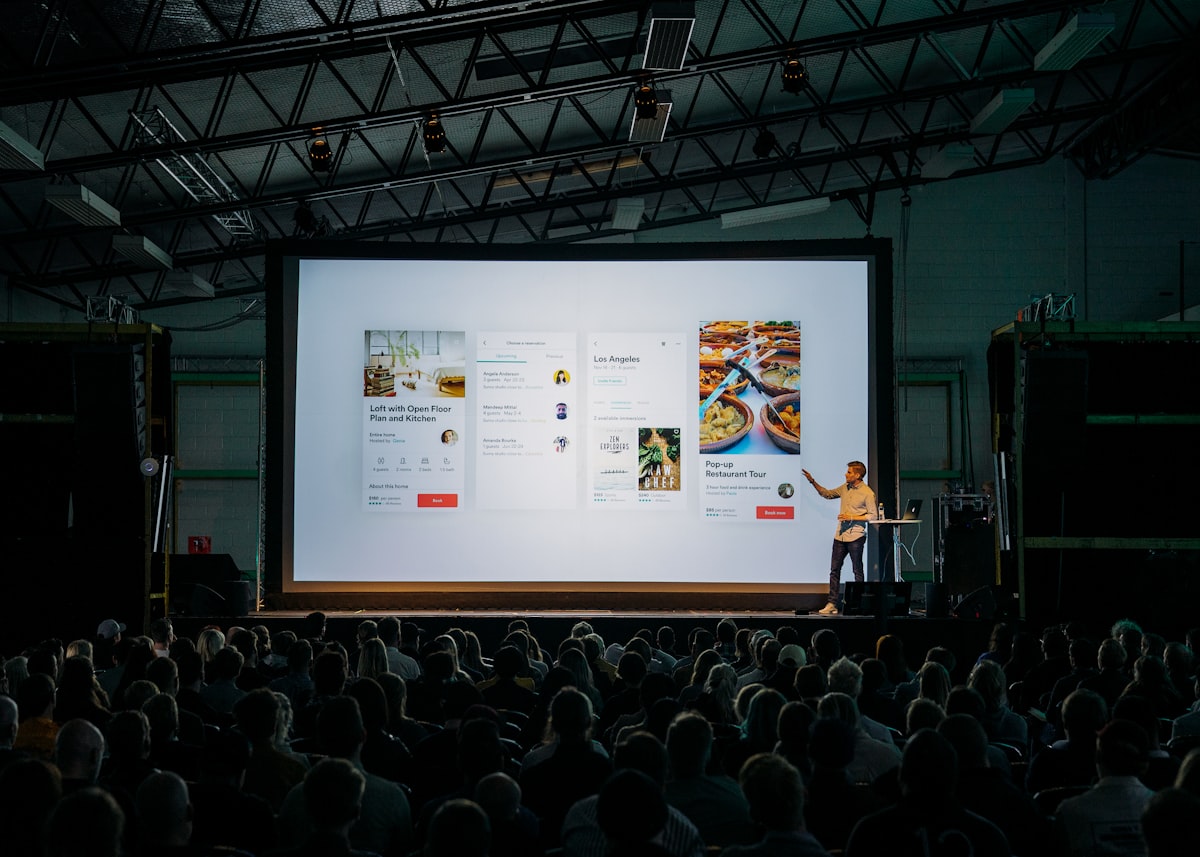
Pre-Production: Strategy, Creative, and Planning Deliverables
The work an event production company does long before load-in day is often the most valuable – and the most overlooked. Pre-production is where your event transforms from a vague vision board into a detailed, executable plan. Here is what should appear on your scope of work.
Discovery and Needs Assessment
A qualified production partner will begin with a thorough discovery session. This is not a casual coffee meeting. Expect a structured conversation that covers:
- Event objectives and KPIs – Are you launching a product, celebrating a milestone, aligning a distributed workforce, or fundraising? Each goal changes the production approach.
- Audience profile and size – A 150-person executive retreat demands different staging, audio, and lighting than a 2,000-person all-hands meeting.
- Venue evaluation – Rigging points, power availability, load-in dock dimensions, Wi-Fi infrastructure, and ceiling heights all inform equipment selection.
- Hybrid or virtual requirements – In 2026, most corporate events still include some form of remote participation. Your production company should ask about streaming needs upfront.
Creative Direction and Design
After discovery, the production team should deliver a creative concept that aligns visuals, messaging, and technology. Deliverables at this stage typically include:
- Event design renderings – 3D visualizations of the stage, scenic elements, LED placements, and lighting looks so stakeholders can approve the design before anything is built.
- Brand integration plan – Detailed specifications for how logos, brand colors, motion graphics, and sponsor assets will appear on screens, stage elements, and environmental projections.
- Content production schedule – A timeline for video packages, speaker slides, animated lower thirds, walk-in loops, and any pre-recorded segments.
Technical Planning and Logistics
This is where the rubber meets the road. A production company should provide:
- Technical rider or equipment list – A complete inventory of every piece of gear being deployed: speakers, microphones, LED panels, cameras, switchers, lighting fixtures, and rigging hardware.
- Venue plot and CAD drawings – Scaled floor plans showing equipment placement, cable runs, camera positions, and front-of-house mixing locations.
- Power distribution plan – Calculated electrical loads to prevent breaker trips and coordinate with the venue’s in-house engineering team.
- Load-in and load-out schedule – A minute-by-minute labor plan that keeps your venue charges in check and avoids overtime surprises.
Audio Solutions: More Than Just Microphones
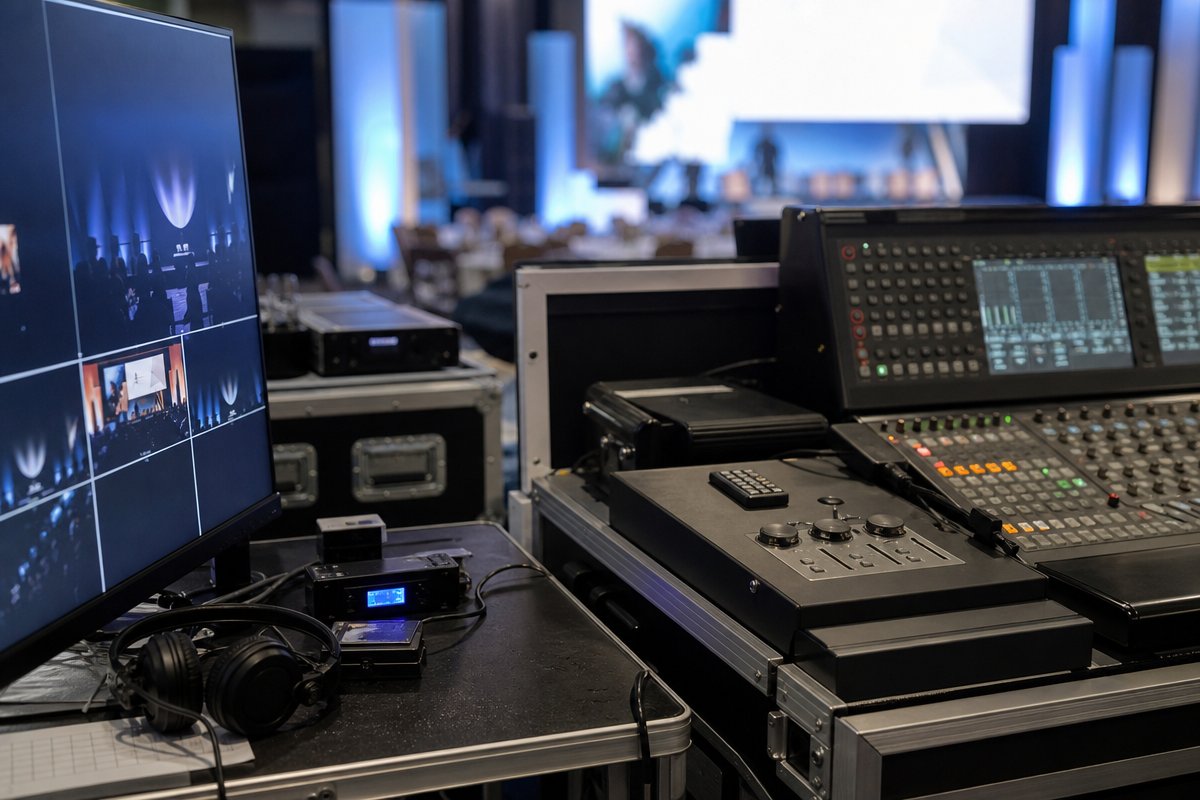
Audio is the single most important technical element of any corporate event. If the audience cannot hear clearly, nothing else matters – not the beautiful LED wall, not the perfect lighting, not the keynote speaker’s brilliant content. Here is what a comprehensive audio package includes.
Sound System Design
- Main PA (public address) system – Line array or point-source speakers sized for the room and audience count.
- Delay speakers – For longer rooms where the main PA cannot reach the back rows without noticeable latency.
- Stage monitors or in-ear systems – So presenters and panelists can hear themselves and any playback content.
- Subwoofers – Essential for walk-in music, video playback, and entertainment segments with low-frequency content.
Microphone Package
- Wireless handheld microphones for presenters who move.
- Wireless lavalier microphones for panelists and fireside chats.
- Podium microphones for formal remarks.
- Audience Q&A microphones – wireless or on stands in aisles.
- Backup microphones on every frequency pair because RF interference in the Washington DC metro area is especially dense.
Audio Mixing and Engineering
The equipment is only as good as the engineer running it. Your scope should include an A1 (lead audio engineer) for front-of-house mixing and, for larger events, an A2 (audio technician) who manages microphone distribution, battery changes, and monitor mixes backstage.

Visual Technology: LEDs, Projection, Video, and Cameras
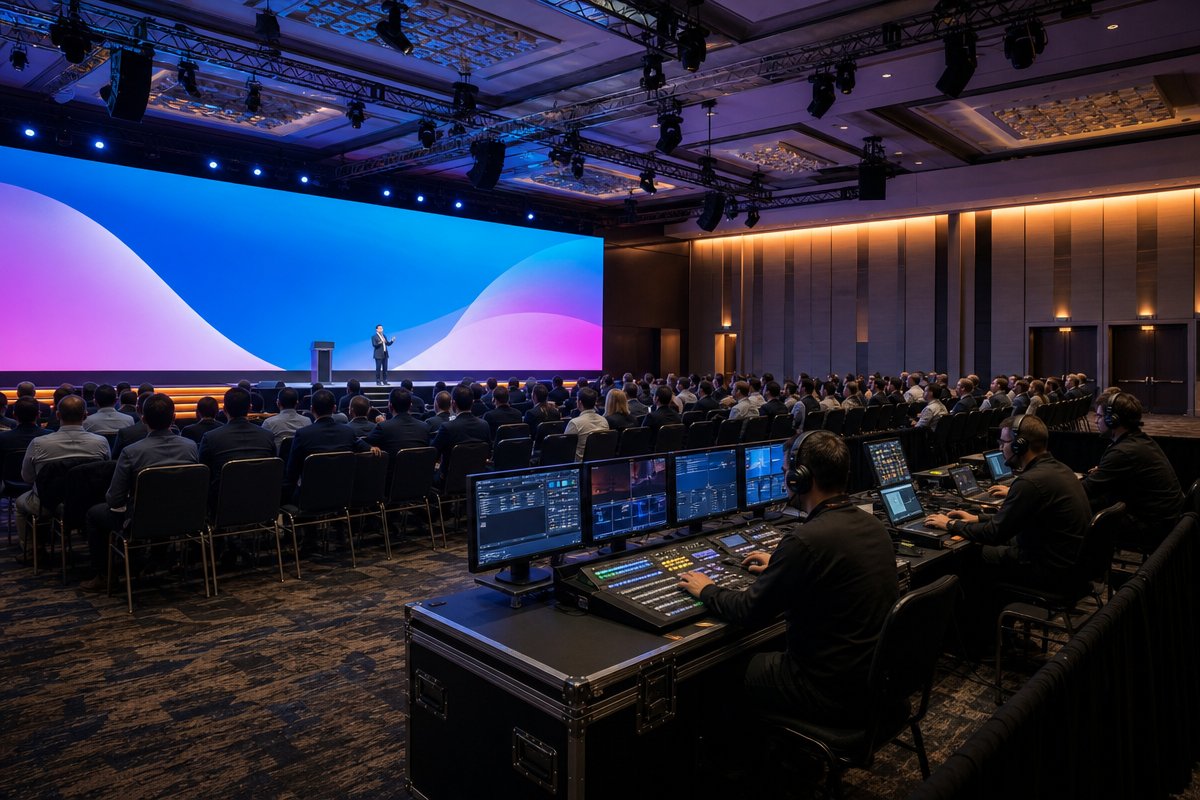
Visual technology is where corporate events have evolved most dramatically over the past five years. Gone are the days of a single projector on a pull-down screen. Here is the full visual technology scope you should expect from a production partner in 2026.
LED Walls and Displays
- Main stage LED wall – Typically a high-resolution (2.6mm to 3.9mm pixel pitch for indoor use) wall serving as the primary visual backdrop. Size depends on viewing distance and stage width.
- Confidence monitors – Downstage LED or LCD screens facing the presenter so they never need to turn their back to the audience.
- IMAG (image magnification) side screens – Flanking LED panels or projection screens that display live camera feeds of the speaker for large-audience events.
- Lobby or registration displays – Freestanding LED panels or large monitors showing schedules, wayfinding, or sponsor content.
Projection
Projection still has a valuable role, especially for breakout rooms, scenic gobo patterns, and environments where LED walls are not practical. Deliverables include:
- High-lumen laser projectors (10,000+ lumens for ambient-light environments).
- Rear-projection or front-projection screens with appropriate gain ratings.
- Projection mapping for scenic surfaces, if specified in the creative design.
Camera and Switching Package
- Multi-camera setup – Typically two to four cameras: a wide shot, a tight shot on the presenter, a jib or robotic camera for dynamic angles, and a handheld or steadicam for walk-and-talk segments.
- Video switching and graphics – A production switcher operated by a technical director who cuts between cameras, rolls video packages, and overlays lower-third graphics in real time.
- Recording – Program recording for post-event content repurposing, often in 4K in 2026.
- Live streaming – Encoder, streaming platform integration, and a dedicated streaming technician if the event has a virtual audience.
Lighting Design: Setting the Tone and Focus
Lighting does two critical jobs at a corporate event: it ensures people on stage look great on camera and in person, and it sets the emotional atmosphere of the room. A proper lighting scope includes:
Stage Lighting
- Key lighting – Front wash fixtures that illuminate presenters evenly and eliminate harsh shadows.
- Backlight and rim light – Separates the speaker from the background, essential for clean camera shots.
- Accent and effects lighting – Moving heads, color washes, and pattern projections that support the event’s creative theme.
Environmental and House Lighting
- Uplighting – LED fixtures around the room perimeter to bathe walls in brand colors.
- Gobo projection – Custom logo or pattern gobos projected onto walls, floors, or ceilings.
- House light control – Integration with the venue’s house lighting system so the LD (lighting designer) can dim or raise room lights on cue.
Lighting Personnel
Your scope should include a lighting designer/programmer who builds the cue list during rehearsal and a lighting operator who runs the board during the live show. For multi-day events, these may be the same person, but for complex shows, they should be separate roles.
Staging, Scenic, and Show Management
This category covers everything the audience sees physically on and around the stage – and the people who make the show run on time.
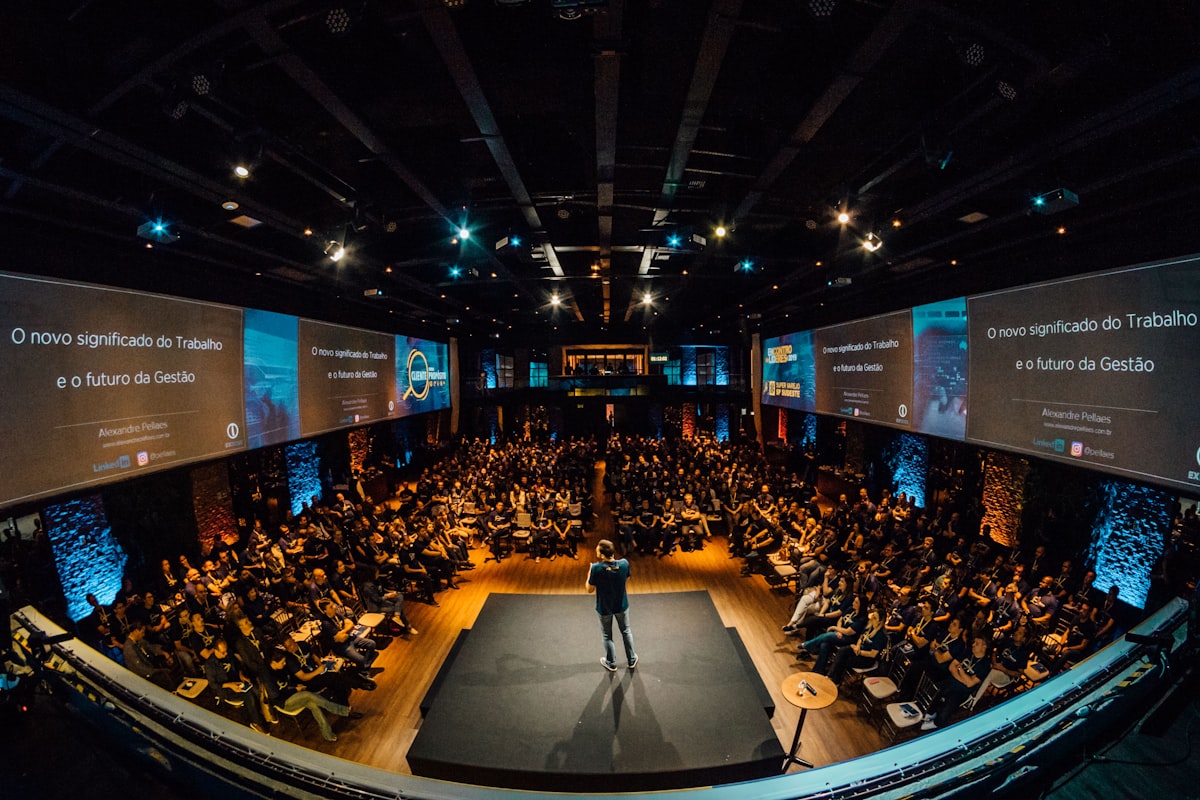
Staging and Scenic Elements
- Stage deck – Modular staging platforms at a height appropriate for the room (typically 24 to 48 inches for flat-floor events).
- Custom scenic pieces – Fabric structures, acrylic panels, dimensional logos, or set walls that reinforce the event’s brand and theme.
- Lecterns, furniture, and props – Everything on stage from the podium to the lounge seating for a panel discussion.
- Drape and masking – Pipe and drape to create backstage areas, mask equipment, or define spaces within a ballroom.
Show Management and Calling
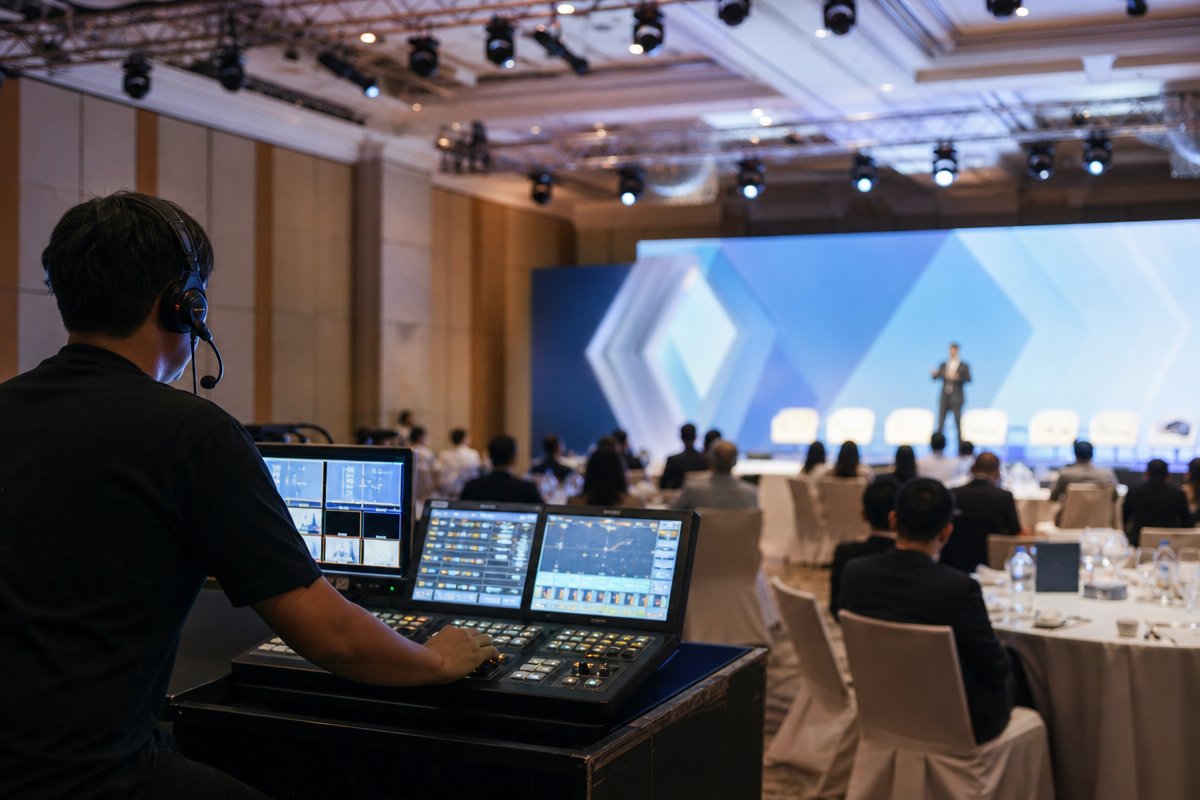
This is the deliverable that separates amateur productions from professional ones. A show caller (also known as a stage manager or technical director, depending on the company) sits at the production table and calls every cue: lighting changes, video rolls, audio transitions, camera switches, and presenter entrances. Deliverables include:
- Show script or run-of-show document – A detailed, time-coded script that every technician follows.
- Rehearsal management – Coordinating presenter walk-throughs, tech rehearsals, and full dress rehearsals.
- Comms system – A clear-com or similar intercom system connecting the show caller to every technical position.
- On-site production management – A dedicated project manager or producer who serves as the single point of contact for the client throughout load-in, show, and strike.
What Many Scopes Miss – And Why It Matters
Even experienced planners sometimes receive scopes of work that omit critical items. Here are deliverables that should be in every corporate event production agreement but frequently are not:
- Contingency and backup equipment – Redundant switchers, backup laptops, spare LED panels, and extra wireless microphone frequencies. Ask your production company what their failure protocol is.
- Power and rigging labor – Some scopes list the equipment but not the electricians or riggers needed to install it. Confirm that labor is included or budgeted separately.
- Venue coordination – Your production company should handle direct communication with the venue’s technical and operations team, not pass that task back to you.
- Post-event deliverables – Edited highlight reels, full session recordings, high-resolution event photography exports, or social media cutdowns. Define these in advance.
- Insurance and compliance documentation – Certificates of liability insurance, W-9s, and any venue-required safety certifications. In the DC metro area, government and association venues often have strict compliance requirements.
Frequently Asked Questions
What does an event production company for corporate events actually do?
An event production company manages every technical and creative element of a live event. This includes audio engineering, LED and projection technology, lighting design, staging and scenic construction, video production, live streaming, show calling, and on-site project management. The goal is to transform a venue into an immersive experience that aligns with the client’s brand and objectives – handling everything from initial creative concepts through load-out so the client can focus on content and attendees.
How early should I engage a production company for a corporate event?
For large-scale corporate events (500+ attendees, multi-day, or high-profile), engage your production partner at least four to six months in advance. For mid-size events (100–500 attendees), three months is a reasonable minimum. Early engagement allows the production team to influence venue selection, negotiate favorable equipment availability, and deliver polished creative designs rather than rushed solutions.
What is typically NOT included in a standard event production scope?
Items commonly excluded unless specifically requested include: floral and decor (usually handled by a separate vendor), catering and beverage service, printed materials, event registration software, transportation and hotel logistics, and entertainment booking (bands, DJs, performers). Some production companies offer these as add-on services, but they are not standard AV or production deliverables.
How do I evaluate whether a production company’s scope is complete?
Request a detailed equipment list with brand names and model numbers, a complete labor manifest with roles and hours, a load-in and load-out schedule, CAD drawings or floor plans, and at least one 3D rendering of the stage design. If any of these are missing, ask why. A reputable production partner will provide this level of detail without hesitation.
What is the difference between a show caller and a project manager?
A project manager oversees the entire production timeline – budgets, logistics, vendor coordination, and client communication – from the first planning meeting through post-event wrap-up. A show caller (or stage manager) is specifically responsible for calling live cues during the event: telling the lighting operator when to change looks, the video team when to roll packages, and the audio engineer when to open microphones. On large events, these are two different people. On smaller events, one experienced producer may handle both roles.
Does a production company handle hybrid and virtual event components?
Yes – most full-service production companies in 2026 include hybrid capabilities as a core offering. This means encoding and streaming the live program, managing a virtual event platform or integration, providing dedicated camera angles optimized for remote viewers (not just a wide room shot), and monitoring stream health in real time. If your event has a remote audience, confirm that the scope includes a dedicated streaming technician and not just a laptop running OBS in the corner.
Choosing the Right Partner in the DC Metro Area
Understanding what should be included in a production scope of work is the first step. The second step is finding a partner who delivers every one of these elements at a consistently high level. In the Washington DC, Northern Virginia, and Maryland market – where corporate, association, government, and nonprofit events demand precision and professionalism – experience matters enormously.
TriVision Event Production has provided full-service event production for complex, high-visibility corporate events across the DMV region for over 30 years. From audio solutions and LED wall technology to creative design, staging, and show management, TriVision delivers every deliverable outlined in this guide – and stands behind each one. If you are planning a corporate event and want a scope of work that leaves nothing to chance, contact TriVision Event Production to start the conversation.
Let’s talk about your event
Tell us the date and the room - we’ll bring the plan.