
Quick answer: Federal agency event AV requires a provider who can work within GSA procurement (schedules, GSA Advantage, eBuy), clear personnel and equipment security protocols, operate within restricted-venue constraints, and deliver Section 508-accessible AV. Vet for all four before issuing an RFQ.
If you are planning an event for a federal agency in the Washington DC, Northern Virginia, or Maryland region, you already know the stakes are high. Federal agency event AV services require far more than plugging in a microphone and pressing play on a slideshow. From navigating GSA procurement schedules to clearing security protocols at restricted venues, every detail must align with rigid compliance standards that most commercial AV providers simply are not equipped to handle. Federal agencies spend heavily on conference and event-related services, and that spending falls under stricter audit and compliance scrutiny than ever before. Understanding these requirements before you issue an RFQ can save your agency months of delays, budget headaches, and operational risk.
Why Federal Agency Event AV Services Demand a Different Approach
Commercial events and federal agency events may look similar on the surface, but the operational framework behind them is fundamentally different. When a private corporation hosts a conference, the biggest concerns are typically budget, branding, and attendee experience. When a federal agency hosts a town hall, training symposium, awards ceremony, or interagency summit, the AV production team must operate within a layered web of procurement regulations, security clearances, and facility-specific restrictions.
The Compliance Gap Most AV Companies Cannot Bridge
Most AV companies in the DMV area specialize in corporate, nonprofit, or social events. While they may deliver excellent production quality, they often lack the institutional knowledge required for federal work. This gap shows up in several critical areas:
- Procurement knowledge: Understanding how to respond to government RFQs, task orders, and blanket purchase agreements (BPAs) under GSA schedules.
- Security protocols: Managing crew background checks, equipment screening, and classified-environment restrictions.
- Venue restrictions: Working within federal buildings that impose specific load-in rules, union requirements, power limitations, and technology restrictions.
- Documentation and reporting: Providing detailed invoicing, performance reporting, and post-event documentation that satisfies federal audit requirements.
TriVision Event Production has served government and agency clients across the Washington DC, Northern Virginia, and Maryland region for over 30 years. This experience means our team understands federal workflows from the inside out, eliminating the learning curve that derails less experienced providers.
Navigating GSA Schedules for Federal Event AV Procurement
The General Services Administration (GSA) Multiple Award Schedule, commonly known as GSA Schedule or MAS, is the primary procurement vehicle through which federal agencies purchase event production and audiovisual services. If your AV provider is not on a GSA schedule or does not understand how to work within one, the procurement process can stall before production planning even begins.
What GSA Schedule Compliance Means for AV Vendors
Being listed on a GSA schedule is not simply a marketing badge. It means the vendor has undergone a rigorous vetting process and agreed to pre-negotiated pricing, terms, and conditions that meet federal acquisition regulations (FAR). For event planners and contracting officers within agencies, this matters because:
- Pre-approved pricing: GSA schedule holders offer rates that have been reviewed and approved, reducing the risk of overpayment and simplifying the justification process during audits.
- Streamlined procurement: Agencies can issue task orders directly against the schedule, bypassing lengthy full-and-open competition requirements for services under the micro-purchase or simplified acquisition thresholds.
- Contract compliance: Vendors on GSA schedules are required to maintain specific insurance, bonding, and performance standards that protect the agency.
- Socioeconomic considerations: Many agencies prioritize small business, veteran-owned, or minority-owned vendors. GSA schedules make it easier to identify and contract with these providers.
Working With AV Providers Through GSA Advantage and eBuy
Federal procurement officers typically search for AV services through GSA Advantage (the online shopping portal) or issue requirements through GSA eBuy (the RFQ/RFP posting platform). If your AV vendor is not listed on these platforms, they may not even appear in your procurement pipeline. When evaluating providers, confirm the following:
- Active GSA MAS contract number and applicable SIN (Special Item Number) codes for event production, audiovisual equipment rental, and related services.
- Current pricing on GSA Advantage that reflects realistic event production costs, not artificially low bids that lead to scope creep.
- A history of successful task order completions for other federal clients.
Security Protocols Every AV Team Must Clear
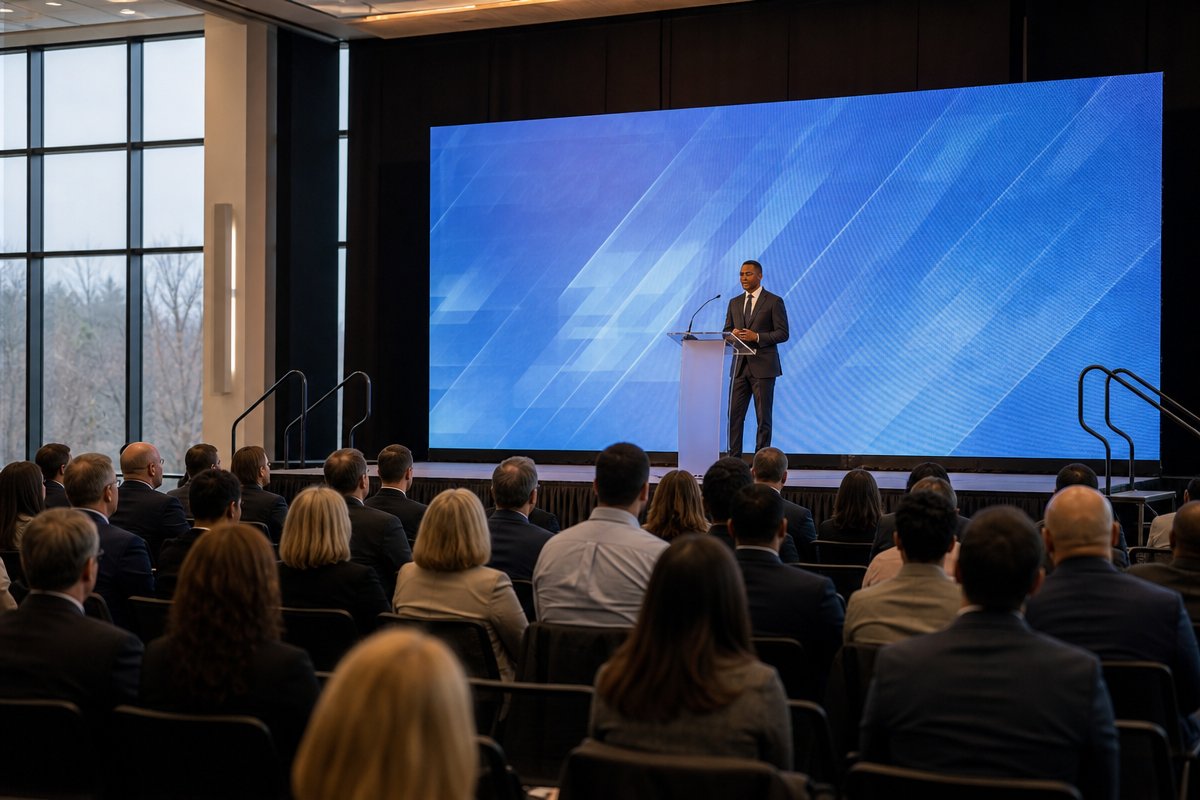
Security is not a suggestion in federal event production. It is a non-negotiable operational requirement. Whether your event takes place at a federal office building, a military installation, a secure conference center, or even an off-site hotel under agency control, the AV team must comply with stringent security protocols that go far beyond a standard venue load-in.
Personnel Security and Background Checks
Every member of the AV crew who enters a federal facility will likely need to pass some level of security screening. Depending on the agency and the sensitivity of the event, this may include:
- NACI or Tier 1 background investigations for access to general federal buildings managed by the Federal Protective Service (FPS).
- Agency-specific credentialing for events at locations managed by the Department of Defense, Department of Homeland Security, intelligence community agencies, or law enforcement entities.
- REAL ID-compliant identification for all crew members, which became fully enforced in May 2025.
- Advance submission of crew rosters (often 10-30 days before the event) with full legal names, dates of birth, Social Security numbers, and citizenship status.
An AV company that cannot provide a vetted, security-cleared crew will delay your event timeline or force last-minute crew substitutions that compromise production quality.
Equipment Screening and Technology Restrictions
Federal venues often require all equipment to pass through security screening checkpoints, similar to airport-style magnetometers and X-ray machines. This has direct implications for AV logistics:
- Large LED wall panels, speaker arrays, and lighting rigs may need to be inspected individually, adding hours to load-in schedules.
- Some secure facilities prohibit Wi-Fi-enabled devices, wireless microphones on certain frequencies, or camera-equipped equipment in classified areas.
- Recording and live streaming capabilities may require explicit written authorization from the agency security officer.
- All cabling and power distribution must comply with the facility’s fire and safety codes, which in federal buildings are enforced by the General Services Administration or the host agency’s facilities management team.
TriVision’s crew is experienced in navigating these exact scenarios. We coordinate directly with agency security offices, facility managers, and contracting officers to ensure every piece of equipment and every crew member is cleared well before event day.
Federal Venue Restrictions That Impact AV Production
Federal venues are not like hotel ballrooms or convention centers. They come with a unique set of physical, logistical, and regulatory constraints that directly affect how AV production is planned and executed.
Load-In and Load-Out Limitations
Many federal buildings restrict vehicle access to specific loading docks with limited hours of availability. This means:
- AV equipment trucks may need to schedule dock access days in advance through building management.
- Load-in windows may be restricted to evenings, weekends, or specific time blocks that do not interfere with normal building operations.
- Some facilities require union labor for loading and rigging, adding an additional coordination layer and cost consideration.
Power and Infrastructure Constraints
Older federal buildings, and there are many in the DC area, often have outdated electrical systems that cannot support the power demands of a full AV production without supplemental power. Key considerations include:
- Available amperage in event spaces, which may require generator rental or power distribution upgrades.
- Rigging points for lighting and projection, which may not exist in government conference rooms or auditoriums.
- Internet bandwidth for live streaming or virtual event components, which is frequently locked behind agency IT firewalls and requires separate authorization.
Acoustic and Visual Limitations
Federal event spaces are rarely purpose-built for large-scale productions. AV providers must adapt to rooms with poor acoustics, low ceilings, fixed furniture, limited sight lines, and ambient noise from HVAC systems. A provider with deep experience in federal venues knows how to engineer solutions around these constraints, including directional speaker arrays, rear-projection setups for low-clearance rooms, and portable LED walls that do not require rigging.

Essential AV Services for Federal Agency Events in 2026
The scope of AV services required for federal events has expanded significantly. In 2026, agencies expect their AV partners to deliver far more than basic sound and projection. Here are the core services that should be included in any comprehensive federal event AV package:
Audio Solutions
Crystal-clear audio is critical for events where information accuracy matters, such as policy briefings, congressional testimonies, and interagency training sessions. Services should include professional microphone systems (wired and wireless), distributed speaker arrays, real-time audio mixing, and simultaneous interpretation support for multilingual events.
LED Walls, Projection, and Display Technology
Federal events increasingly rely on high-resolution visual displays for presentations, data visualization, and branding. LED video walls offer superior brightness and flexibility compared to traditional projection, especially in rooms with ambient light. Your AV provider should offer multiple display sizes and configurations, including confidence monitors for speakers and rear-stage prompter systems.
Lighting Design
Professional lighting transforms a bland government conference room into an engaging event environment. It also ensures on-camera talent looks professional for recorded or live-streamed sessions. Key elements include stage washes, spotlights, color temperature matching for video, and energy-efficient LED fixtures.
Video Production and Live Streaming
Many federal events now require a virtual component, whether for remote attendees, public transparency, or archival purposes. This includes multi-camera video production, live switching, graphic overlays, closed captioning (required for Section 508 accessibility compliance), and secure streaming to approved platforms.
Show Management and Technical Direction
Federal events with high-profile speakers, VIPs, or complex run-of-show elements require dedicated show management. A technical director ensures every cue is hit, every transition is smooth, and every contingency plan is in place. This is not a luxury for federal events. It is a necessity.
How to Vet an AV Provider for Federal Agency Work
Not every AV company that claims federal experience can actually deliver. Here is a practical checklist for agency event planners and contracting officers evaluating potential AV partners:
- Verify GSA schedule status: Request the vendor’s GSA MAS contract number and confirm it through the GSA eLibrary.
- Ask for federal client references: Request at least three references from federal agency clients within the past two years. Ask those references about compliance, communication, and problem-solving.
- Review security experience: Ask how the vendor handles crew background checks, equipment screening, and classified-environment protocols.
- Evaluate venue expertise: Has the vendor worked in federal buildings in the DC area? Do they understand FPS regulations, GSA building management rules, and agency-specific facility requirements?
- Confirm Section 508 compliance: Any AV content, streaming, or digital displays must meet federal accessibility standards. Your vendor should demonstrate proficiency in closed captioning, audio description, and accessible content delivery.
- Assess contingency planning: Federal events cannot fail. Ask the vendor about redundant systems, backup equipment, and their protocol for handling technical failures in real time.
Frequently Asked Questions About Federal Agency Event AV Services
What is the difference between federal agency event AV services and standard corporate AV services?
Federal agency event AV services must comply with government procurement regulations (FAR and GSA schedules), security screening requirements for personnel and equipment, federal venue access restrictions, and Section 508 accessibility standards. Standard corporate AV services do not typically operate under these constraints. The procurement process alone, including RFQ responses, task order management, and audit-ready documentation, requires specialized knowledge that most commercial AV companies lack.
Does my AV provider need to be on a GSA schedule to work federal events?
Not always, but it significantly simplifies procurement. Agencies can use GSA schedules for streamlined purchasing, especially under the simplified acquisition threshold. Without a GSA schedule, the agency may need to conduct a full competitive solicitation process, which adds time and administrative burden. For recurring or high-value AV needs, working with a GSA schedule holder is strongly recommended.
How far in advance should I book AV services for a federal event?
For most federal events in the DMV area, you should begin the AV procurement process at least 60 to 90 days before the event date. Events at high-security facilities, events requiring specialized clearances, or large-scale productions with complex staging may require 120 days or more. Early engagement allows time for crew vetting, equipment screening approvals, and site surveys.
Can AV crews bring wireless equipment into federal buildings?
This depends on the facility and the agency. Many federal buildings allow standard wireless microphone systems, but some secure facilities restrict wireless frequencies, Wi-Fi-enabled devices, and Bluetooth equipment. Always coordinate with the agency’s security office and facility management team during the planning phase. Your AV provider should be prepared to offer wired alternatives if wireless equipment is restricted.
What happens if AV equipment fails during a federal event?
A qualified federal AV provider will have redundant systems in place, including backup microphones, secondary signal paths for video, and spare equipment on-site. TriVision Event Production deploys full redundancy for critical federal events, ensuring that a single equipment failure never results in a production stoppage. Our technical directors monitor all systems in real time and can switch to backup configurations instantly.
Are there specific accessibility requirements for AV at federal events?
Yes. Section 508 of the Rehabilitation Act requires that all electronic and information technology used by federal agencies be accessible to people with disabilities. For AV services, this means providing real-time closed captioning for live presentations and streaming, audio description for video content when applicable, hearing loop or assistive listening device support, and accessible display positioning that accommodates wheelchair users and attendees with visual impairments.
Partner With a Proven Federal Event AV Provider in the DMV
Federal agency events demand precision, compliance, and production quality that leaves no room for error. From GSA schedule procurement to security-cleared crews, from Section 508 accessibility to redundant technical systems, every element must be executed flawlessly under the scrutiny of auditors, security officers, and senior agency leadership.
TriVision Event Production has been the trusted federal agency event AV services partner for clients across Washington DC, Northern Virginia, and Maryland for over 30 years. We understand the regulations, we know the venues, and we deliver the production quality that federal events demand. Whether you are planning a small agency briefing or a large-scale interagency conference, our team is ready to support you from strategy through final strike.
Contact TriVision Event Production today at trivisioneventproduction.com to discuss your upcoming federal event and discover how our compliance-focused approach protects your agency while delivering an exceptional event experience.
Let’s talk about your event
Tell us the date and the room - we’ll bring the plan.