
Quick answer: A DC corporate gala comes together in six phases: vision and theme development (12–16 weeks out), venue selection and technical site survey (10–14 weeks), scenic, AV, and lighting design (8–10 weeks), entertainment and show flow (6–8 weeks), load-in, rehearsal, and show night during event week, and finally strike, review, and content capture.
Your corporate gala is the one night each year where your organization’s brand, culture, and ambition are on full display – and in a city as polished as the nation’s capital, the margin for error is razor-thin. Corporate gala production in Washington DC demands a level of sophistication that matches the audience: C-suite executives, elected officials, major donors, and media. Corporate galas and fundraising events drive an enormous amount of activity in the DC metro area every year, making the DMV one of the most competitive – and scrutinized – gala markets in the country. If you’re planning one for 2026, this start-to-finish production timeline will walk you through every phase, from initial concept to the final bow.

Phase 1: Vision, Strategy, and Theme Development (12–16 Weeks Out)
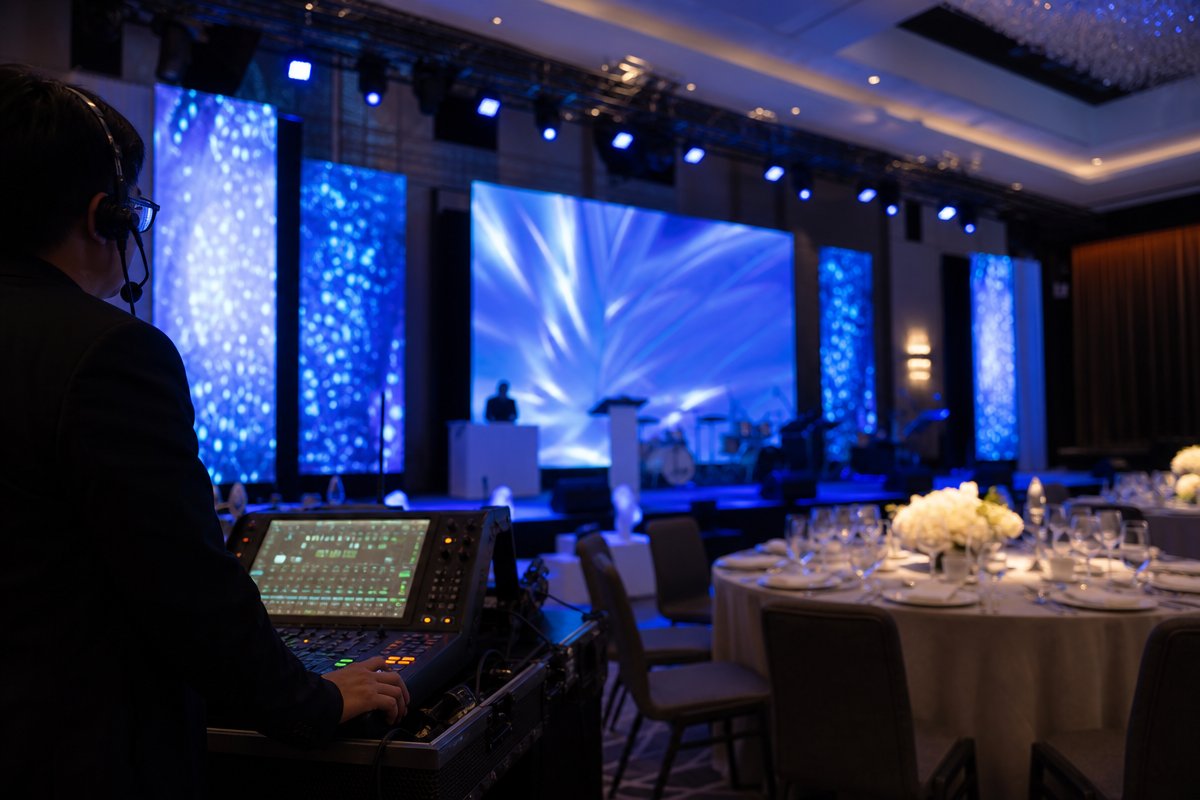
Every memorable corporate gala begins long before the first spotlight is hung. The strategic foundation you set three to four months in advance determines whether your event feels cohesive or cobbled together. This is where your event production partner earns their keep.
Defining the Gala’s Purpose and Audience
Before choosing a color palette or booking entertainment, your team must answer foundational questions:
- What is the primary goal? Brand elevation, donor cultivation, employee recognition, or industry networking?
- Who is the audience? A room full of Capitol Hill staffers requires different energy than a celebration for Fortune 500 partners.
- What is the desired emotional arc? Should guests feel inspired, entertained, grateful, or all three?
A seasoned DC event production company will facilitate a creative strategy session that aligns your organizational objectives with a thematic concept. This is not about picking a trendy motif – it’s about building a narrative framework that guides every production decision downstream.
Theme Ideation and Creative Direction
Washington DC galas often lean into architectural elegance, political gravitas, or cultural sophistication. But the strongest themes are the ones that reflect your organization’s story. In 2026, we are seeing a significant move toward immersive, experiential themes – think multisensory environments where scenic design, lighting, projection, and sound work in concert to transport guests rather than simply decorate a ballroom.
Your creative direction document should include mood boards, a preliminary color story, scenic sketches, and a written narrative that every vendor can reference. This single document prevents the fragmentation that plagues galas produced by multiple disconnected vendors.
Phase 2: Venue Selection and Technical Site Survey (10–14 Weeks Out)
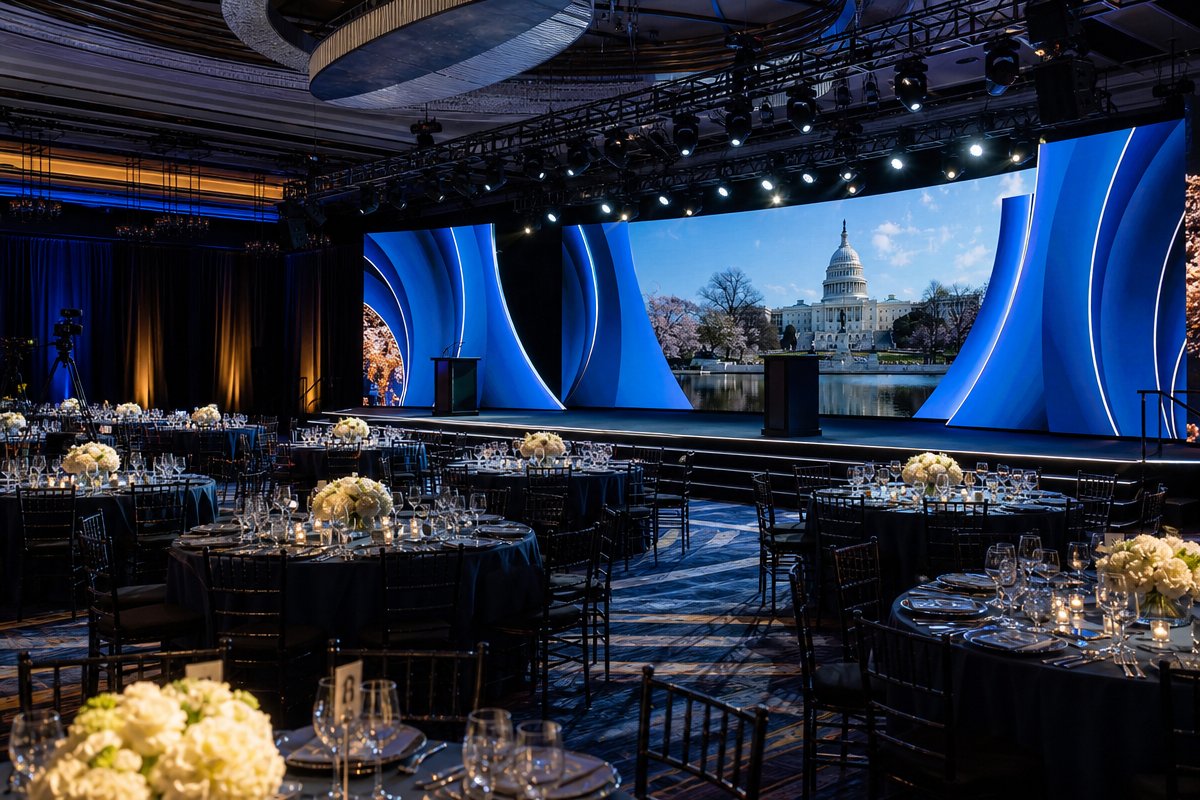
Washington DC offers an extraordinary range of gala-worthy venues – from the grand halls of the National Building Museum to rooftop terraces overlooking the monuments. But a venue that looks stunning on a venue tour can become a production nightmare without a proper technical assessment.
What a Technical Site Survey Covers
Your event production team should conduct an in-person site survey that evaluates:
- Power availability and distribution: Many historic DC venues have limited electrical capacity. Galas with LED walls, intelligent lighting, and live entertainment can require 200+ amps of supplemental power.
- Rigging points and ceiling load capacity: Chandeliers, aerial performers, scenic drops, and lighting trusses all need structural support that not every venue can provide.
- Loading dock access and freight elevators: A scenic installation that looks effortless on event night may require an 18-hour load-in through a loading dock shared with three other tenants.
- Acoustic properties: A marble-floored atrium sounds very different from a carpeted ballroom. Audio engineering must be planned around the room, not imposed on it.
- Wi-Fi and network infrastructure: Live streaming, real-time social media walls, and cashless auction platforms all depend on reliable connectivity.
Venue-Production Alignment
The best corporate gala production in Washington DC happens when the venue and the production design are selected in tandem – not sequentially. A venue that cannot accommodate your scenic vision will force compromises that dilute the guest experience. Conversely, a production concept that ignores venue constraints will blow your budget on workarounds.
Phase 3: Scenic Design, AV Engineering, and Lighting Architecture (8–10 Weeks Out)
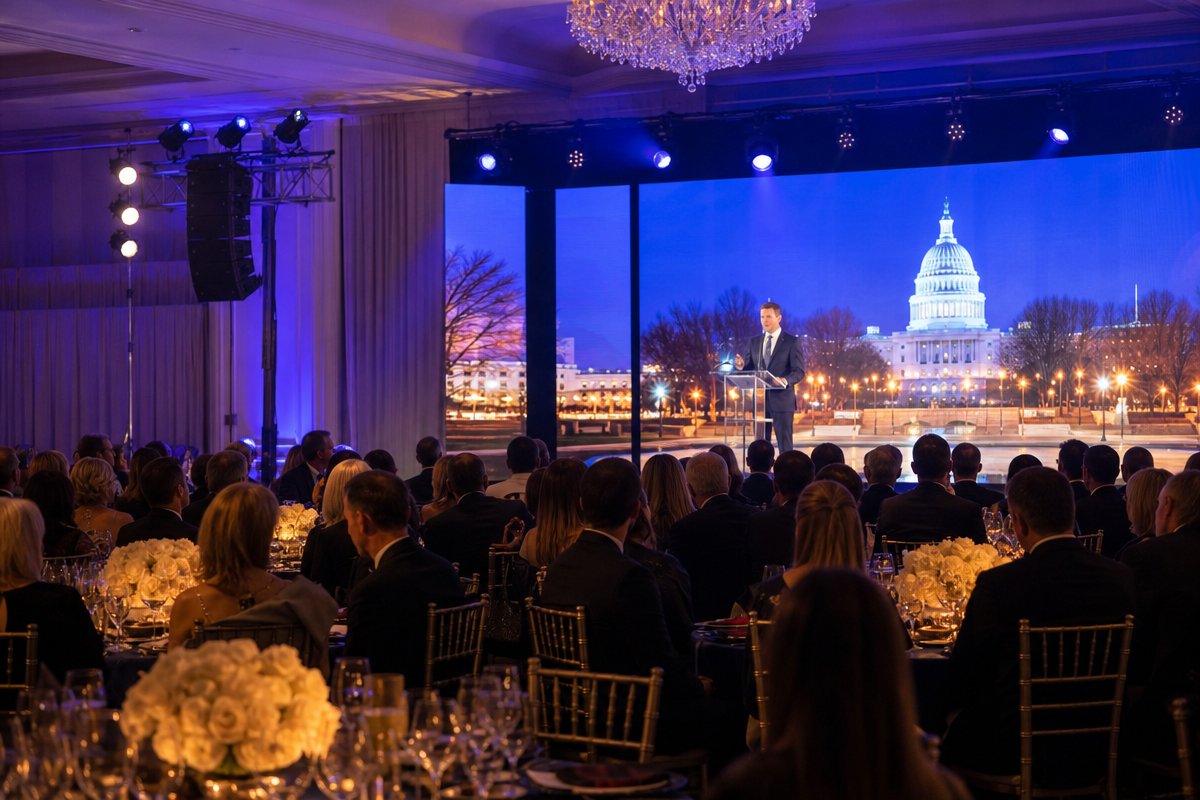
This is the phase where your gala transforms from a concept into a tangible production plan. Scenic design, audiovisual engineering, and lighting architecture are the three pillars that create the immersive environment your guests will remember.
Scenic Design and Fabrication
Scenic design for a DC corporate gala goes far beyond draping and florals. It includes:
- Custom stage sets: A branded proscenium, award presentation backdrop, or scenic environment that reinforces your theme.
- Entrance experiences: The first 15 seconds inside the venue set the emotional tone. Step-and-repeat walls have evolved into immersive photo environments with projection mapping, dimensional signage, and interactive elements.
- Environmental scenic: Ceiling treatments, wall wraps, scenic dividers, and centerpiece installations that transform a generic ballroom into a bespoke environment.
Custom scenic fabrication typically requires four to six weeks of lead time, which is why design decisions must be locked by the eight-week mark.
AV Coordination: Sound, Video, and Connectivity
The audiovisual system is the nervous system of your gala. It connects every program element – from the welcome remarks to the keynote to the live auction – and ensures that every guest, whether seated at table one or table fifty, has a first-row experience.
Key AV components for a high-end DC corporate gala include:
- LED video walls or large-format projection: Used for speaker support (IMAG), video playback, sponsor recognition, and atmospheric content. LED walls have become the standard for galas seating 300+ guests.
- Professional audio system: Line arrays or distributed speaker systems tuned to the room’s acoustics, with separate monitor mixes for live entertainment.
- Confidence monitors and teleprompters: Essential for executives and honorees who are presenting from stage.
- Playback and switching systems: A show-calling position with multi-source video switching, audio mixing, and lighting control keeps program segments flowing into one another.
- Live streaming infrastructure: If your gala includes a virtual audience or hybrid component, dedicated cameras, encoding hardware, and a streaming platform are non-negotiable.
Lighting Design: The Silent Storyteller
Lighting is the single most transformative – and most underinvested – element of corporate gala production. The right lighting design can make a $50,000 scenic installation look like a $200,000 environment. The wrong lighting can make a $200,000 environment look flat and forgettable.
A professional lighting designer will create distinct lighting looks for each phase of your evening:
- Cocktail reception: Warm, ambient washes with accent uplighting on architectural features.
- Dinner service: Intimate table washes with pin spots on centerpieces and dimensional gobos on walls.
- Program and awards: Focused stage lighting with dynamic color shifts that match the emotional beats of your program.
- Entertainment and dancing: High-energy intelligent lighting with movement, color, and haze effects.
Phase 4: Entertainment, Programming, and Show Flow (6–8 Weeks Out)
A gala without a tight program is just an expensive dinner. The show flow – the minute-by-minute script that governs every transition, cue, and moment – is what separates a produced gala from a catered event.
Building the Show Flow
Your show flow document should include:
- Exact timing for each program segment (welcome, dinner courses, keynote, awards, entertainment, closing)
- Audio cues (walk-on music, video playback starts, microphone assignments)
- Video cues (IMAG camera switches, pre-produced video rolls, sponsor loops)
- Lighting cues (scene changes, spotlight follows, blackouts)
- Stage management notes (who is where, when, and how they transition on and off stage)
The show flow is a living document that gets refined through multiple revision cycles. A full-service event production company will assign a dedicated show caller – a technical director who executes every cue in real time during the event.
Entertainment Coordination
Whether you are booking a headline act, a live band, a DJ, or a specialty performer, entertainment must be fully integrated into your AV and lighting plan. This means:
- Advance technical riders reviewed and fulfilled
- Sound check windows scheduled during load-in
- Lighting looks programmed specifically for the performance
- Backline equipment sourced and staged
In Washington DC’s competitive gala circuit, entertainment is often the differentiator between an event guests attend and an event guests talk about for months.
Phase 5: Load-In, Rehearsal, and Showtime (Event Week)
The final week is where months of planning become a physical reality. For a large-scale corporate gala in Washington DC, load-in typically begins 24 to 48 hours before doors open.
Load-In and Technical Setup
A well-managed load-in follows a sequenced schedule:
- Rigging and truss installation (if applicable)
- Staging and scenic installation
- Lighting hang, focus, and programming
- Audio system deployment and tuning
- Video system setup, alignment, and content loading
- Floral, décor, and table setting (coordinated with the scenic team)
- Full technical rehearsal and walk-through
Every element is tested, adjusted, and tested again. The technical rehearsal is the final opportunity to refine cue timing, adjust audio levels for the actual room conditions, and ensure that every presenter knows their mark.
Show Management on Event Night
During the gala itself, your production team operates as a unified command center. The show caller communicates via comms with audio, video, lighting, and stage management positions. Every cue is executed to the second. When something unexpected happens – and something always does – the team adapts in real time without the audience ever noticing.
This is the invisible craft of professional event production: the better it is, the less anyone sees it. Guests simply experience a flawless, emotionally resonant evening.
Phase 6: Strike, Post-Event Review, and Content Capture (After the Final Bow)
The event ends, but the production work continues. A professional strike (teardown) follows a reverse sequence of the load-in, typically completed within 4 to 8 hours depending on the venue’s requirements.
Post-Event Deliverables
High-value post-event deliverables include:
- Event highlight video: Captured during the gala and edited for social media, donor communications, and internal use.
- Photography assets: Professional event photography coordinated with your lighting design to ensure high-quality images.
- Technical debrief: A post-event review with your production team to document what worked, what could improve, and what to plan for next year.
Organizations that treat the gala as an annual production – rather than a one-off event – build institutional knowledge that makes each year’s gala more polished, more efficient, and more impactful.
Frequently Asked Questions About Corporate Gala Production in Washington DC
How far in advance should we start planning a corporate gala in DC?
For a gala seating 300 or more guests with custom scenic, professional AV, and live entertainment, we recommend beginning the planning process at least 16 weeks in advance. Venues in Washington DC book quickly, especially during the spring gala season (April through June) and the fall season (September through November). Engaging your event production partner early ensures that creative development, technical planning, and vendor coordination happen on a timeline that avoids costly rush fees.
What is the typical budget range for corporate gala production in DC?
Production budgets for corporate galas in the DC metro area vary widely based on guest count, venue, scenic complexity, and entertainment. For a mid-to-large-scale gala (300–800 guests) with professional AV, custom scenic, intelligent lighting, and show management, production costs typically range from $75,000 to $250,000 or more. This does not include catering, venue rental, or non-production vendors. Working with a full-service production company helps consolidate costs and eliminate the markup inefficiencies of managing multiple subcontractors.
Do we need a separate AV company and a separate lighting company?
Not if you work with a full-service event production company that provides audio, video, lighting, scenic, and show management under one roof. Consolidating these services with a single production partner eliminates communication gaps, reduces setup time, ensures technical compatibility, and gives you a single point of accountability. For complex galas, this integrated approach is not just convenient – it is essential.
Can our gala include a live-streamed or hybrid component?
Absolutely. Many DC corporate galas now include a live-streamed program for remote attendees, satellite offices, or donor audiences who cannot attend in person. This requires dedicated camera operators, a video switching system, encoding hardware, and a reliable streaming platform. Your production team should manage the entire hybrid workflow so that the virtual experience feels intentional, not like an afterthought.
What makes DC gala production different from other cities?
Washington DC galas operate in a uniquely high-stakes environment. Guests often include senior government officials, diplomats, media figures, and industry leaders who attend dozens of galas each year. The production quality must meet – and ideally exceed – their expectations. Additionally, many DC venues are historic properties with specific restrictions on rigging, flame effects, sound levels, and load-in logistics. An experienced local production partner understands these nuances and plans for them proactively.
Your 2026 Corporate Gala Deserves a Production Partner, Not Just a Vendor
A corporate gala is more than an event – it is a statement about your organization’s standards, values, and vision. From the first creative strategy session to the final strike, every decision either strengthens or undermines that statement. Corporate gala production in Washington DC requires a partner who brings creative vision, technical excellence, and decades of local expertise to every phase of the process.
TriVision Event Production has been trusted by corporate and organizational clients across Washington DC, Northern Virginia, and Maryland for over 30 years. We deliver end-to-end gala production – scenic design, lighting architecture, professional AV, show management, and creative strategy – as a single, fully integrated team. No subcontractor patchwork. No communication breakdowns. Just flawless execution from theme to final bow.
Ready to start planning your 2026 corporate gala? Contact TriVision Event Production for a complimentary consultation and discover what a true production partnership looks like.
Let’s talk about your event
Tell us the date and the room - we’ll bring the plan.