
Quick answer: The ten mistakes that trip up first-time DC event planners: underestimating venue logistics, treating audio as an afterthought, ignoring power requirements, choosing vendors on price alone, skipping the technical rehearsal, overlooking permits and security, forgetting the hybrid audience, starting creative too late, going without a dedicated show caller, and failing to plan for the unexpected. Every one is avoidable with an experienced local production partner and a timeline that starts early.
Planning your first large-scale event in the nation’s capital feels exhilarating – until reality sets in. Event production in Washington DC operates under a unique set of pressures that blindside even seasoned planners from other markets. The DC metro area is one of the busiest business-event markets in the country. That scale means fierce competition for venues, vendors, and attention – and very little room for rookie mistakes.
Whether you are coordinating a corporate gala, a nonprofit fundraiser, or a large-format conference, the ten mistakes below are the ones TriVision Event Production sees first-timers make year after year. Avoid them, and your 2026 event will look like it was produced by a veteran.
Mistake #1: Underestimating DC’s Venue Logistics
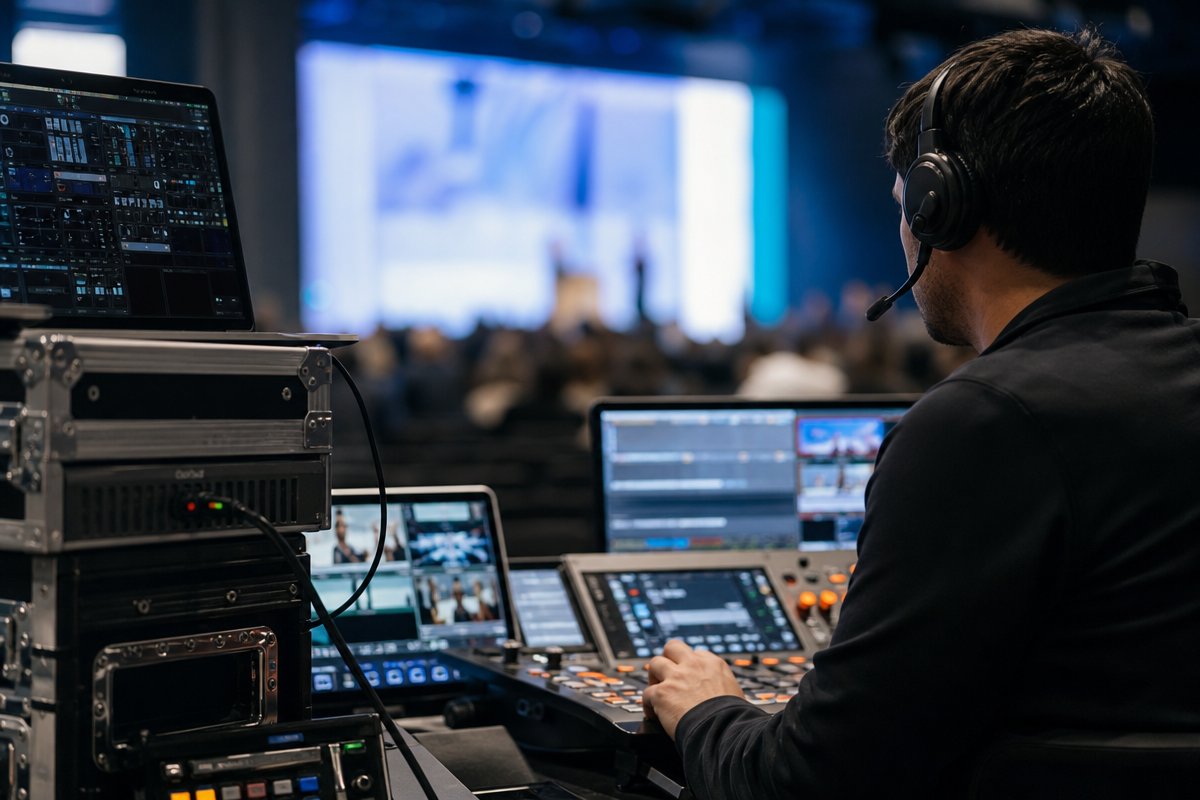
Washington DC is not a simple load-in-and-go city. Many of the most prestigious event venues – hotels along Pennsylvania Avenue, rooftop spaces in Georgetown, ballrooms near the National Mall – come with strict loading dock schedules, freight elevator reservations, and security protocols that can derail a production timeline.
What First-Timers Miss
- Loading dock windows: Downtown hotels often share docks with restaurant deliveries and other events. If your AV truck misses its 90-minute slot, you could lose half a day.
- Freight elevator size limits: LED walls, truss, and staging platforms need to physically fit. Measure twice, book once.
- Union labor requirements: Some DC convention spaces and hotels require union stagehands. Failing to budget for this inflates costs overnight.
A seasoned event production partner conducts a thorough site survey weeks in advance, mapping every pinch point from the loading dock to the ballroom door.
Mistake #2: Treating Audio as an Afterthought
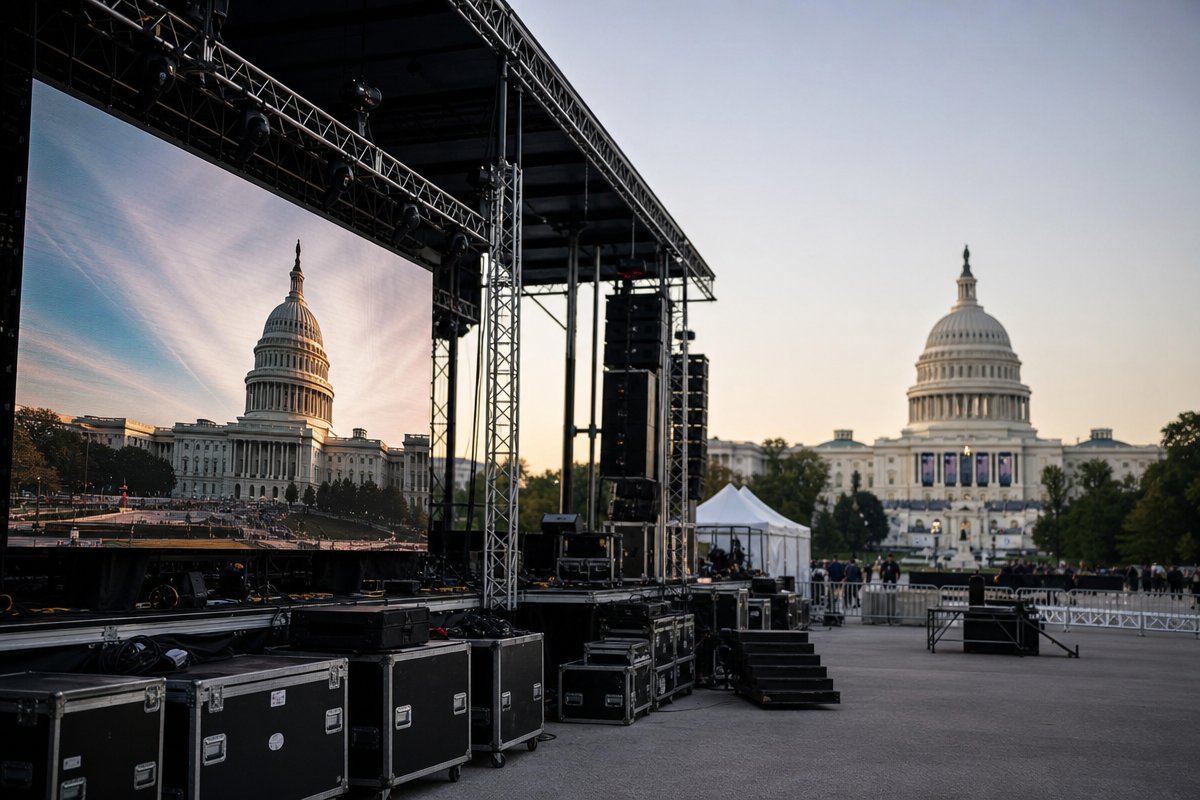
Nothing kills credibility faster than a keynote speaker who cannot be heard past the fifth row. Yet first-time planners routinely allocate their budget toward flashy visuals and leave audio engineering as a line item to trim.
Why DC Events Demand Better Sound
Washington DC events often feature panel discussions with government officials, association leaders, and C-suite executives. The audience expects broadcast-quality clarity. Rooms in older DC hotels can have low ceilings, hard marble surfaces, and odd column placements that create echo, dead spots, and feedback loops.
- Invest in a professional audio engineer – not just speakers on sticks.
- Request a sound check with the actual microphones and podium placement you will use during the event.
- If your event includes simultaneous interpretation (common for international policy conferences in DC), plan your audio channels early.
Mistake #3: Ignoring the Power Equation
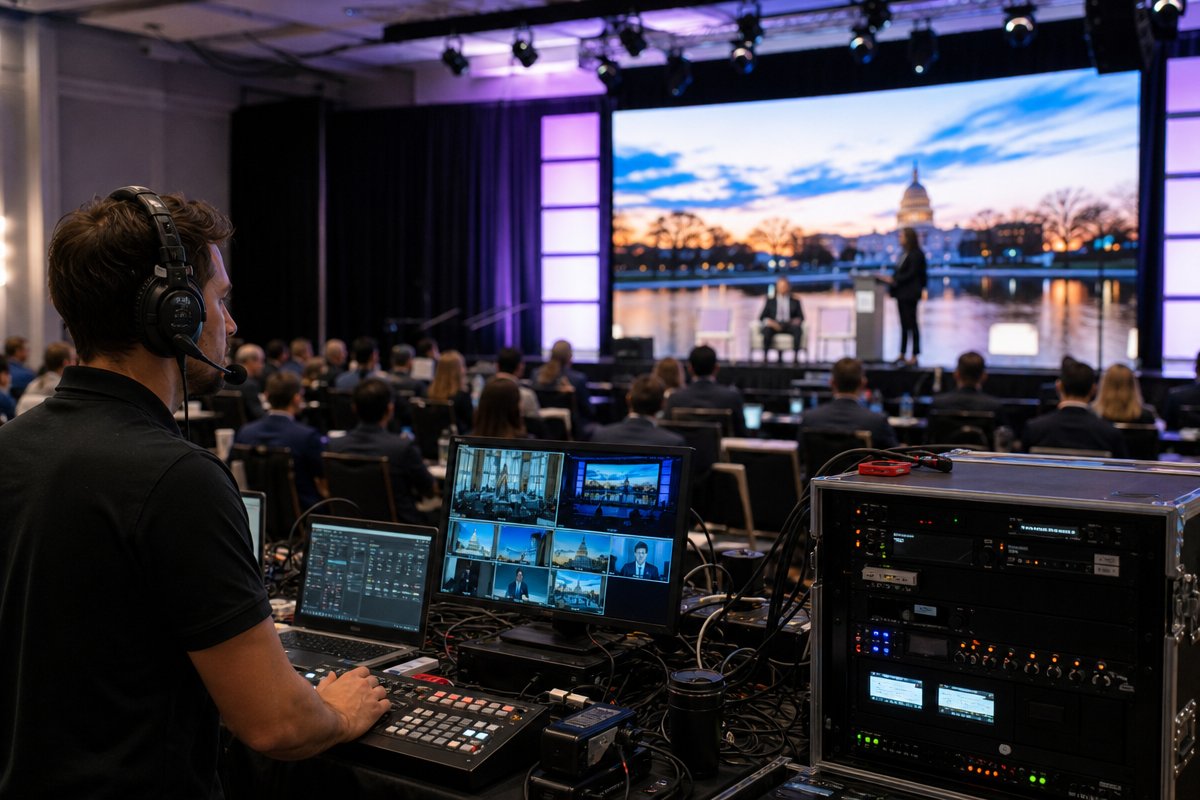
LED video walls, intelligent lighting rigs, and high-output sound systems are power-hungry. First-time producers often assume the venue’s existing electrical capacity will handle everything. It rarely does for a production-heavy event.
How to Get It Right
- Request the venue’s electrical specs (amperage per circuit, dedicated vs. shared lines) before you sign the contract.
- Calculate your total power draw with your AV partner. A single 16-by-9-foot LED wall can pull 30+ amps depending on brightness and pixel pitch.
- Budget for generator rental if the venue cannot support your needs – or if you need clean, isolated power for sensitive video equipment.
TriVision’s engineering team runs a full power audit for every event, ensuring there are no mid-show surprises like a breaker trip during your CEO’s keynote.
Mistake #4: Choosing Vendors Based Solely on Price
The Washington DC event market is dense with vendors at every price point. First-timers often pick the lowest bid for AV rental, staging, or lighting – only to discover on event day that cheap and affordable are very different words.
The Hidden Costs of the Lowest Bid
- Outdated equipment: Older projectors, dim LED panels, and consumer-grade audio gear reflect poorly on your brand.
- Skeleton crews: Budget vendors cut labor first. Fewer technicians mean slower setup, limited troubleshooting, and no contingency if something fails.
- No project management: You end up playing the role of technical director, show caller, and problem-solver – while also trying to host your event.
A full-service production company like TriVision bundles strategy, creative design, equipment, labor, and show management into a cohesive plan. That integration almost always delivers better value per dollar than piecing together five separate low-cost vendors.
Mistake #5: Skipping the Rehearsal and Technical Run-Through
Time is money, and first-timers often try to save both by eliminating the rehearsal. In a market as high-stakes as Washington DC – where your audience may include elected officials, association board members, or Fortune 500 leadership – skipping the tech rehearsal is a gamble you will lose.
What a Proper Tech Rehearsal Covers
- Speaker confidence monitor placement and slide advancement flow
- Audio levels for every microphone, walk-up music, and video playback
- Lighting cue timing for keynotes, award presentations, and transitions
- Video switching between IMAG cameras, pre-recorded content, and virtual presenters
- Backup plans: What happens if a presenter’s laptop fails? If the livestream drops?
Even a focused 90-minute run-through the morning of the event can prevent the kind of visible technical stumbles that erode an organization’s credibility.
Mistake #6: Overlooking DC’s Permit and Security Requirements
Washington DC is the seat of the federal government, and that reality touches event production in tangible ways. First-timers are often surprised by:
- Street closure permits: If your venue requires temporary road access for large trucks or equipment, you may need permits from the DC Department of Transportation – filed weeks in advance.
- Secret Service and security sweeps: Events with high-profile government attendees can require advance security sweeps of your AV equipment, staging, and production areas.
- Noise ordinances: Outdoor events or rooftop receptions near residential zones have strict decibel limits, especially after 10 p.m.
An experienced DC event production company navigates these requirements routinely and builds them into the project timeline from day one.
Mistake #7: Forgetting the Hybrid and Virtual Audience
Most of the large-format DC events we produce still include a virtual or hybrid component. First-time planners who design only for the in-room audience are leaving significant engagement and ROI on the table.
Hybrid Production Essentials
- Dedicated camera coverage: A single wide shot from the back of the room is not a hybrid event – it is a surveillance feed. Budget for at least two switched camera angles.
- Platform integration: Whether you use Zoom, Microsoft Teams, or a custom streaming platform, your AV team must test the integration with the venue’s internet bandwidth days before the event.
- Remote presenter management: If a speaker is joining virtually, they need a green-room rehearsal, a technical liaison, and a backup connection plan.
Mistake #8: Starting the Creative Process Too Late
Many first-timers lock down the date and venue, then wait until six weeks out to think about stage design, scenic elements, and branded content. In a competitive market like Washington DC, that timeline creates problems:
- Custom scenic builds, fabric prints, and branded LED content need 4–8 weeks of lead time.
- Creative concepts should inform your AV design – not the other way around. A stage that is designed after the lighting plot leads to compromises on both.
- Late-stage changes are exponentially more expensive than early-stage revisions.
TriVision’s strategy and creative team works alongside clients from the earliest planning phases, ensuring that creative vision and technical execution develop in parallel.
Mistake #9: Not Having a Dedicated Show Caller
First-time producers often assume the event planner or emcee will manage technical cues. This is like asking the pilot to also serve drinks. A professional show caller (also called a stage manager or technical director) sits at the production table and orchestrates every lighting cue, video roll, audio transition, and spotlight follow in real time.
Why This Role Matters
In a complex DC event with multiple speakers, video packages, live music, and award segments, there can be 200+ individual cues across a three-hour program. One missed cue – a late spotlight, a wrong slide, an open mic during a backstage conversation – can become the moment everyone remembers.
TriVision provides experienced show callers as part of its show management service, ensuring every second of your event is choreographed and executed with precision.
Mistake #10: Failing to Plan for the Unexpected
Washington DC throws curveballs that other markets simply do not. Motorcades reroute traffic and delay your keynote speaker. Government shutdowns shift attendance projections overnight. A last-minute VIP addition triggers a security protocol that restricts backstage access for two hours.
Building Resilience into Your Event
- Redundant systems: Backup projectors, secondary audio feeds, and failover internet connections are not luxuries – they are necessities for high-visibility DC events.
- Flexible run-of-show: Build buffer time into transitions so that a 10-minute delay does not cascade into a 45-minute disaster.
- Experienced crew: There is no substitute for a production team that has solved real problems in real time across hundreds of DC events.
With over 30 years of experience producing complex events across Washington DC, Northern Virginia, and Maryland, TriVision Event Production has seen – and solved – every scenario on this list and dozens more.
Frequently Asked Questions
How far in advance should I book an event production company in Washington DC?
For major events in 2026, aim to engage your production partner at least 3–4 months in advance. High-demand seasons – cherry blossom season in spring, the fall gala circuit from September through November, and inaugural-year events – can push that timeline to 6+ months. Early engagement gives your team time for proper site surveys, creative development, and equipment reservation.
What does full-service event production in DC typically include?
A full-service partner like TriVision handles audio solutions, LED video walls, projection and monitors, lighting design, staging and scenic elements, video production (including IMAG and livestreaming), strategy and creative direction, and day-of show management. The goal is a single point of accountability so you are not juggling five separate vendors.
How much does event production in Washington DC cost?
Costs vary widely based on event size, venue complexity, and production scope. A straightforward corporate meeting with basic AV might start in the low five figures, while a large-format gala or multi-day conference with LED walls, custom staging, and hybrid streaming can reach six figures. The best approach is to share your vision and budget range with your production partner early so they can design a solution that maximizes impact within your means.
Do I need a generator for my DC event?
It depends on your power requirements and venue capacity. Indoor hotel ballrooms can usually support moderate AV setups, but production-heavy events with large LED installations, concert-level lighting, and full camera packages often exceed available circuits. Outdoor events almost always require generator power. Your production company should conduct a power audit as part of the planning process.
Can a production company help with virtual and hybrid events in DC?
Absolutely. Hybrid event production requires specialized expertise in camera switching, streaming platform integration, remote presenter management, and bandwidth planning. It is not simply pointing a webcam at the stage. A company like TriVision designs the hybrid experience as a parallel production track, ensuring remote attendees receive a polished, engaging broadcast – not an afterthought.
Set Your First DC Event Up for Success
The Washington DC event market rewards preparation, precision, and partnership. Every mistake on this list is avoidable when you have the right production team guiding the process from concept through curtain call.
TriVision Event Production has been the trusted event production Washington DC partner for corporate and organizational clients for over 30 years. From audio and lighting to LED walls, staging, video, and full show management, our team delivers end-to-end production services designed for the high-visibility, high-stakes events that define this market.
Ready to produce your first major DC event the right way? Contact TriVision Event Production today for a consultation, and let our experience become your competitive advantage in 2026.
Let’s talk about your event
Tell us the date and the room - we’ll bring the plan.