
Quick answer: Hybrid event production works in 2026 when the virtual audience is treated as a first-class audience: two-director workflows, broadcast-grade audio, LED video walls doing double duty as in-room and on-camera backdrops, pre-event technical rehearsals for virtual speakers, and a dedicated engagement producer for remote attendees. The most common failure is treating hybrid as an add-on livestream bolted onto an in-person event.
The Hybrid Promise vs. Hybrid Reality
Let’s be direct: most hybrid events fail – not because the concept is flawed, but because production is treated as an afterthought. You’ve probably attended one. The in-room energy is great, but the virtual audience is watching a shaky camera feed, hearing garbled audio, and feeling like they accidentally joined someone’s Zoom meeting.
In 2026, that gap is no longer acceptable. Audiences – whether they’re 10 feet from the stage or 1,000 miles away – expect a polished experience with no visible seams between the room and the stream. Organizations that get hybrid event production right are not just meeting expectations. They’re building brand equity, deepening audience engagement, and generating measurable ROI.
At TriVision, we’ve produced hundreds of corporate company events across the Washington DC metro area – from intimate executive briefings to multi-day hybrid summits. This guide breaks down exactly what’s working in 2026, and the most common (and costly) mistakes we see DC organizations make when they try to cut corners on corporate event production.
Key Insight: In our experience, hybrid attendees who sit through a poor technical experience rarely give that organization’s next event a chance – a bad stream is often the last one they watch.
What Is Hybrid Event Production in 2026?
True hybrid event production is not simply livestreaming an in-person event and calling it done. It is the deliberate design and technical execution of an experience that serves two distinct audiences simultaneously – and makes both feel like first-class attendees.
A fully realized hybrid event in 2026 includes all of the following:
- A dedicated virtual broadcast layer – separate camera operators, switching, and encoding for the remote audience
- Real-time audience interaction tools – live Q&A, polling, and networking features that work across physical and virtual attendees
- Professional event AV production – multi-camera setups, broadcast-grade audio, and lighting designed for both in-room experience and camera
- Event video production services – clean post-event recordings, highlight reels, and on-demand content
- A dedicated virtual platform – not just a webinar tool, but a purpose-built environment with agenda navigation, sponsor visibility, and attendee analytics
What’s Actually Working in Hybrid Event Production Right Now
1. Two-Director Workflows
The most successful hybrid events now assign two separate directors: one for the physical room experience and one who acts as the broadcast director for the virtual audience. This person manages camera switching, decides when to show slides vs. speaker close-ups, and ensures the virtual events services experience has its own deliberate narrative flow.
2. Broadcast-Grade Audio as a Non-Negotiable
Audio is the single most common failure point in corporate event production. An audience member watching from home will forgive a slightly imperfect video. They will immediately disconnect if they can’t hear clearly. Leading event AV production companies in DC now use redundant audio chains – a backup for the backup – specifically for the virtual broadcast feed.
3. LED Video Walls as Dual-Purpose Infrastructure
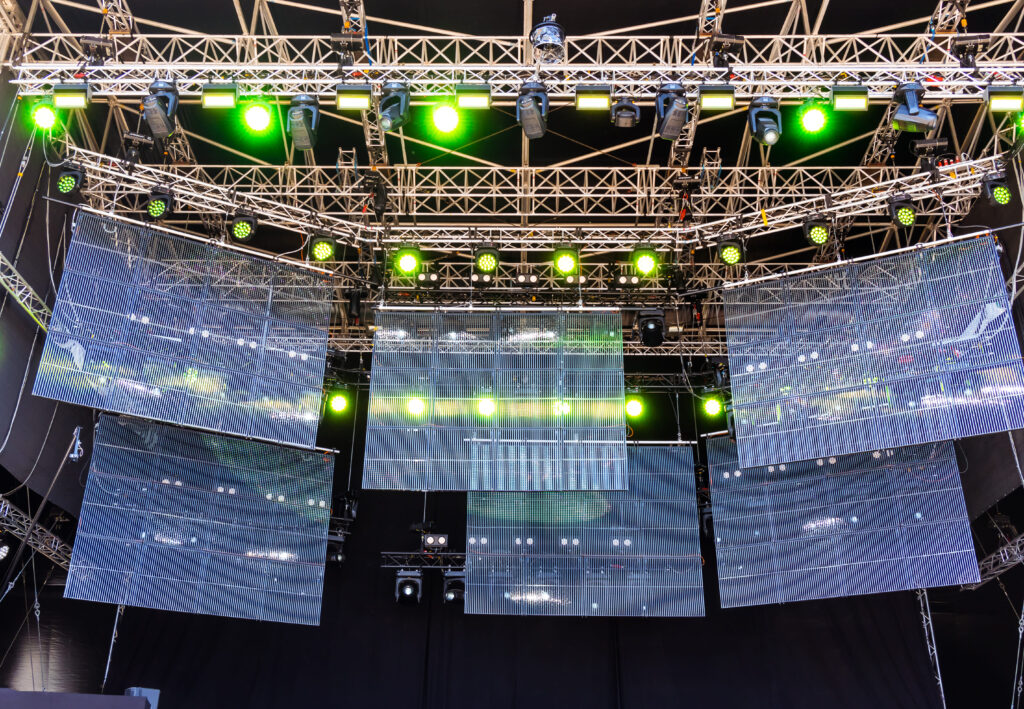
LED walls have become a cornerstone of modern stage design, and in hybrid formats they serve double duty: they enhance the in-room experience for live attendees AND create a visually compelling background for cameras. When the event AV production team designs the set with broadcast framing in mind, every shot looks intentional and premium.
4. Pre-Event Technical Rehearsals for Virtual Speakers
Remote presenters are often the weakest link in a hybrid event. Top-tier corporate event production teams now conduct mandatory technical run-throughs with every virtual speaker – checking internet bandwidth, audio quality, lighting, and screen sharing – at least 48 hours before the event.
5. Dedicated Engagement Producers for Virtual Attendees
The best hybrid event production companies assign a dedicated moderator whose sole responsibility is managing the virtual audience – monitoring chat, curating Q&A submissions, facilitating polls, and ensuring virtual attendees feel seen and heard throughout the program.
What DC Companies Are Getting Wrong (And How to Fix It)
Mistake #1: Treating Hybrid as an Add-On
The most expensive hybrid event mistake is deciding to “add livestream” two weeks before the event date. Genuine hybrid event production must be scoped from day one. Camera positions, lighting angles, set design, speaker positioning, and the virtual platform must all be planned together – not bolted on at the last minute.
The Fix: Bring your production partner into the planning conversation early – ideally when you’re still choosing the venue. Room layout and sightlines directly affect hybrid quality.
Mistake #2: Using the Wrong Platform
Zoom, Teams, and standard webinar tools are communication platforms – not event platforms. Serious virtual events services require purpose-built environments with features like lobby networking, sponsor booths, multi-session navigation, and granular attendee data. Using the wrong platform signals to virtual attendees that they’re a secondary audience.
Mistake #3: Underestimating Bandwidth Requirements
Many DC venues – particularly historic ballrooms and government-adjacent conference spaces – have older network infrastructure that cannot support the upload bandwidth required for quality event video production services. Without a dedicated bonded cellular or fiber connection for the broadcast feed, buffering and dropped streams are almost guaranteed. Always conduct a thorough venue tech assessment before committing to a location.
Mistake #4: No Contingency Plan
Even the best event AV production teams encounter technical failures. What separates professional production from amateur production is not the absence of problems – it’s having tested failover systems ready to deploy instantly. Ask your production partner: what happens if the internet drops 20 minutes into the keynote?
Mistake #5: Ignoring Post-Event Content Strategy
Your hybrid event production investment should not end when the last attendee logs off. The recordings, highlight clips, speaker soundbites, and session content generated from your event are a content marketing asset. Organizations that build an event video production services plan into their hybrid production scope get significantly more ROI from every dollar spent.
The TriVision Approach to Hybrid Event Production in DC
At TriVision, our approach to hybrid event production is built on a single principle: every attendee deserves an intentional experience. That means we design the physical and virtual experience in parallel from the very first planning call.
Here’s what that looks like in practice:
- Discovery & Scope – We audit your venue, audience size, budget, and goals before recommending any technical approach.
- Set & Stage Design – We design stage layouts that look great both in-room and on camera, often incorporating LED walls optimized for broadcast.
- Full AV Production – Our team handles all event AV production including audio, video, lighting, and switching – with dedicated feeds for virtual broadcast.
- Virtual Platform Management – We configure and manage your virtual environment, ensuring attendee navigation is intuitive and your branding is consistent.
- Post-Event Deliverables – Full session recordings, edited highlights, and speaker clips – all ready for distribution and repurposing.
2026 Hybrid Event Production Checklist
Use this checklist when planning your next hybrid event:
✅ Hybrid event production scope included in initial planning
✅ Dedicated broadcast director assigned
✅ Venue network infrastructure assessed
✅ Bonded cellular or dedicated fiber for broadcast feed
✅ Virtual events services platform selected and tested
✅ Virtual speaker technical rehearsals scheduled
✅ Virtual audience engagement moderator assigned
✅ Event AV production – redundant audio chain in place
✅ Contingency/failover plan documented and tested
✅ Event video production services – post-event content plan confirmed
Hybrid Done Right Is a Competitive Advantage
Organizations that invest in professional hybrid event production are not just delivering a better event – they’re demonstrating operational sophistication and respect for every member of their audience. In a market as competitive and high-profile as Washington DC, that distinction matters.
Whether you’re planning your first hybrid summit or your fifteenth corporate company events series, the TriVision team is ready to help you design something worth attending – wherever your audience is watching from.
Ready to plan your next hybrid event? Contact TriVision today for a free production consultation – trivisioneventproduction.com
Let’s talk about your event
Tell us the date and the room - we’ll bring the plan.