
Quick answer: DC event lighting rental spans three broad tiers: foundation lighting at roughly $1,500–$4,000, enhanced production lighting at $4,000–$10,000, and full intelligent lighting design at $10,000–$25,000+. Your venue type – ballroom, historic space, convention center, or outdoors – determines which tier and fixtures you need.
You have booked an incredible venue, confirmed the guest list, and locked in your agenda – but when the lights come on (or worse, stay at a flat fluorescent default), the entire atmosphere falls short. Lighting and ambiance are consistently among the biggest factors shaping attendees’ perception of an event’s quality. If you are planning a corporate gathering, gala, or organizational milestone in the capital region, event lighting rental in DC is one of the single most impactful investments you can make – and it is far more accessible across budget tiers than most planners realize.
This guide breaks down exactly how different lighting rental packages – from foundational uplighting to fully programmed intelligent fixtures – can transform Washington DC venues regardless of your budget. Whether you are working with a lean allocation or an expansive production spend, you will walk away understanding what is possible, what it costs, and how to get the most visual impact for every dollar.
Why Lighting Is the Most Underestimated Element in Event Production
Event planners in the DC, Northern Virginia, and Maryland region tend to prioritize AV equipment, staging, and content – all essential – but lighting often gets treated as an afterthought. That is a costly mistake, and here is why:
- Lighting defines the emotional tone of your event. Warm amber washes create intimacy for donor dinners. Cool blue and white washes convey professionalism for corporate keynotes. Dynamic color-changing sequences build energy for galas and celebrations.
- It shapes how your venue is perceived. A standard hotel ballroom with bare overhead lighting feels generic. The same ballroom with strategic uplighting, gobos, and pin spots feels like a curated, branded experience.
- It directly affects video and photography quality. In 2026, virtually every corporate event is documented on camera. Poor lighting means poor content, which undermines post-event marketing and stakeholder reporting.
- It guides attendee attention. Stage washes, spotlights, and audience lighting transitions tell people where to look and when to listen. This is not decoration – it is communication.
When you invest in professional event lighting rental in DC, you are not adding a nice-to-have. You are upgrading the foundational layer that ties every other production element together.
Budget Tier Breakdown: What DC Lighting Rental Looks Like at Every Level
One of the biggest barriers for event planners is not knowing what they can actually get within their budget. Below, we break lighting rental into three tiers so you can see realistic options and make informed decisions.
Tier 1: Foundation Lighting ($1,500–$4,000)
This tier is ideal for corporate meetings, mid-size receptions, nonprofit fundraisers, and organizational events where ambiance matters but production complexity is moderate.
- LED Uplighting (12–24 fixtures): Battery-powered, wireless LED uplights placed around the perimeter of your venue. These wash walls, columns, and drapery in your brand colors, instantly transforming a generic space. Expect full RGB or RGBAW color mixing for precise color matching.
- Basic Stage Wash: Two to four LED par fixtures or compact LED fresnel lights focused on the stage or podium area. This ensures speakers are properly illuminated for visibility and camera capture.
- Pin Spots for Centerpieces: Small, focused LED pin spots that highlight floral arrangements or table centerpieces, adding depth and visual interest to dining areas.
- Simple DMX Control: A compact lighting console or wireless app-based control system that allows pre-programmed color settings and basic transitions throughout the event.
Best for: Hotel ballrooms, conference centers, and community event spaces across DC, Arlington, Bethesda, and Tysons Corner where the venue provides basic overhead lighting but lacks any atmospheric or branded lighting.
Real-world example: A nonprofit in Northwest DC hosts an annual awards reception for 200 guests in a hotel banquet room. With 20 uplights in their organization’s signature teal and gold, stage wash for the podium, and pin spots on each table, the room goes from a forgettable rental to a cohesive, branded environment – all within a $2,500 lighting budget.
Tier 2: Enhanced Production Lighting ($4,000–$10,000)
This tier is where events begin to feel truly produced. It suits corporate galas, large-scale conferences with breakout stages, product launches, and high-visibility organizational events.
- Everything in Tier 1, plus:
- Gobo Projection: Custom metal or glass gobos project your company logo, event branding, or textured patterns (breakup gobos) onto walls, floors, and ceilings. This is one of the most cost-effective ways to brand a space.
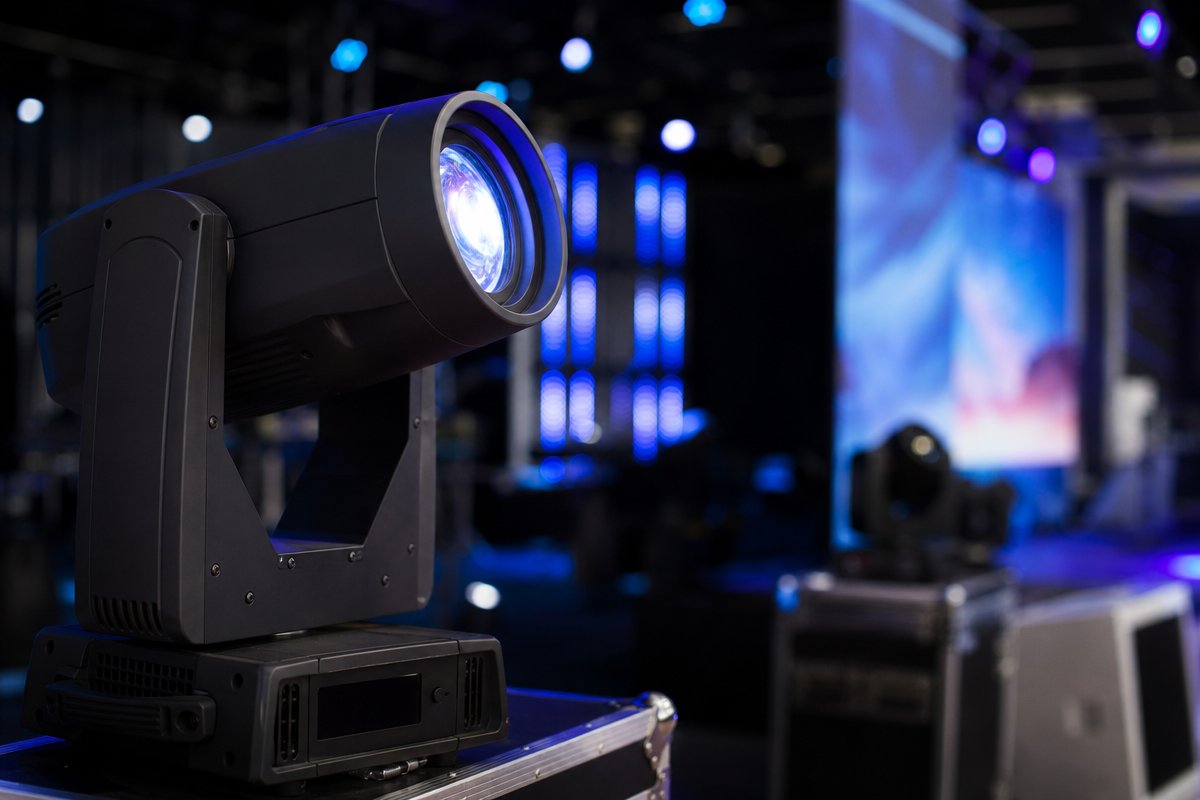
- Moving Head Wash Fixtures: Compact moving head LED wash lights that can pan, tilt, and change color dynamically. These create visual movement and energy, particularly effective during transitions, entertainment segments, or walk-in and walk-out moments.
- Theatrical Front Lighting: Properly angled front lighting using ellipsoidal (ERS/leko) fixtures ensures speakers and presenters look professional on camera – eliminating harsh shadows under eyes and creating a polished, broadcast-quality look.
- Dedicated Lighting Technician: A trained lighting designer or operator on-site throughout the event, making real-time adjustments and running cues from a professional lighting console.
- Atmospheric Effects: Haze machines or low-lying fog to make lighting beams visible, adding a layer of drama and visual depth that transforms how fixtures look in the space.
Best for: Venues like The Anthem, the Ronald Reagan Building, MGM National Harbor, The Ritz-Carlton Tysons, and similar upscale DC-area locations where expectations are high and the event will be documented extensively.

Tier 3: Full Intelligent Lighting Design ($10,000–$25,000+)
This is concert-level, broadcast-grade event lighting. It is designed for flagship galas, award ceremonies, product reveals, large conferences with general sessions, and any event where the visual experience is a core part of the brand message.
- Everything in Tiers 1 and 2, plus:
- Intelligent Spot Fixtures: High-output moving head spot lights with gobos, prisms, and precise beam control. These create dramatic aerial effects, sharp beams, and stage specials that rival touring concert productions.
- LED Pixel Bars and Battens: Individual pixel-mapped LED bars that mount on truss or scenic elements, creating dynamic color chases, video-mapped effects, and immersive wall treatments.
- Custom Lighting Plot and Programming: A professional lighting designer creates a full lighting plot specific to your venue and event flow. Every cue – from the opening walk-in to the keynote to the closing moment – is pre-programmed and rehearsed.
- Truss and Rigging: Ground-supported or flown truss structures that allow fixtures to be positioned overhead, creating top-down washes, beam effects, and layered lighting that ground-based setups cannot achieve.
- Integration with Video and Audio: Lighting is synchronized with LED walls, projection screens, and audio cues so that the entire sensory experience operates as one unified production.
- Multiple Technicians and a Lighting Director: A team including a lead lighting designer, a console programmer, and follow-spot operators for award presentations or featured speakers.
Best for: High-profile events at venues such as the Walter E. Washington Convention Center, the Kennedy Center, Capital One Hall, and large-scale outdoor event spaces on the National Mall or in Georgetown.
How DC Venues Influence Your Lighting Rental Strategy
Washington DC is not a one-size-fits-all market. The diversity of event venues across the DMV region means your lighting approach must be tailored to the specific space. Here is how venue type affects your rental decisions:
Hotel Ballrooms
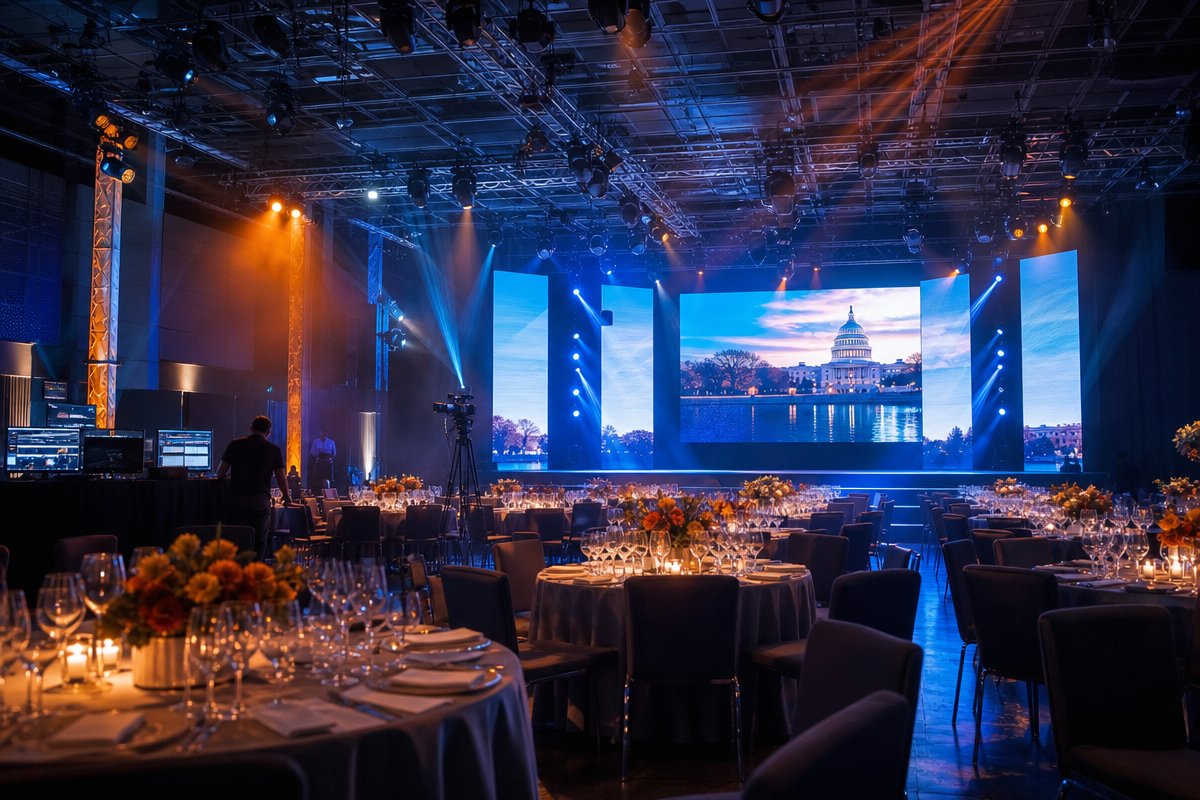
Most DC hotel ballrooms – including properties in Dupont Circle, the Wharf, and Crystal City – come with basic overhead chandeliers or recessed can lights. These provide functional illumination but zero atmosphere. Uplighting and stage washes are essential. If the ceiling height allows, gobo projection and moving head fixtures add dramatic impact without requiring complex rigging.
Historic and Unique Venues
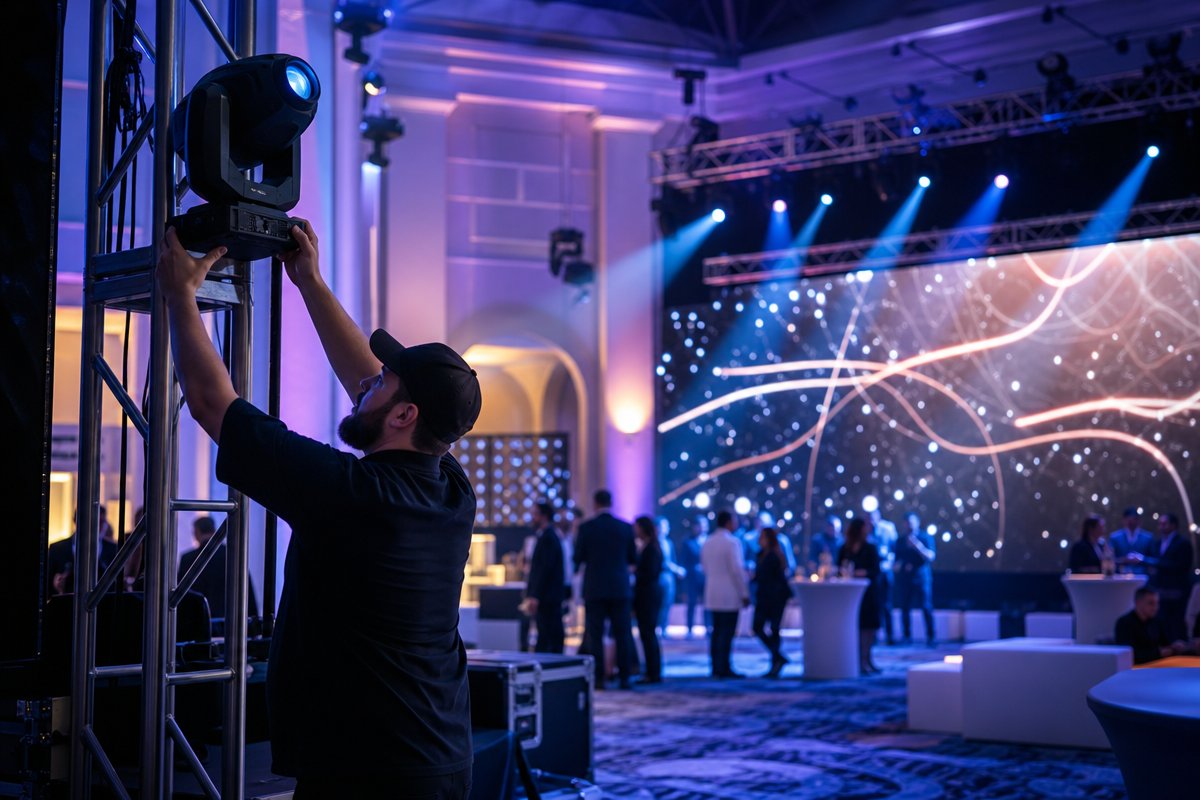
DC is rich in historic venues – think the Daughters of the American Revolution Constitution Hall, the Anderson House, or the Decatur House. These spaces have architectural character but often come with restrictions: no rigging from ceilings, limited power access, and sensitivity to heat output. Battery-powered LED uplighting, compact intelligent fixtures, and careful power distribution planning become critical. An experienced production team will know these restrictions before load-in day.
Convention Centers and Large-Format Spaces
The Walter E. Washington Convention Center and Dulles Expo Center offer vast, open spaces with high ceilings and existing rigging points. Here, the challenge is not restriction – it is scale. You need high-output fixtures, longer cable runs, and more gear to fill the space with light. Truss-mounted intelligent fixtures and high-powered LED washes become necessary to avoid a dim, cavernous feel.
Outdoor Events
From embassy gardens to waterfront spaces along the Potomac, outdoor events in the DC area require weather-resistant fixtures, generator-powered electrical distribution, and fixtures with enough output to compete with ambient daylight during golden hour. Outdoor events also benefit enormously from intelligent lighting after sunset, when the production becomes the entire visual environment.
What to Look for in a DC Event Lighting Rental Partner
Choosing the right lighting rental partner is about more than price. Here are the factors that separate a reliable production partner from a vendor who simply drops off equipment:
- In-house inventory and technicians: Companies that own their gear and employ their technicians deliver more reliable, responsive service than brokers who subcontract everything.
- Venue-specific experience: A partner who has produced events at your specific venue knows the power capacity, load-in logistics, rigging points, and union labor requirements before you even sign a contract.
- Design-first approach: The best partners do not hand you a price list and ask you to choose fixtures. They start with your event goals, venue, and budget, then design a lighting plan that achieves maximum impact within those parameters.
- Integration capability: Lighting does not exist in isolation. Your partner should be able to integrate lighting with audio, video, LED walls, and staging so the whole production moves together.
- On-site technical support: Live events are unpredictable. Having a lighting technician on-site who can troubleshoot in real time is non-negotiable for any event with more than basic uplighting.
Frequently Asked Questions About Event Lighting Rental in DC
How far in advance should I book event lighting rental in DC?
For most corporate and organizational events in the Washington DC area, we recommend booking your lighting rental and production partner at least 6 to 8 weeks in advance. For peak-season events (spring gala season from March through June and fall conference season from September through November), 10 to 12 weeks is advisable. High-demand periods often coincide with congressional schedules and association calendars, which can strain local production inventory.
Can I rent lighting equipment without a technician?
Technically, some vendors offer dry rentals – equipment only with no operator. However, for anything beyond simple plug-and-play uplighting, a professional technician is strongly recommended. Intelligent fixtures require DMX programming, proper power distribution, and precise focus. Without a trained operator, you risk equipment damage, safety issues, and a subpar visual result that undermines your investment.
What is the difference between uplighting and wash lighting?
Uplighting refers to fixtures placed on the ground pointing upward to wash walls, columns, or drapery with color. Wash lighting is a broader term that includes any fixture designed to cover a wide area with an even field of light – including stage washes that illuminate performers, speakers, or scenic elements from above or in front. Both serve different purposes and are often used together in a comprehensive lighting design.
How does lighting integrate with LED walls and projection?
Lighting and video must be carefully coordinated. Ambient lighting that is too bright can wash out LED walls and projection screens, while stage lighting that is too dim makes presenters look poor on camera. A skilled lighting designer balances front light for camera, controls ambient spill near screens, and synchronizes color temperatures so that the entire visual environment feels cohesive. This integration is one of the key advantages of working with a full-service production company rather than separate vendors.
Does the venue provide any lighting, or do I need to rent everything?
Most DC-area venues provide basic house lighting – overhead fixtures, chandeliers, or recessed cans. This is sufficient for functional illumination (guests can see their plates and find the restrooms) but rarely adequate for a produced event experience. Specialty lighting – uplighting, stage lighting, gobos, moving heads, and atmospheric effects – almost always needs to be brought in by a production partner.
Is outdoor event lighting more expensive than indoor?
Generally, yes. Outdoor events require weather-rated fixtures, generator power (which is an additional cost), longer setup times, and sometimes permitting for temporary power and structures. However, the visual impact of professional lighting in an outdoor setting – especially after sunset at waterfront venues or garden settings – is extraordinary and often justifies the added investment.
Transform Your Next DC Event with the Right Lighting Partner
Event lighting rental in DC is not about spending the most money – it is about spending strategically. Whether your budget supports foundational uplighting or a fully programmed intelligent lighting design, the right approach transforms your venue, flatters your brand, and creates an experience that your attendees will remember.
The key is working with a production partner who understands the nuances of DC-area venues, brings design expertise to the table, and ties lighting into every other production element.
TriVision Event Production has been delivering end-to-end event production services across Washington DC, Northern Virginia, and Maryland for over 30 years. From intimate corporate dinners to large-scale galas and multi-day conferences, our team designs and executes lighting solutions tailored to your venue, your vision, and your budget. We own our inventory, employ our technicians, and approach every event with a design-first mindset.
Ready to see what professional lighting can do for your next event? Contact TriVision Event Production for a complimentary consultation and custom lighting proposal. Let us show you what is possible.
Let’s talk about your event
Tell us the date and the room - we’ll bring the plan.