
Quick answer: A successful indoor LED wall setup comes down to four decisions: match pixel pitch to viewing distance (P2.5–P2.9 suits most 100–500-person corporate events), specify brightness for the venue’s ambient light (600–800 nits in a dark room, up to 1,400–1,600 nits with daylight), format content at the wall’s exact native resolution with large high-contrast type, and plan load-in, power (15–30 amps of 208V for a mid-size wall), and setup time (2 to 12 hours depending on size). Book four to eight weeks ahead – earlier during DC’s peak seasons.
You have approved the budget, locked down the venue, and confirmed the keynote speaker. But if your audience cannot clearly see your content on screen, everything else falls flat. For corporate event attendees, visual presentation quality directly shapes how they perceive the hosting organization. That is exactly why getting your indoor LED wall rental for corporate events right is not optional – it is foundational to event success. This guide walks you through every practical detail: from pixel pitch selection and ambient light management to content formatting and load-in logistics, specifically for corporate events in the Washington DC, Northern Virginia, and Maryland region.
Why Indoor LED Walls Have Become the Corporate Standard in 2026
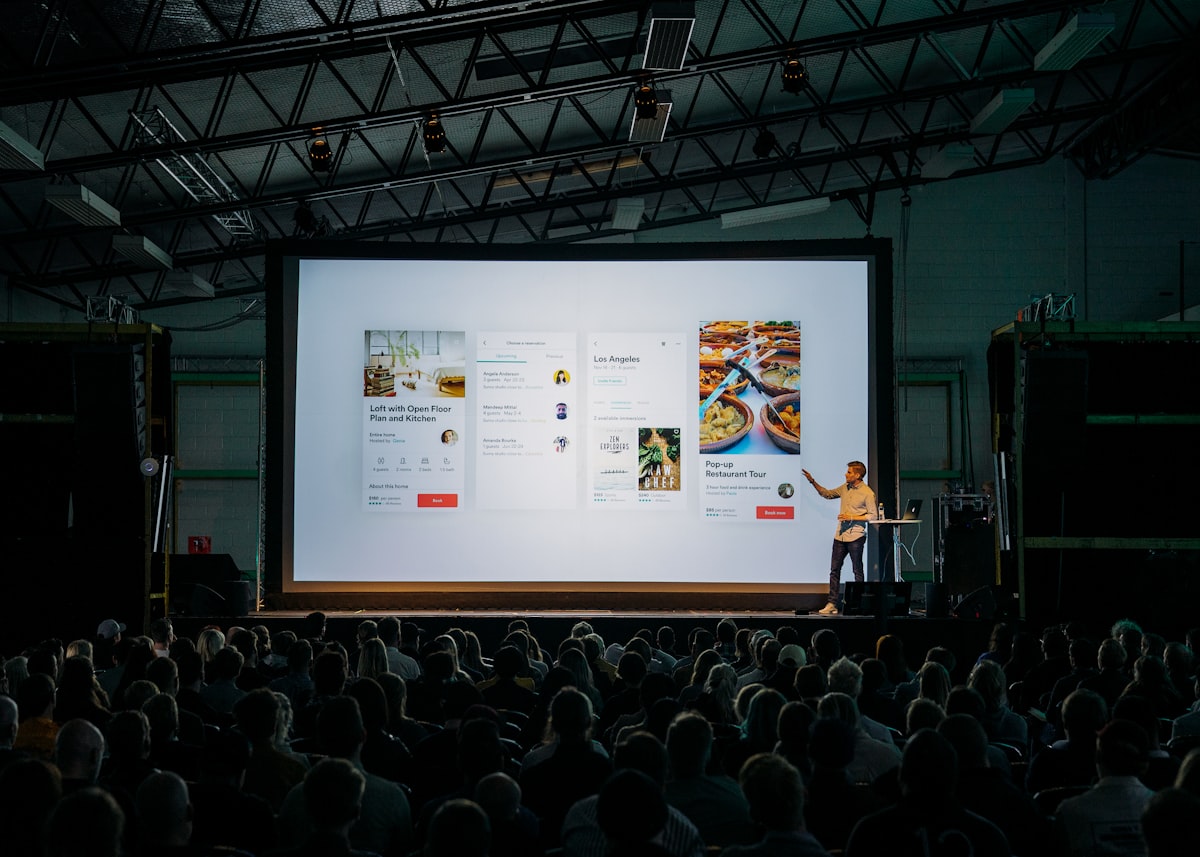
For decades, projectors and pull-down screens dominated corporate event visuals. But in 2026, indoor LED walls have become the default for organizations that demand crisp imagery, vibrant color reproduction, and reliability under any lighting condition. The shift is not just aesthetic – it is strategic.
The Business Case for LED Over Projection
- Superior brightness: LED panels deliver 800 to 1,600 nits of brightness, compared to the 3,000–6,000 lumens of most projectors. In practical terms, this means LED walls produce visible, vivid content without requiring a darkened room – critical for corporate environments where attendees need to take notes, network, and move freely.
- No shadow interference: Speakers can stand directly in front of an LED wall without casting shadows, unlike rear- or front-projected setups that require careful staging offsets.
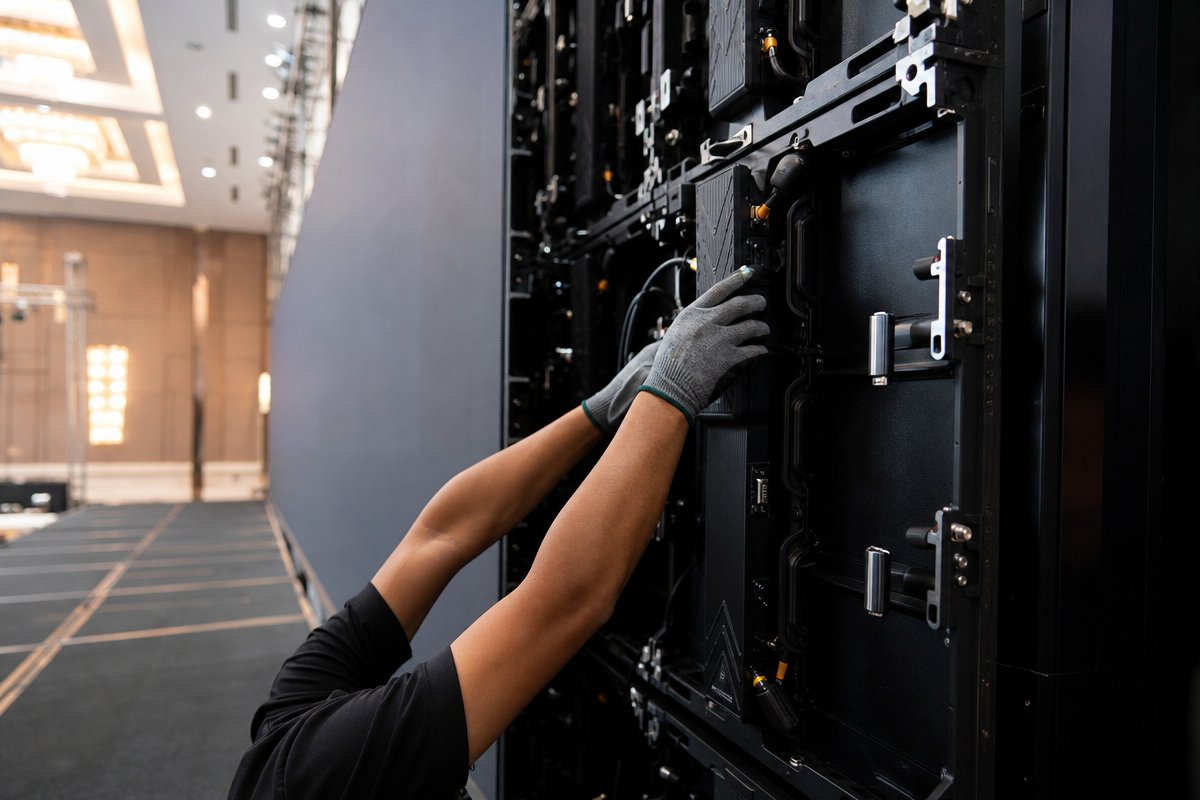
- Modular scalability: LED panels tile together to create virtually any size and aspect ratio, from a 10-foot-wide breakout room display to a 40-foot-wide general session wall.
- Color accuracy: Modern LED panels achieve over 95% of the DCI-P3 color gamut, ensuring brand colors render exactly as intended – a detail that matters enormously for corporate brand managers.
For corporate events in the DMV area – where venues range from intimate boardrooms at Tysons Corner hotels to grand ballrooms at the Walter E. Washington Convention Center – this flexibility is invaluable.
Choosing the Right Pixel Pitch for Indoor Corporate Events
Pixel pitch is the single most important technical specification when renting an indoor LED wall, and yet it is the detail most frequently misunderstood by event planners. Here is what you actually need to know.
What Pixel Pitch Means (in Plain Language)
Pixel pitch refers to the distance, measured in millimeters, between the center of one LED pixel and the center of the adjacent pixel. A smaller number means pixels are packed more tightly together, resulting in higher resolution at closer viewing distances.
Pixel Pitch Selection by Viewing Distance
The general rule of thumb is that minimum comfortable viewing distance (in feet) equals roughly the pixel pitch number multiplied by 3 to 4. Here is a practical breakdown for corporate events:
- P1.5 to P1.9 (1.5mm–1.9mm pitch): Ideal when attendees will be seated 5 to 12 feet from the screen. Best for executive boardroom presentations, intimate breakout sessions, and product reveal events where close-up viewing is expected.
- P2.5 to P2.9 (2.5mm–2.9mm pitch): The sweet spot for most mid-size corporate events – general sessions with 100 to 500 attendees, annual meetings, and awards galas where the nearest viewers are 8 to 20 feet away. This is the most commonly rented pixel pitch in the DC-area corporate market.
- P3.9 (3.9mm pitch): Suitable for larger ballrooms and convention halls where minimum viewing distance exceeds 15 feet. Often chosen for budget-conscious events where the wall is used primarily for IMAG (image magnification) of speakers rather than detailed data slides.
A Common Mistake to Avoid
Many planners over-specify pixel pitch, renting P1.5 panels for a 300-person ballroom where no one is seated closer than 20 feet. This wastes budget because finer pixel pitch panels cost significantly more per square foot. Conversely, under-specifying – using P3.9 in a boardroom – produces visible pixelation on text-heavy slides, which undermines credibility. The key is matching pixel pitch to your actual seating chart and content type.
Managing Ambient Light: The Variable Most Planners Overlook
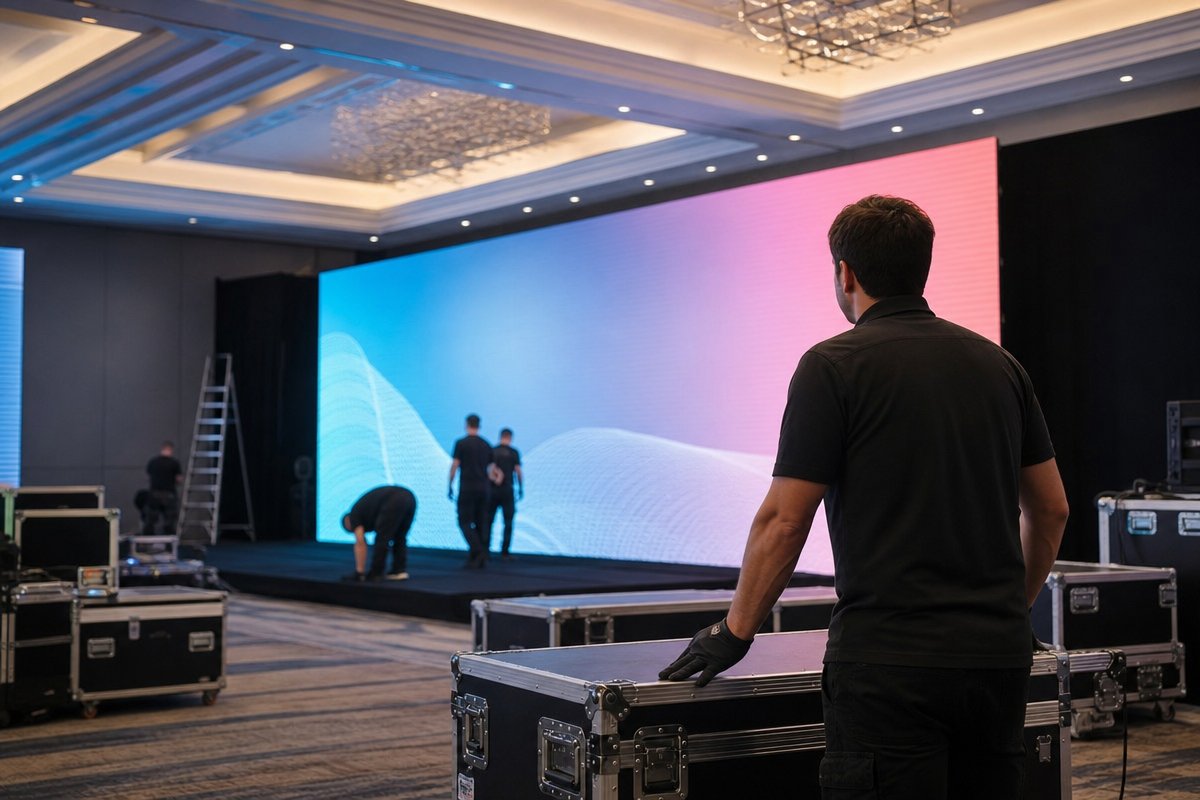
One of the greatest advantages of LED walls over projection is their performance in ambient light. But that advantage only holds if you plan for the specific lighting conditions in your venue. Here is how to approach it.
Assess Your Venue’s Natural Light
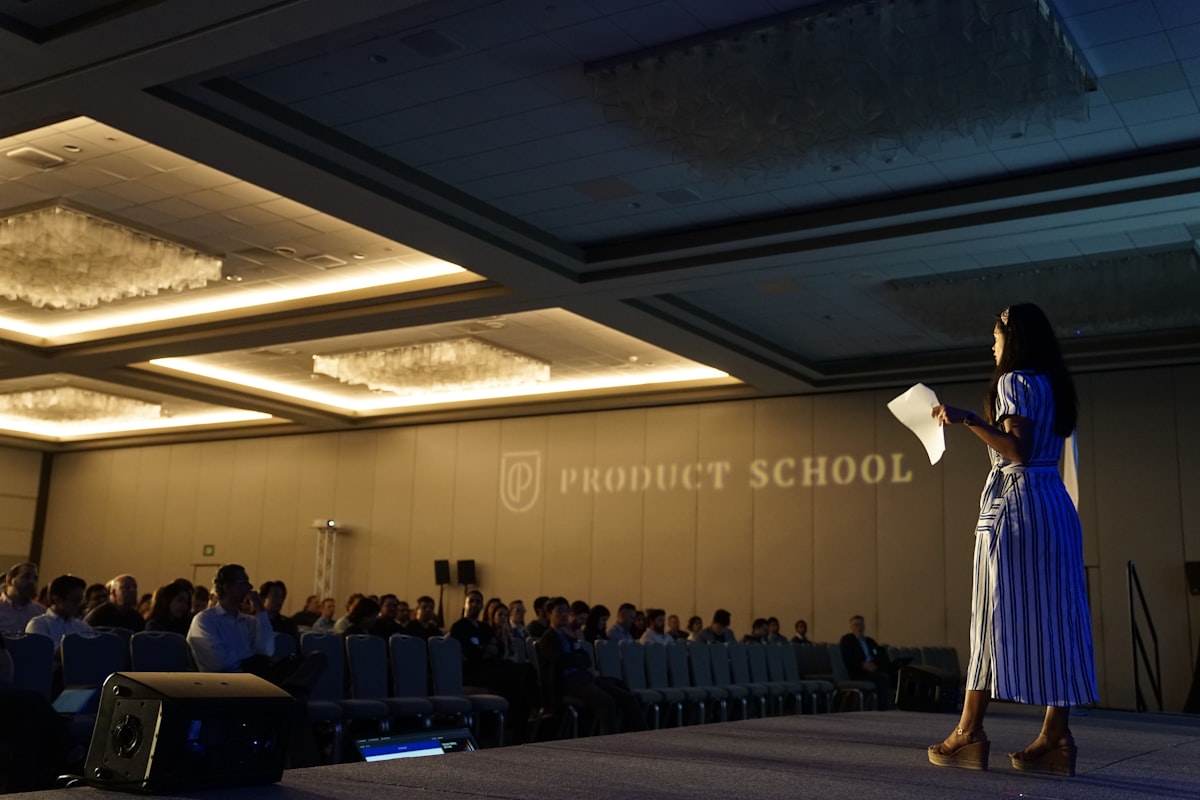
Many premium DMV-area corporate venues – the Ritz-Carlton Tysons, MGM National Harbor, the Marriott Marquis in DC – feature floor-to-ceiling windows, atriums, or skylights that flood rooms with natural light during daytime events. Before finalizing your LED wall rental specifications, take these steps:
- Conduct a site visit at the same time of day as your event. A ballroom that feels dim at 7 PM may be bathed in sunlight at 10 AM when your keynote is scheduled.
- Identify light sources that cannot be controlled. Windows without blackout curtains, glass entryways, and open foyers all introduce ambient light that will compete with your screen.
- Coordinate with venue lighting staff. Most hotels can adjust house lights, but you need to request this in advance and specify levels (e.g., dimmed to 30%) for each event segment.
LED Wall Brightness Recommendations by Environment
- Fully controlled environment (dark room): 600–800 nits is sufficient. Running panels at lower brightness extends their lifespan and reduces power draw.
- Standard ballroom with house lights at 50%: 1,000–1,200 nits delivers clear, comfortable viewing.
- Daylight-exposed venue or windows present: 1,400–1,600 nits or higher. In some cases, you may also want matte-finish panels to reduce glare reflection.
Coordinate LED Brightness with Stage Lighting
Your LED wall does not exist in a vacuum. Stage lighting – especially front washes aimed at the speaker – can wash out portions of the screen if angles are not carefully managed. An experienced production team will position front lights to illuminate the presenter without spilling onto the LED surface, and will calibrate LED brightness to complement, not compete with, the overall lighting design.
Content Formatting Tips for Corporate LED Wall Presentations
Even a perfectly specified and brilliantly lit LED wall will disappoint if the content displayed on it is not formatted correctly. Corporate presentations have unique requirements that differ from concert visuals or trade show graphics.
Resolution and Aspect Ratio
- Match your content resolution to your wall resolution – exactly. If your LED wall is configured at 3840×1080 pixels (a common ultra-wide 32:9 setup), design your slides at precisely 3840×1080. Scaling artifacts destroy text legibility.
- Request the exact pixel dimensions from your AV provider at least three to four weeks before the event. Do not assume standard 16:9. Many corporate LED wall configurations use non-standard ratios to accommodate stage design.
- For standard 16:9 walls, design at native 1920×1080 or 3840×2160 (4K), depending on panel resolution.
Typography and Readability
- Minimum font size: No text should appear smaller than 36pt when rendered on the wall. For key data points and headlines, 60pt or larger is recommended.
- Use sans-serif fonts. Helvetica, Arial, Gotham, and similar typefaces render cleanly on LED pixel grids. Serif fonts and thin-weight typefaces can appear fuzzy.
- High contrast only. White or light text on dark backgrounds is the gold standard for LED walls. Avoid medium-tone backgrounds (grays, pastels) that reduce contrast ratios.
- Limit text per slide. No more than six to eight lines of text, with generous line spacing. Remember: the audience is viewing from distance, not reading a document.
Video and Motion Graphics
- Frame rate: Deliver video content at 30fps or 60fps. Avoid 24fps cinematic content, which can exhibit visible judder on LED panels that refresh at 60Hz.
- Codec: H.264 or H.265 at a high bitrate (50 Mbps+) for pre-rendered video. For live feeds, ensure your video switcher outputs match the wall’s native resolution.
- Color space: Design in sRGB or Rec. 709. Avoid wide-gamut color profiles unless your AV team has profiled the specific panels being used.
- Safe margins: Keep critical content within 90% of the screen area. The outermost edges of a tiled LED wall can have slight variances at panel seams.

Load-In, Rigging, and Venue Logistics in the DMV Region
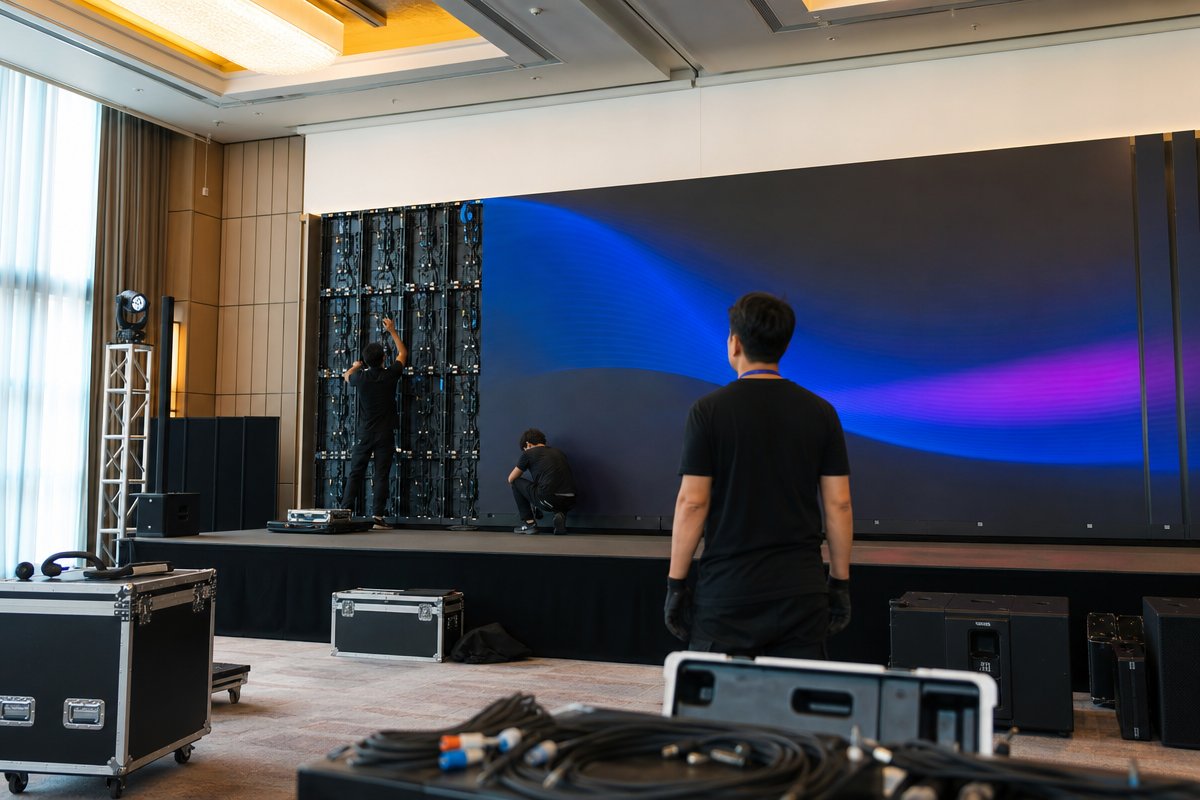
The technical specifications are only half the equation. Getting an indoor LED wall physically into your venue, assembled, tested, and show-ready demands careful logistical planning – especially in the DC metro area, where venue access can be uniquely challenging.
Venue Access and Load-In Considerations
- Dock access and elevator dimensions: LED wall panels are transported in road cases that can weigh 80 to 120 pounds each. A 16×9-foot wall may require 30 to 50 cases, plus rigging hardware, processors, and cabling. Confirm freight elevator weight limits, door widths, and dock scheduling with the venue.
- Union labor requirements: Several major DC-area convention centers and hotels operate under union labor agreements. This affects who can unload trucks, push cases, and connect power. Your production company should manage this coordination, but you need to budget for it.
- Power requirements: A mid-size indoor LED wall draws 15 to 30 amps of 208V power. Larger walls or walls running at maximum brightness may require dedicated electrical circuits. Confirm power availability and outlet locations during your site survey.
Setup Timeline
Plan for these approximate timelines for indoor LED wall setup at corporate events:
- Small wall (8×5 feet, ground-supported): 2 to 3 hours including testing and content check.
- Medium wall (16×9 feet, ground-supported or flown): 4 to 6 hours. If rigging from ceiling, add time for rigging inspection and structural verification.
- Large wall (24×13 feet or larger): 8 to 12 hours. These setups typically require a dedicated load-in day before the event.
Always build in at least 60 minutes of buffer for content rehearsal after the wall is fully operational. This allows presenters to see their slides at scale and make last-minute adjustments.
What to Look for in an Indoor LED Wall Rental Provider
Not every AV vendor offering LED wall rental delivers the same level of service, especially for corporate events where reliability is non-negotiable and brand perception is on the line.
Key Evaluation Criteria
- In-house inventory vs. sub-rented gear: Providers that own their LED panels maintain them rigorously. Sub-rented panels may arrive with mismatched calibration, dead pixels, or inconsistent brightness across tiles.
- Technical staff on-site: For corporate events, you need a dedicated LED wall technician on-site throughout the event – not a drop-off-and-leave rental arrangement. Issues like a single panel failure or a processor glitch require immediate resolution.
- Content management support: The best providers offer pre-event content testing, on-site content loading, and real-time switching between presentations, video rolls, and camera feeds.
- DMV venue experience: A provider familiar with the specific venues in Washington DC, Northern Virginia, and Maryland will already know dock access limitations, power availability, rigging points, and union requirements – saving you headaches and potential surprises.
- Redundancy planning: Ask whether the provider brings backup panels, a spare processor, and redundant signal paths. For high-stakes corporate events, a single point of failure is unacceptable.
Frequently Asked Questions About Indoor LED Wall Rental for Corporate Events
What size LED wall do I need for a corporate event with 200 attendees?
For a 200-person general session in a standard hotel ballroom, a 16×9-foot LED wall with P2.5 or P2.9 pixel pitch is typically ideal. This provides clear visibility for attendees seated 15 to 60 feet from the screen. If the room layout is wider than it is deep, consider two flanking screens or an ultra-wide single wall. Your production partner should model sightlines based on your specific floor plan.
How far in advance should I book an indoor LED wall rental?
For corporate events in the DMV area, we recommend booking four to eight weeks in advance. However, during peak event season (September through November and March through May in Washington DC), inventory can tighten significantly. High-demand pixel pitches like P2.5 often sell out for prime dates. Early booking also ensures adequate time for content formatting guidance and site surveys.
Can I use my existing PowerPoint slides on an LED wall?
Yes, but they will likely need reformatting. Standard PowerPoint slides are designed for 16:9 projection at 1920×1080, which may not match your LED wall configuration. Additionally, slides designed for a laptop screen often use fonts that are too small, colors that lack contrast, and layouts that are too text-heavy for LED wall display. Plan to reformat key slides or work with your AV provider’s content team to optimize them.
What happens if an LED panel fails during my event?
Individual panel failures are rare with well-maintained equipment but can occur. A qualified on-site technician can swap a failed panel in minutes – often during a break without the audience noticing. This is why having a production partner with spare panels on-site and a technician dedicated to your event is essential, especially for high-visibility corporate programs.
Is an indoor LED wall rental more expensive than projection?
Yes, LED wall rental carries a higher line-item cost than projection. However, the total cost comparison is more nuanced. LED walls eliminate the need for screen rental, specialized projection surfaces, darkened rooms (which can require additional draping), and the risk of shadow interference that may necessitate staging redesign. For events where visual impact and brand perception matter, the return on investment typically justifies the premium.
Do I need a separate lighting designer if I am using an LED wall?
For most corporate events, yes. The LED wall itself emits significant light that affects the look and feel of the room. A lighting designer ensures the stage wash, ambient room lighting, and LED wall brightness work together cohesively rather than competing. This coordination prevents the washed-out-presenter look that is common when LED walls and stage lighting are not calibrated in tandem.
Make the Visuals Carry Your Next Corporate Event
Getting your indoor LED wall rental for corporate events right requires more than placing an order for panels. It demands the right pixel pitch for your viewing distances, ambient light analysis tailored to your specific venue, content formatted to LED specifications, and a logistics plan that accounts for every variable from dock access to power distribution. When all of these elements align, your audience sees one unbroken, high-impact image that does justice to your brand and your message.
TriVision Event Production has delivered indoor LED wall solutions for corporate clients across Washington DC, Northern Virginia, and Maryland for over 30 years. From intimate executive briefings to 2,000-person general sessions, our team handles site surveys, pixel pitch recommendations, content optimization, load-in logistics, and on-site technical management – so your event looks flawless from the first slide to the last. Contact TriVision Event Production to start planning your indoor LED wall setup for 2026.
Let’s talk about your event
Tell us the date and the room - we’ll bring the plan.