
Quick answer: LED wall rental cost is driven by seven variables: pixel pitch (the biggest single driver – fine pitch runs roughly 40–70 percent more per panel), wall size and shape, rigging method (flown costs more than ground-stacked), content creation (10–25 percent of the total), rental duration, venue logistics, and service level (dry hire vs. full-service). Tighter pitch, bigger walls, flown rigging, custom shapes, and custom motion graphics push the price up; multi-day tiered pricing, easy load-in venues, standard 16:9 configurations, and bundled AV packages pull it down.
You have been quoted two very different numbers for the same size LED wall, and now you are wondering which one is real – or if either of them is. You are not alone. LED wall rental cost is one of the most opaque line items on any event production budget, and for good reason: there are at least seven distinct variables that can push the price up or pull it down by thousands of dollars. LED video walls claim a growing share of corporate event budgets every year, yet most planners still say they do not fully understand what they are paying for. This post changes that.
Below, we break down every major factor that influences LED wall rental pricing – pixel pitch, wall dimensions, rigging and labor, content creation, rental duration, venue logistics, and service-level packaging. Whether you are planning a gala in Washington DC, a product launch in Northern Virginia, or a multi-day conference in Maryland, this guide will help you read any quote with confidence.
Factor 1: Pixel Pitch – The Biggest Single Cost Driver

What Pixel Pitch Actually Means
Pixel pitch is the distance, measured in millimeters, between the center of one LED pixel and the center of the next. A wall with a 1.9 mm pixel pitch packs far more LEDs per square foot than one at 3.9 mm. More LEDs means sharper images at closer viewing distances – and a significantly higher rental fee.
How Pixel Pitch Affects LED Wall Rental Cost
- Fine pitch (≤ 2.5 mm): Best for executive boardrooms, close-range presentations, and broadcast backdrops. Expect to pay roughly 40–70 percent more per panel than a standard pitch wall.
- Standard pitch (2.6–3.9 mm): The workhorse for most corporate events, galas, and conferences. Offers a strong balance between resolution and budget.
- Wide pitch (≥ 4 mm): Ideal for large arenas, outdoor festivals, or any setting where the nearest viewer is 15 feet or more from the screen. This is typically the most affordable tier.
Choosing the Right Pitch for Your Event
The rule of thumb is simple: multiply the pixel pitch by roughly 8 to estimate the minimum comfortable viewing distance in feet. A 2.5 mm wall looks crisp at about 20 feet; a 4 mm wall needs at least 32 feet. If your front row is closer than that threshold, you need a tighter pitch – and the cost reflects it.
At TriVision Event Production, our team walks clients through a quick viewing-distance analysis before recommending a pixel pitch, because choosing the wrong one means either overspending on resolution nobody can appreciate or under-delivering image quality that distracts from the content.
Factor 2: Wall Size and Configuration
Square Footage Is the Baseline
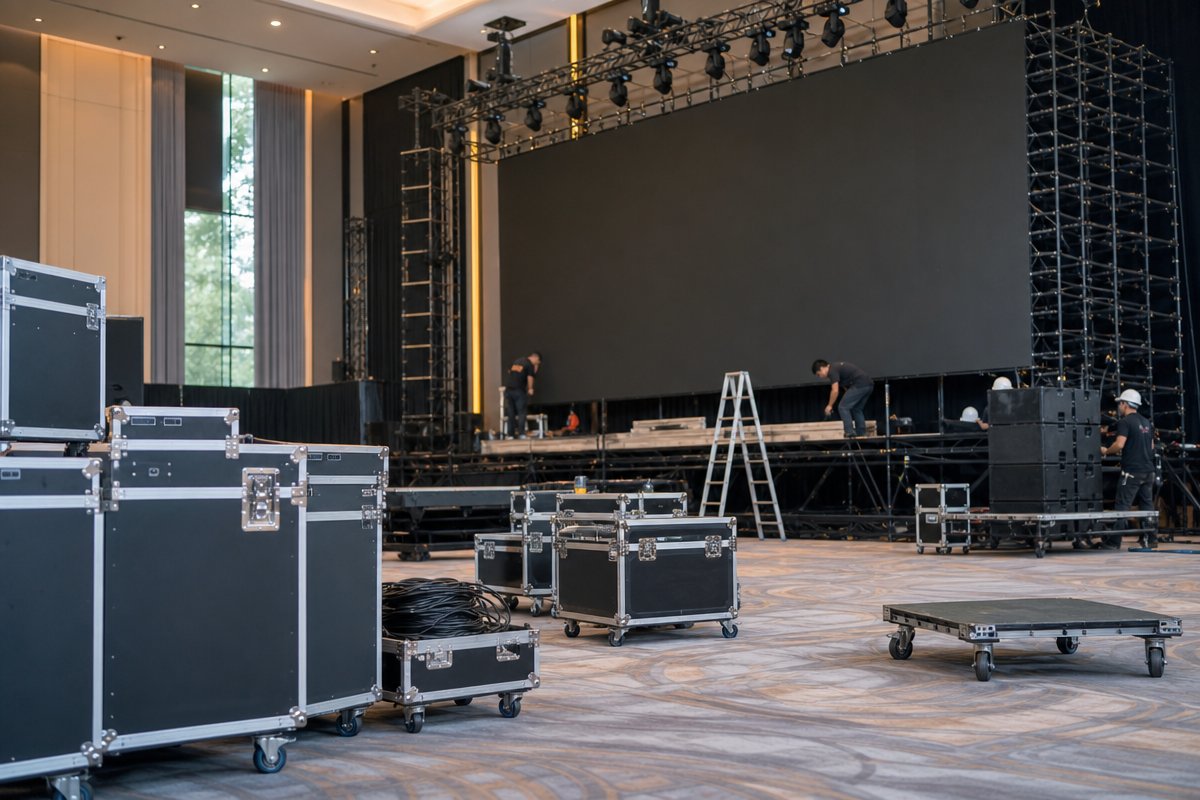
After pixel pitch, total wall size is the next major variable. LED panels are modular – typically 500 mm × 500 mm or 500 mm × 1000 mm per cabinet – so you are essentially renting a certain number of cabinets and assembling them into your desired shape. More cabinets equal more cost, not only for the hardware itself but for the processors, cabling, and power distribution required to drive them.
Standard Sizes vs. Custom Configurations
- Standard 16:9 or 4:3 rectangles are the fastest and least expensive to set up because rigging hardware and processor mapping are straightforward.
- L-shaped, curved, or wrap-around walls require custom frames, additional processors, and more labor hours for alignment and calibration.
- Ceiling-hung or floor-integrated panels add structural engineering considerations and specialty rigging, which we will cover in the next section.
A useful benchmark: doubling the square footage of a standard-pitch wall does not simply double the cost – it usually increases it by about 80 to 90 percent, because processor capacity and power infrastructure scale in steps rather than linearly.
Factor 3: Rigging, Labor, and Structural Complexity
Ground-Stacked vs. Flown Walls
How the wall is mounted matters almost as much as what wall you choose. There are two primary methods:
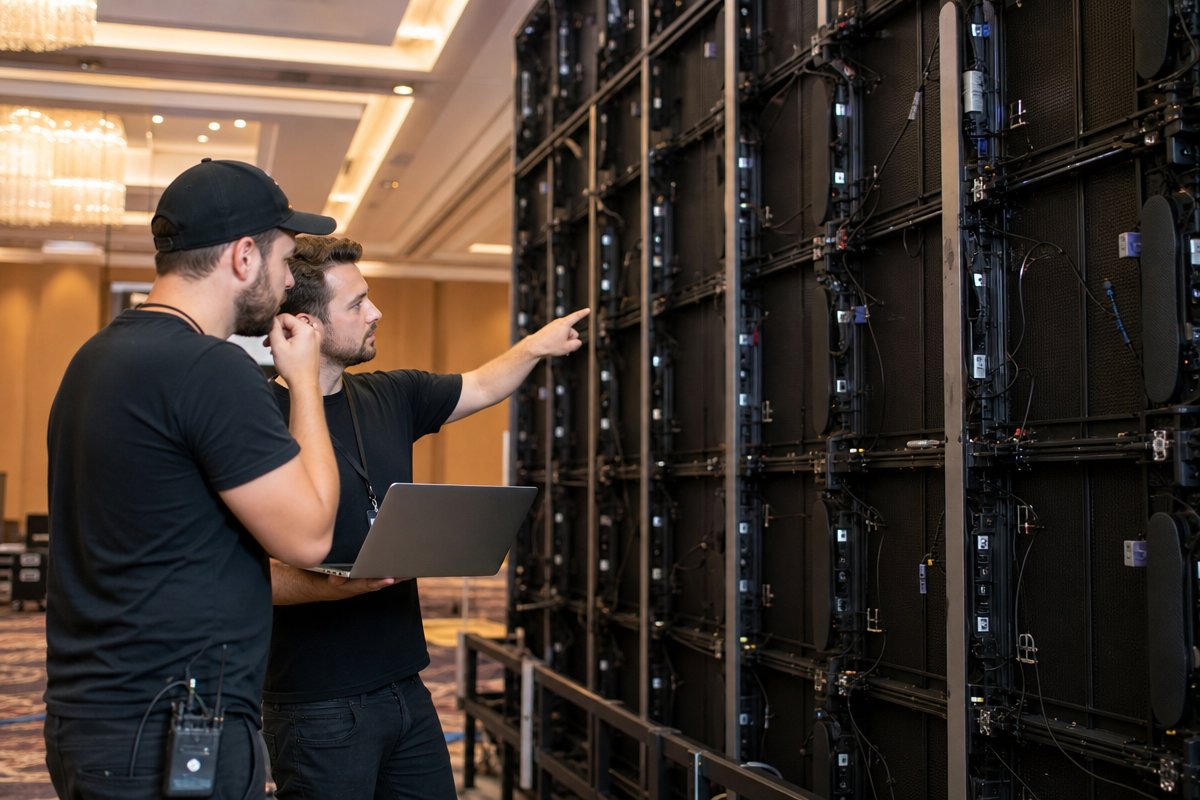
- Ground-stacked: Panels are assembled on a floor-based frame or cart. This is faster, requires fewer crew members, and avoids rigging insurance and venue rigging-point inspections. It is the more budget-friendly option.
- Flown (suspended from truss): Panels are hung from overhead rigging points. This frees up floor space, creates a dramatic stage look, and is often required in ballrooms or theaters where sightlines demand an elevated screen. However, it requires a certified rigger, structural engineering calculations, chain motors, and more setup time – all of which add to the total.
Labor Hours and Crew Size
LED wall setup is not a one-person job. A typical 12-foot by 8-foot wall needs a minimum of two to three technicians and about four hours to build, calibrate, and test. A 20-foot by 12-foot flown wall may require five crew members and a full day of load-in. Labor is usually billed at an hourly or half-day rate per technician, so this becomes a meaningful cost lever.
Venue-Specific Challenges in the DMV
In Washington DC, Maryland, and Northern Virginia, venue logistics can add unexpected costs:
- Hotels along the DC waterfront and in Tysons Corner often have narrow freight elevators and long load-in paths, adding labor time.
- Historic venues – common for galas and government events in the District – may restrict overhead rigging entirely, forcing creative ground-stack solutions that require wider footprints.
- Union labor requirements at certain convention centers can mandate specific crew minimums regardless of wall size.
An experienced local production partner will factor these realities into the quote upfront, rather than surprising you with change orders on-site.
Factor 4: Content Creation and Signal Management
Why Content Is Not an Afterthought
A stunning LED wall showing a stretched PowerPoint slide is a waste of budget. The content displayed on the wall – motion graphics, branded templates, live camera feeds, dynamic data visualizations – can represent 10 to 25 percent of the total LED wall rental cost, depending on complexity.
Levels of Content Investment
- Basic branded slides and lower thirds: Template-driven, minimal custom animation. This is the entry point.
- Custom motion graphics and video loops: Purpose-built visuals that match your event theme, brand palette, and messaging arc. Requires a designer and a render pipeline.
- Live IMAG (Image Magnification) with switching: Real-time camera feeds cut to the wall during keynotes or panel discussions. Requires camera operators, a technical director, and a video switcher – plus the wall must be content-mapped for split or PiP layouts.
- Interactive or data-driven content: Live social feeds, real-time polling results, or audience participation visuals that change on the fly. This demands additional software licensing and a dedicated operator.
Signal Processing and Redundancy
Behind every LED wall is a signal chain: source devices (laptops, media servers, cameras), a video processor or scaler, and the wall’s receiving cards. For mission-critical events – government briefings, shareholder meetings, live broadcasts – clients often request redundant signal paths, backup processors, and a dedicated engineer monitoring the system throughout the show. Redundancy adds cost, but it is insurance against a black screen at the worst possible moment.
Factor 5: Rental Duration and Multi-Day Pricing
Single-Day vs. Multi-Day Rentals
Most LED wall rental quotes are structured around a one-day event with same-day load-in and load-out. Multi-day events – such as a three-day conference at the Walter E. Washington Convention Center or a week-long training summit in Reston – change the math:
- Equipment hold days are usually billed at 30–50 percent of the first-day rate, since the wall remains assembled and the inventory is unavailable for other jobs.
- Crew standby days may be needed if the wall requires daily calibration, content changes, or technical support during sessions.
- Extended rental discounts are common. A five-day rental rarely costs five times the single-day price; most production companies offer tiered pricing that rewards longer commitments.
Load-In and Load-Out Timing
Venues in DC frequently restrict load-in to overnight windows or early morning slots. If your venue allows only a midnight load-in, you are paying overtime labor rates. Conversely, a venue that grants a full day of advance setup time can reduce labor pressure and cost. Always share your venue’s load-in schedule with your production partner as early as possible.
Factor 6: Service-Level Packaging – Rental-Only vs. Full-Service
Dry Hire vs. Turnkey Production
Some companies offer dry-hire LED wall rentals: you get the panels, frames, and cables, and your team handles the rest. This can be cheaper on paper, but it shifts all risk – and the need for skilled technicians – to you.
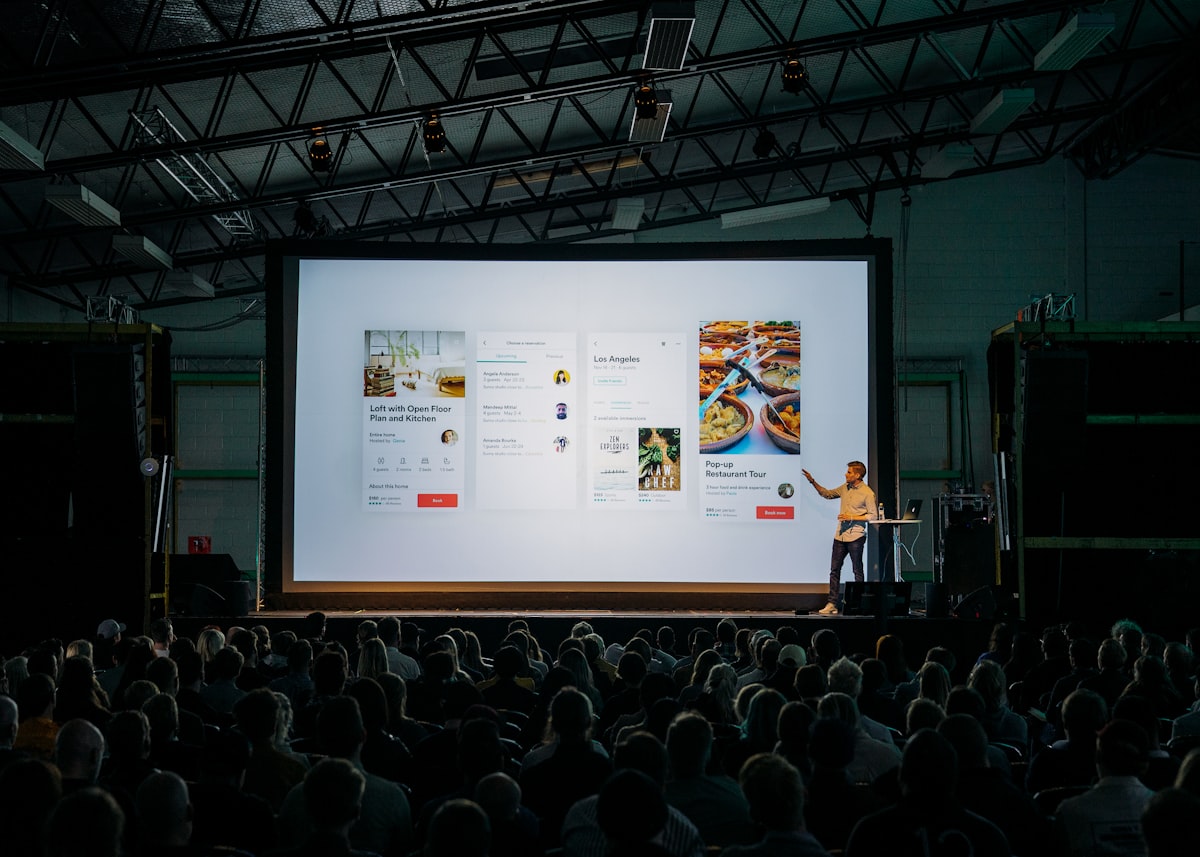
A full-service approach bundles equipment, delivery, setup, calibration, on-site technical direction, content management, and strike into a single package. While the total number is higher, the per-risk-dollar value is significantly better for high-stakes events where failure is not an option.
What Full-Service Includes at TriVision
- Pre-event site survey and CAD renderings of the wall in your venue
- Equipment delivery, setup, and alignment by certified technicians
- On-site technical director for the duration of the event
- Real-time content switching and troubleshooting
- Complete strike and equipment removal post-event
- Backup panels and processors on standby
For corporate clients, government agencies, and nonprofit organizations across the DMV region, this turnkey model eliminates the coordination headaches that come with managing multiple vendors.
Quick-Reference: What Pushes LED Wall Rental Cost Up or Down
Here is a simplified table of directional cost impacts:
- Tighter pixel pitch → Cost goes up
- Larger wall dimensions → Cost goes up
- Flown rigging vs. ground-stacked → Cost goes up
- Custom motion graphics vs. static slides → Cost goes up
- Multi-day rental with tiered pricing → Cost per day goes down
- Venue with easy load-in access → Cost goes down
- Standard 16:9 configuration vs. custom shape → Cost goes down
- Bundling LED wall with full AV package → Cost per item goes down
Frequently Asked Questions About LED Wall Rental Cost
How much does it typically cost to rent an LED wall for a corporate event in 2026?
Pricing varies widely based on the factors outlined above, but for a standard-pitch (2.9–3.9 mm) LED wall in a 10-foot by 6-foot configuration with full-service setup and on-site support in the DC metro area, expect a range that starts in the low thousands and scales upward with size, pixel pitch, and content complexity. The most accurate way to get a number is to request a custom quote with your specific venue, wall size, and event duration.
Is it cheaper to rent an LED wall or use projectors?
Projectors are generally less expensive for small, dimly lit rooms. However, LED walls outperform projectors in brightness, contrast, and reliability – especially in venues with ambient light. For events where visual impact is a priority or where the room cannot be fully darkened, LED walls deliver a return on investment that projectors cannot match. Many clients find the upgrade pays for itself in audience engagement and brand perception.
Can I save money by renting a larger pixel pitch than recommended?
You can, but it is a trade-off. If your audience is far enough from the screen, a wider pixel pitch works beautifully and saves budget. If viewers are too close, the image appears pixelated and undermines your event’s credibility. A reputable production company will never upsell you on a pixel pitch you do not need – but they will also caution you against going too wide for your specific room layout.
Do most LED wall rental companies charge separately for content creation?
Yes, content creation is typically a separate line item. Some full-service production companies – TriVision included – offer content design as part of an integrated package, which can streamline communication and ensure the visuals are optimized for the exact wall resolution and aspect ratio you are using. Bundling content with hardware rental often reduces total project cost compared to hiring a separate design agency.
What hidden costs should I watch for in LED wall rental quotes?
The most common surprise charges include: overtime labor for restricted load-in windows, power distribution upgrades (some venues lack sufficient circuits near the stage), freight and trucking fees for large walls, and last-minute content revisions. Ask your provider to itemize every cost category and clarify what triggers additional charges before you sign.
Does wall shape affect the rental price?
Absolutely. Non-standard shapes – curves, corners, L-configurations, or ceiling-mounted arrays – require additional framing hardware, more complex processor mapping, and extra calibration time. A curved wall of the same total square footage as a flat wall can cost 20–35 percent more due to these factors.
Make Your Next LED Wall Investment Count
Understanding LED wall rental cost is not about finding the cheapest option – it is about knowing exactly where every dollar goes so you can make strategic decisions that align with your event goals. Pixel pitch, wall size, rigging method, content quality, rental duration, venue logistics, and service level each play a measurable role in the final number.
At TriVision Event Production, we have been delivering end-to-end event production across Washington DC, Northern Virginia, and Maryland for over 30 years. Our team provides transparent, itemized proposals so you understand every cost factor before you commit. Whether you need a compact LED backdrop for a keynote or a massive wrap-around wall for a product reveal, we tailor the solution to your audience, your venue, and your budget.
Ready to get a detailed, no-surprise LED wall rental quote? Contact TriVision Event Production to start the conversation. Let us help you turn your vision into a visual experience your audience will remember.
Let’s talk about your event
Tell us the date and the room - we’ll bring the plan.