
Quick answer: Judge a live event streaming company in Northern Virginia on five factors: encoding quality and latency, platform integration (multi-destination streaming and on-demand delivery), true redundancy and failover, production value beyond a single camera, and hands-on experience with NoVA venues and networks.
Your Audience Is Watching Remotely – Can Your Stream Keep Up?
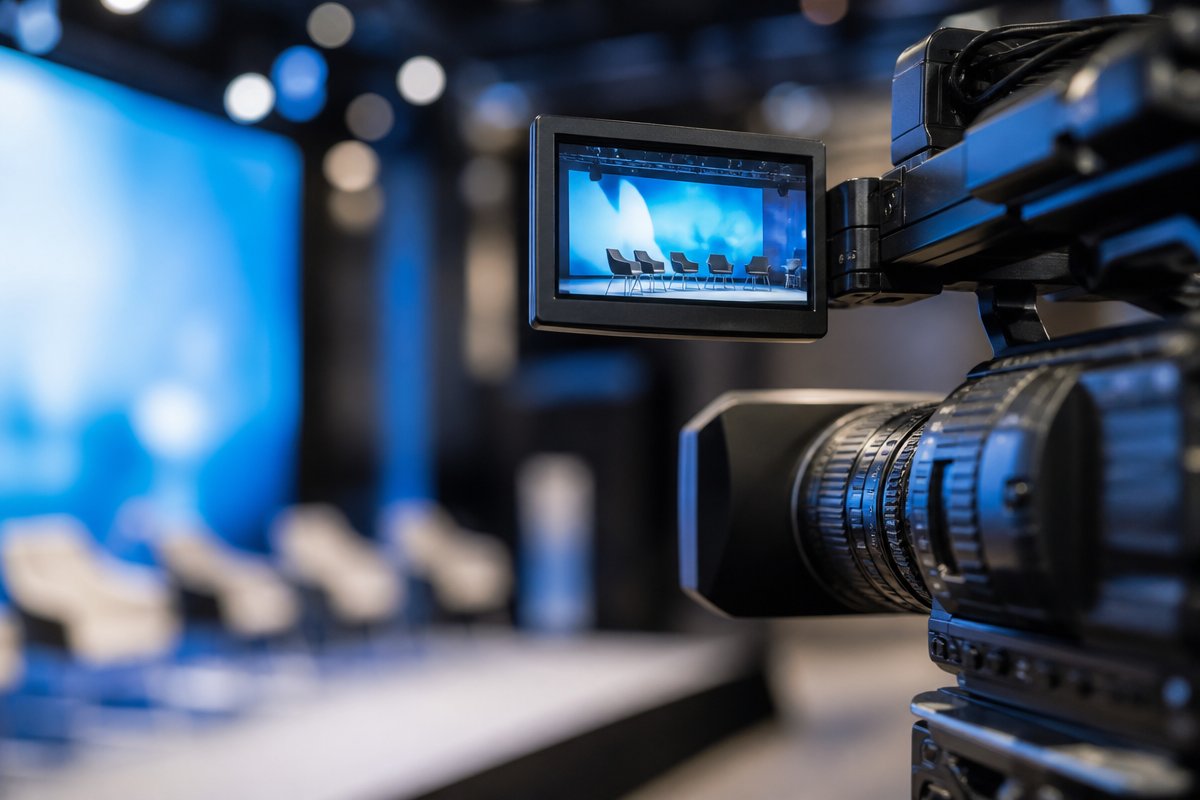
If you are planning a hybrid or virtual event in the DMV region in 2026, choosing the right live event streaming company in Northern Virginia is one of the highest-stakes decisions you will make. A single dropped frame during a keynote, an audio sync issue during a panel, or a platform crash mid-broadcast can undermine months of planning and damage your organization’s credibility with hundreds – or thousands – of remote attendees.
Live streaming has grown from a niche add-on into a core part of how organizations reach their audiences, and corporate and organizational events are a leading driver of that growth – especially in markets like Northern Virginia where government agencies, associations, and Fortune 500 companies regularly need broadcast-quality streaming for stakeholders who cannot attend in person.
But not every streaming provider is built for the complexity your event demands. This guide is a feature-comparison framework – a structured way for Northern Virginia organizations to evaluate live streaming partners across the technical, logistical, and strategic factors that actually determine whether your stream succeeds or fails.
Encoding Quality: The Technical Foundation Most Planners Overlook
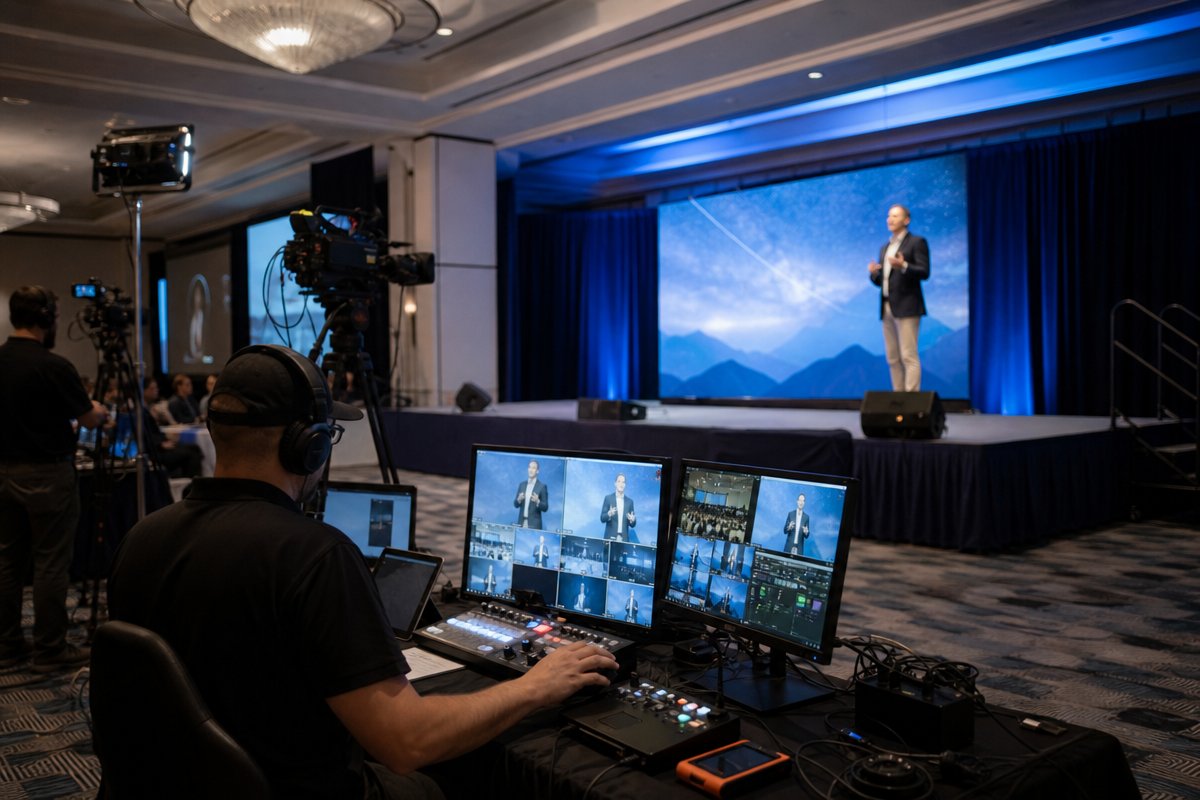
Encoding is the process of converting your live video and audio signals into a digital format that can be transmitted over the internet. It is the invisible backbone of every live stream, and the quality of encoding directly determines what your remote audience actually sees and hears.
What to Compare When Evaluating Encoding
- Resolution and bitrate options: A capable live event streaming company should offer adaptive bitrate streaming (ABR), which automatically adjusts video quality based on each viewer’s internet connection. Ask whether they support 1080p full HD as a baseline, with 4K options for high-profile broadcasts.
- Hardware vs. software encoding: Professional-grade hardware encoders (such as those from Teradek, AJA, or Blackmagic) deliver lower latency and more reliable output than software-only solutions. Ask what hardware the company deploys on-site.
- Frame rate consistency: Dropped frames create stuttering that frustrates viewers. A strong partner will monitor encoding in real time and have a dedicated engineer managing the encoding pipeline throughout your event.
- Audio encoding quality: Many organizations focus on video and forget that poor audio encoding – low sample rates, mono-only output, or compression artifacts – is the number one reason remote viewers abandon a stream. Confirm that your partner encodes audio at 48 kHz stereo minimum with AAC or similar high-quality codecs.
When you are comparing two or three potential partners, ask each one to walk you through their encoding chain from camera to viewer. A company that cannot explain this clearly is a company that does not control it.
Latency Matters More Than You Think
For events that include live Q&A, polling, or interactive elements, encoding latency – the delay between what happens on stage and what appears on screen for remote viewers – is critical. Standard RTMP streaming typically introduces 15-30 seconds of delay. If your event requires near-real-time interaction, ask whether the provider supports low-latency protocols like SRT, RIST, or WebRTC, which can reduce delay to under five seconds.
Platform Integration: Reaching Your Audience Where They Are
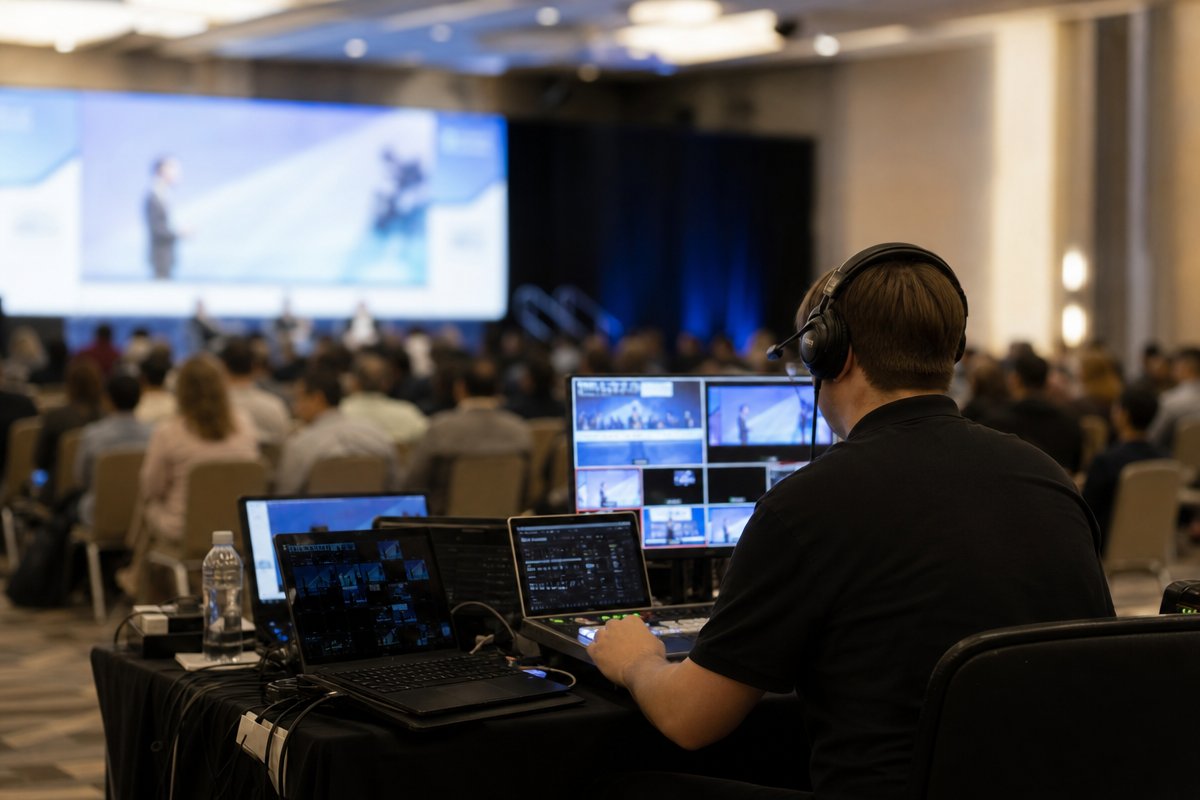
A live stream is only valuable if your audience can actually access it. The best live event streaming company in Northern Virginia will have deep expertise in integrating with the platforms and destinations your stakeholders use – not just one generic solution.
Key Platform Integration Questions
- Multi-destination streaming: Can the company simultaneously stream to your website, a virtual event platform (like Swoogo, Hopin, or Bizzabo), YouTube, LinkedIn Live, and internal portals? Simultaneous multi-destination output (simulcasting) is essential for maximizing reach.
- Embedded player customization: If you are hosting the stream on your own website or intranet, can the provider deliver a branded, embedded player with your organization’s colors, logo, and custom overlays?
- Virtual event platform compatibility: Many associations and corporate teams in Northern Virginia use specific virtual event platforms mandated by their organizations. Confirm that the streaming company has successfully integrated with your chosen platform before – and ask for references.
- Access control and gating: For ticketed events, member-only broadcasts, or sensitive government-adjacent sessions, you may need password protection, SSO integration, or token-based access. Not all streaming providers support these security layers.
- Chat, polling, and Q&A integration: If your event includes interactive elements for remote attendees, the streaming partner should either provide these tools natively or integrate cleanly with third-party solutions like Slido or Pigeonhole.
On-Demand and Post-Event Delivery
Your live stream should not disappear the moment the event ends. Ask whether the company provides automatic recording, post-event editing, and delivery of on-demand versions. Many organizations in the DMV region repurpose recorded streams as training content, board meeting archives, or marketing assets – and a strong partner will build that workflow into the project from the start.
Redundancy and Failover: The Non-Negotiable Factor
Redundancy is the single most important differentiator between a professional live event streaming company and an amateur one. When a stream goes down during a high-visibility event, there is no redo. The reputational and financial cost is immediate.
What Real Redundancy Looks Like
- Dual internet connections: The provider should bring at least two independent internet sources – typically a hardwired connection plus a bonded cellular backup (using devices like Teradek Bond or LiveU). Relying solely on the venue’s Wi-Fi is a red flag.
- Backup encoding hardware: A second encoder should be running in parallel, ready to take over instantly if the primary unit fails. This is non-negotiable for events with more than 100 remote viewers.
- Redundant ingest servers: The streaming infrastructure should route through redundant ingest points so that a server failure on the CDN (content delivery network) side does not kill the broadcast.
- On-site technical director: Automated failover is only part of the equation. A skilled technical director on-site can diagnose and respond to issues – audio feedback, camera failures, switching glitches – in real time. Ask whether a dedicated TD is included or an add-on.
- Pre-event testing and dry runs: Any credible partner will insist on a full technical rehearsal, including testing failover procedures, at least 24-48 hours before the event. If a company tells you a rehearsal is unnecessary, walk away.
For Northern Virginia organizations hosting events at venues like the Hilton McLean Tysons Corner, Capital One Hall, the Ritz-Carlton Tysons, or Hylton Performing Arts Center, a streaming partner who has worked in these spaces before will already understand the internet infrastructure limitations and power availability – saving valuable setup time and reducing risk.
Production Value: Streaming Is More Than Pointing a Camera
A common mistake organizations make is treating live streaming as a purely technical service – plug in a camera, hit record, and push to the internet. In reality, the remote viewer experience is a production challenge that requires intentional creative decisions.
Elements That Separate a Broadcast From a Webcam Feed
- Multi-camera switching: A single locked-off wide shot is boring. Professional streaming should include at least two to three camera angles with a live switching operator cutting between them to maintain visual engagement.
- Lower thirds and graphics: Speaker names, session titles, sponsor logos, and agenda graphics should appear as polished overlays – not text hastily added in post-production.
- Pre-roll and interstitial content: Branded countdown timers, welcome videos, and transition slides between sessions keep remote audiences informed and engaged during breaks.
- Audio mixing for the stream: The audio mix for the in-room audience is different from what sounds good on a laptop or phone. A professional streaming company will create a separate, dedicated audio mix optimized for the stream output.
- Closed captioning: Real-time captioning (CART) is increasingly expected – and in some cases required for compliance – for government and association events. Confirm whether the company provides live captioning or integrates with a captioning service like StreamText or VITAC.
Experience and Local Expertise in Northern Virginia
The DMV region is not a typical event market. The density of government agencies, national associations, defense contractors, and international organizations creates unique requirements that a generic streaming vendor from outside the area may not understand.
Why Local Experience Matters
- Venue-specific knowledge: Northern Virginia venues have widely varying internet infrastructure, power capacity, rigging points, and load-in logistics. A company that has streamed from your venue before will anticipate challenges that a newcomer will discover the hard way.
- Security and compliance awareness: Events associated with government agencies or defense organizations often require background-checked crew, specific data handling protocols, and content restrictions. A Northern Virginia-based streaming company will have experience navigating these requirements.
- Speed of response: When equipment needs to be swapped, a crew member needs to be added last-minute, or weather threatens an outdoor hybrid event, having a partner based in NoVA – with a local warehouse and local crew – means faster response times than flying in a team from another state.
- Relationships with complementary vendors: An established local streaming company will have working relationships with DMV-area rental houses, internet service providers, captioning services, and venue technical directors – relationships that translate into smoother execution for your event.
Frequently Asked Questions
How much does professional live event streaming cost in Northern Virginia?
Pricing varies significantly based on the complexity of the production. A basic single-camera stream to one platform for a half-day event might start around $3,000-$5,000. A multi-camera, multi-platform stream with graphics, captioning, redundant internet, and an on-site technical director for a full-day event typically ranges from $8,000-$20,000 or more. The best approach is to request an itemized quote so you can see exactly what you are paying for and where you can adjust scope to meet your budget.
What internet speed do we need at the venue for live streaming?
For a reliable 1080p stream, you need a minimum of 10 Mbps dedicated upload bandwidth – and that is the floor, not the target. Professional streaming companies typically request 20-50 Mbps dedicated upload to accommodate adaptive bitrate streaming and leave headroom for fluctuations. Critically, this must be a dedicated, hardwired connection – not shared venue Wi-Fi. Your streaming partner should coordinate directly with the venue’s IT team well in advance to arrange this.
Can we stream to multiple platforms at the same time?
Yes. Simulcasting to multiple destinations – such as your website, YouTube, LinkedIn Live, and a virtual event platform – is a standard capability for professional streaming companies. However, each additional destination requires additional bandwidth and sometimes additional encoding streams, so discuss your multi-platform needs during the planning phase so the technical infrastructure is sized appropriately.
What happens if the internet goes down during our live stream?
This is exactly why redundancy planning matters. A professional partner will have a secondary internet connection (typically bonded cellular) that activates automatically or within seconds if the primary connection fails. The stream continues with minimal or no interruption for viewers. Additionally, the event should be recorded locally on-site as a safety net, so even in a worst-case scenario, the content is preserved for on-demand distribution.
How far in advance should we book a live streaming company for our event?
For major events – conferences, galas, large-format hybrid meetings – book your streaming partner at least 6-8 weeks in advance. For peak event seasons in the DMV (spring and fall), 10-12 weeks is safer. Early booking ensures availability of top-tier crew and equipment and allows adequate time for venue coordination, platform testing, and rehearsals.
Do we need separate AV and streaming vendors, or should one company handle both?
Whenever possible, it is more efficient and less risky to have one company handle both in-room AV production and live streaming. When audio, video, lighting, and streaming are managed by the same team, signal routing is simpler, communication is faster, and there is single-point accountability if something goes wrong. Splitting these services between two vendors often creates finger-pointing during troubleshooting and adds coordination overhead for your planning team.
Choosing the Right Partner for Your Next Hybrid or Virtual Event
Selecting a live event streaming company in Northern Virginia is not just a vendor decision – it is a decision about how thousands of stakeholders will experience your brand, your message, and your event. The right partner brings broadcast-quality encoding, deep platform expertise, bulletproof redundancy, genuine production value, and the local knowledge that only comes from years of working in the DMV market.
TriVision Event Production has delivered end-to-end event production – including professional live streaming – for corporate, association, government, and nonprofit clients across Washington DC, Northern Virginia, and Maryland for over 30 years. From multi-camera HD streaming with real-time graphics to fully redundant internet infrastructure and direct virtual platform integration, TriVision’s team handles every layer of your hybrid or virtual broadcast so you can focus on your content and your audience.
Ready to discuss your upcoming event? Contact TriVision Event Production to schedule a consultation and get a customized streaming plan built for your specific venue, audience, and goals.
Let’s talk about your event
Tell us the date and the room - we’ll bring the plan.