
Quick answer: Since 2020, virtual event production in DC has evolved from improvised Zoom calls into broadcast-quality productions – studio-grade multi-camera capture, LED backdrops, real-time graphics, professional audio, and full show management are now the baseline. When choosing a partner in 2026, look for end-to-end capability, broadcast-quality equipment and crew, venue and studio flexibility, high-stakes event experience, and redundancy. Professionally produced single-session webinars start around $5,000–$10,000, multi-day virtual conferences run $25,000–$100,000 or more, and you should book 8–12 weeks ahead.
When the world shut down in early 2020, organizations across Washington DC scrambled to move their events online. The results were often painful: laggy Zoom calls with unstable audio, awkward presenter moments caught on unmuted microphones, and audiences quietly clicking away. Fast-forward to 2026, and the field looks nothing like those early pandemic workarounds. Virtual events have matured from a pandemic stopgap into a large and still-growing market. For organizations in DC, Maryland, and Northern Virginia, working with a professional virtual event production company in DC is no longer a backup plan – it is a strategic decision that delivers measurable engagement, broader reach, and production quality that rivals live television.
So what exactly has changed? And what should you expect when you partner with a virtual event production team in the DMV in 2026? This guide walks you through the evolution, the technology, and the standards that define modern virtual event production.
The 2020 Starting Point: Survival Mode Virtual Events
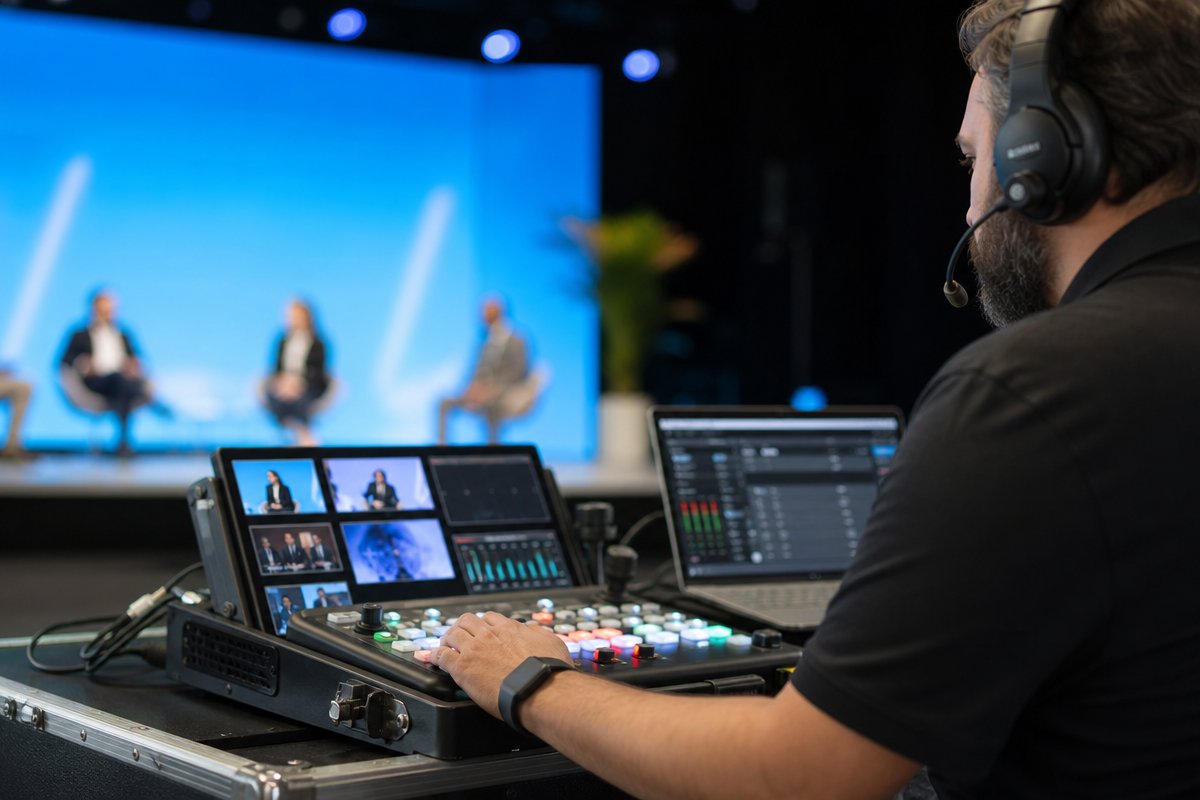
To understand how far virtual event production has come, it helps to remember where it started. In 2020, most organizations treated virtual events as temporary replacements for in-person gatherings. The prevailing mindset was simple: get the content online by any means necessary.
What Early Virtual Events Looked Like
- Consumer-grade platforms: Most organizations defaulted to Zoom, Microsoft Teams, or Google Meet – tools designed for meetings, not productions.
- Single-camera, single-angle setups: Presenters sat at their home desks with laptop webcams, often with poor lighting and distracting backgrounds.
- No production design: There were no branded environments, no lower-thirds, no pre-produced video content, and no show flow management.
- Passive audiences: Attendees had limited ways to engage beyond a chat window, leading to high drop-off rates and low satisfaction scores.
- DIY technical management: Internal teams – often marketing coordinators or executive assistants – were tasked with running complex technical workflows they had never managed before.
The result was predictable: audience engagement became the single biggest challenge event marketers faced with virtual events. Organizations in Washington DC – a city built on high-stakes convenings for government, associations, and nonprofits – felt this gap acutely. The content was important, but the delivery undermined it.
How Virtual Event Production in DC Matured: 2021–2025
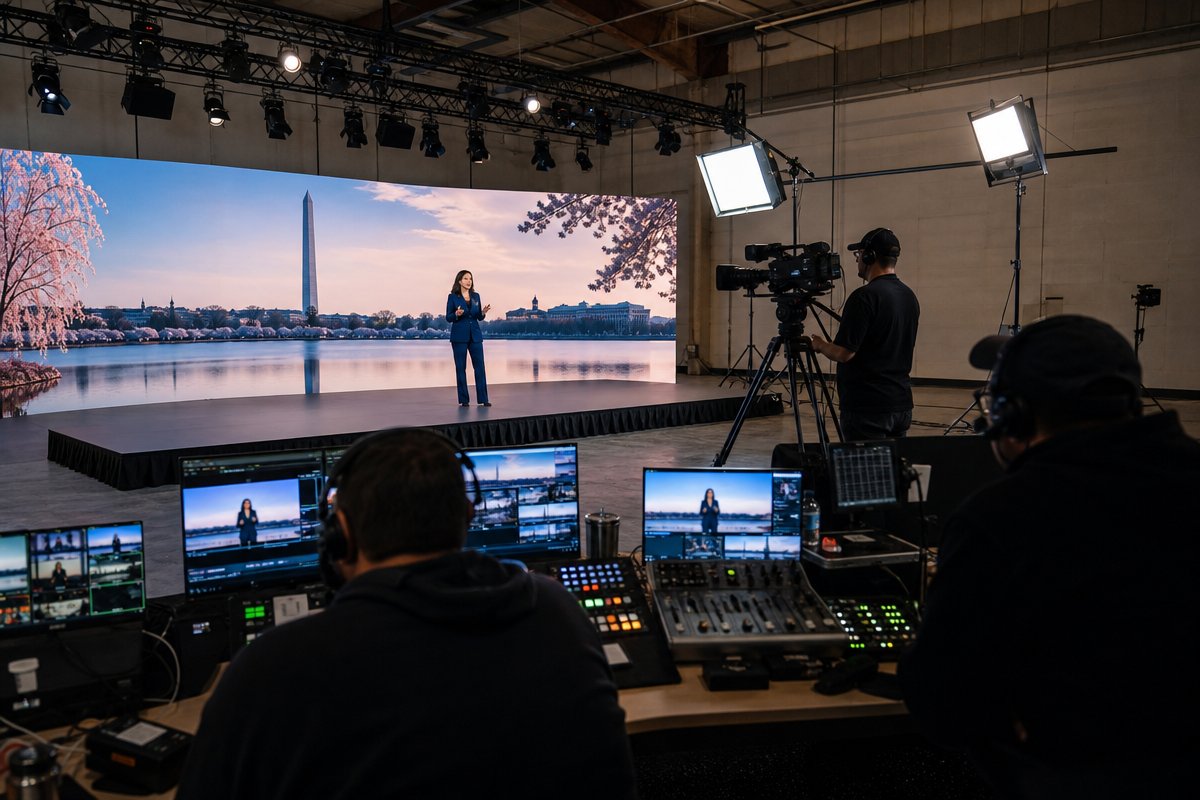
Between 2021 and 2025, the virtual event production industry in the DMV region underwent a rapid, methodical transformation. What started as reactive pivots became intentional investments in technology, talent, and creative strategy.
The Rise of Dedicated Production Studios
One of the most significant shifts was the move away from makeshift home setups toward purpose-built or portable production studios. Professional virtual event production companies in DC began offering studio environments with broadcast-quality cameras, teleprompters, professional lighting rigs, and LED wall backdrops that could display dynamic branded content behind speakers.
This was a game-changer. Instead of a presenter staring into a laptop camera in their spare bedroom, audiences saw polished, visually compelling presentations that felt like watching a news broadcast or a TED Talk.
Multi-Camera Directing and Real-Time Switching
Professional production teams introduced multi-camera setups with live switching – the same approach used in television production. A technical director could cut between wide shots, close-ups, screen shares, and pre-produced video segments in real time, keeping the visual experience dynamic and maintaining audience attention.
Platform Diversification
Organizations stopped relying solely on meeting platforms and began investing in purpose-built virtual event platforms like Hopin, vFairs, Swapcard, and ON24. These platforms offered features tailored for events: virtual lobbies, breakout rooms, networking lounges, exhibitor booths, live polling, and detailed analytics dashboards.
Professional Show Management
Perhaps the most important evolution was the recognition that virtual events need the same level of show management as live events – arguably more. A skilled virtual event production company provides stage managers, technical directors, speaker coaches, and run-of-show coordination so every transition lands and every cue hits on time.
Virtual Event Production in 2026: The New Standard
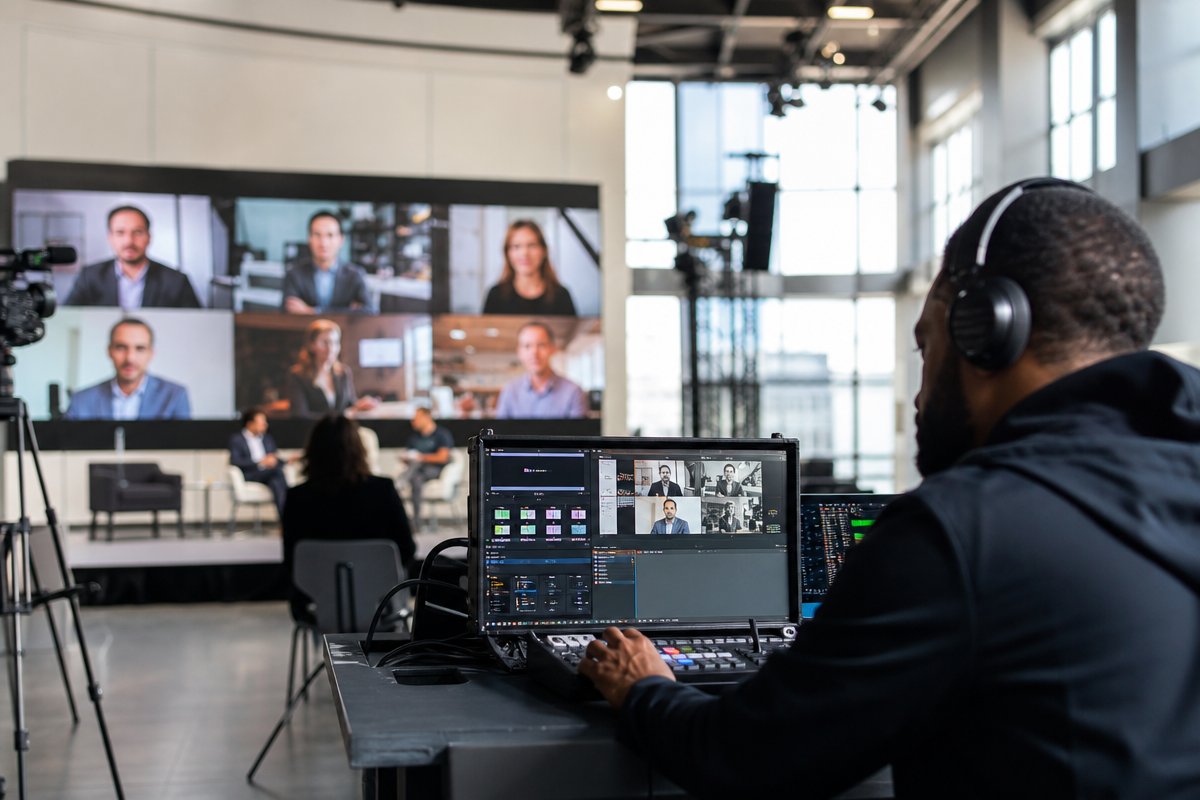
In 2026, the expectations for virtual events in Washington DC, Northern Virginia, and Maryland have reached a new baseline. Audiences – whether they are association members, government stakeholders, corporate executives, or donors – expect broadcast-quality experiences. Anything less feels unprofessional.
Studio-Grade Production Is the Baseline
Today, a reputable virtual event production company in DC delivers experiences that include:
- 4K multi-camera capture with professional cinema lenses and broadcast monitors
- LED volume stages that create immersive, dynamic backgrounds without green screen artifacts
- Real-time graphics and lower-thirds that reinforce branding and speaker identification
- Professional audio engineering with lavalier microphones, audio mixing, and echo cancellation
- Pre-produced video packages including sizzle reels, sponsor acknowledgments, and transition bumpers
- Teleprompter support so speakers deliver polished, confident presentations
Advanced Audience Engagement Tools
Engagement is no longer an afterthought. Modern virtual productions incorporate:
- Live polling and Q&A moderation with real-time results displayed on screen
- Gamification elements such as leaderboards, badges, and prize drawings
- Breakout sessions with facilitated networking using AI-powered matchmaking
- Second-screen experiences where attendees interact via mobile apps while watching the main stage stream
Data-Driven Post-Event Insights
One advantage virtual events have always had over in-person events is data. In 2026, production companies deliver comprehensive analytics packages that include session-level attendance, average watch time, engagement scores, poll responses, chat sentiment analysis, and lead scoring for sponsors and exhibitors. This data turns every virtual event into a measurable business asset.
Accessibility and Global Reach
DC-based organizations – particularly associations, nonprofits, and federal agencies – serve national and international audiences. Virtual event production in 2026 routinely includes real-time closed captioning, ASL interpretation windows, multi-language translation streams, and on-demand replay libraries. These features are not add-ons; they are standard expectations for inclusive, professional events.
What to Look for in a Virtual Event Production Company in DC in 2026
Not all production companies are created equal, and the gap between a true full-service virtual event production company and a basic streaming service provider has never been wider. Here is what to evaluate:
1. End-to-End Production Capability
Your production partner should handle everything from creative concepting and run-of-show development through technical execution and post-event analytics. If you are stitching together separate vendors for video, audio, streaming, graphics, and show management, you are introducing unnecessary risk.
2. Broadcast-Quality Equipment and Crew
Ask about camera systems, switching hardware, audio rigs, and the credentials of the technical crew. A legitimate production company employs experienced technical directors, camera operators, audio engineers, and graphics operators – not just AV technicians who also happen to know how to press the stream button.
3. Venue and Studio Flexibility
The best virtual event production companies in the DMV can produce from their own studios, transform a hotel ballroom or conference center into a broadcast set, or deploy portable studio kits to any location in Washington DC, Northern Virginia, or Maryland. Flexibility matters because your event may require on-location production at a venue that is meaningful to your brand or mission.
4. Experience with High-Stakes Events
DC events are often high-visibility: congressional briefings, national association keynotes, federal agency town halls, and corporate leadership summits. Your production partner should have a track record with events where failure is not an option. Ask for case studies and references from similar organizations.
5. Redundancy and Reliability
Professional virtual production requires backup internet connections, redundant streaming encoders, backup power supplies, and failover protocols. Ask your production company what happens if the primary internet connection drops mid-event. If they do not have a clear, detailed answer, keep looking.

Why DC Organizations Continue to Invest in Virtual Events
Some predicted that virtual events would disappear once in-person gatherings resumed. That has not happened. In 2026, organizations across the DMV continue to invest in virtual production for strategic reasons:
- Audience reach: Virtual events remove geographic barriers. A DC-based association can engage members nationwide without requiring travel.
- Cost efficiency: While professional virtual production requires investment, it is often significantly less expensive than renting a large venue, catering for hundreds, and managing travel logistics.
- Content longevity: Professionally produced virtual events generate on-demand content libraries that deliver value for months after the live event.
- Sustainability: Reducing travel aligns with the environmental commitments many organizations have adopted.
- Inclusion: Virtual access ensures that people with mobility challenges, caregiving responsibilities, or budget constraints can still participate fully.
For many organizations, the question is no longer whether to produce virtual events but how to produce them at a level that reflects their brand and mission.
Frequently Asked Questions About Virtual Event Production in DC
How much does professional virtual event production cost in DC?
Costs vary significantly based on the scope of the event. A simple single-session webinar with professional cameras and graphics might start around $5,000 to $10,000. A multi-day virtual conference with multiple stages, breakout sessions, branded environments, and full show management can range from $25,000 to $100,000 or more. The key factors are the number of sessions, the complexity of the production design, the platform used, and the size of the technical crew required. A reputable virtual event production company in DC will provide a detailed, transparent proposal based on your specific needs.
What is the difference between a virtual event and a hybrid event?
A virtual event is produced entirely for a remote audience – there is no in-person audience component. A hybrid event combines a live, in-person audience with a simultaneous virtual audience. Hybrid events are typically more complex and expensive because they require full production for both experiences. Many DC organizations use a mix of both formats depending on the event goals and audience.
Can a virtual event feel as engaging as an in-person event?
Yes, but only with professional production. Studio-grade visuals, dynamic camera work, interactive engagement tools, skilled moderation, and thoughtful pacing are all essential. When these elements are executed well, virtual audiences report high satisfaction and engagement. The key is treating the virtual experience as a distinct production – not a lesser version of an in-person event.
How far in advance should we book a virtual event production company?
For complex virtual events, we recommend booking your production partner at least 8 to 12 weeks in advance. This allows adequate time for creative development, technical planning, speaker preparation, platform setup, and rehearsals. Simpler events may require less lead time, but earlier engagement always leads to better results.
Do we need a special venue for a virtual event?
Not necessarily. A professional virtual event production company can build a studio-quality set in a hotel meeting room, a corporate office, or a dedicated production studio. The production team brings the cameras, lighting, audio equipment, LED walls or scenic elements, and streaming infrastructure. The most important requirements for the venue are reliable power, adequate space, and a strong internet connection – though professional teams bring their own dedicated connectivity as backup.
What platforms are best for virtual events in 2026?
The best platform depends on your goals. For large conferences with exhibitors and networking, platforms like Swapcard, vFairs, and Hopin remain popular. For webinar-style events, ON24 and Zoom Events offer strong analytics. For broadcast-quality streaming to large passive audiences, custom RTMP solutions feeding into branded web players are common. Your production company should help you select and configure the right platform based on your audience size, engagement goals, and budget.
Partner with a Proven Virtual Event Production Team in DC
The era of improvised virtual events is over. In 2026, audiences expect – and organizations deserve – virtual experiences that are as polished, engaging, and impactful as any live event. Whether you are planning a national association keynote, a corporate leadership summit, a nonprofit fundraiser, or a government town hall, working with an experienced virtual event production company in DC makes the difference between an event people tolerate and one they remember.
TriVision Event Production has supported complex, high-visibility events across Washington DC, Northern Virginia, and Maryland for over 30 years. From studio-grade virtual productions to full-service hybrid events, our team delivers end-to-end solutions – including video production, audio engineering, LED environments, show management, and creative strategy – so your virtual event meets the standard your organization and your audience expect.
Contact TriVision Event Production today to start planning your next virtual event with a team that has been setting the standard in the DMV for three decades.
Let’s talk about your event
Tell us the date and the room - we’ll bring the plan.